Workplace layoffs have remained a major concern for American workers throughout 2025 and 2026. Companies across technology, manufacturing, government, retail and other industries have continued to restructure as they respond to economic uncertainty, organizational changes and the expanding use of artificial intelligence.
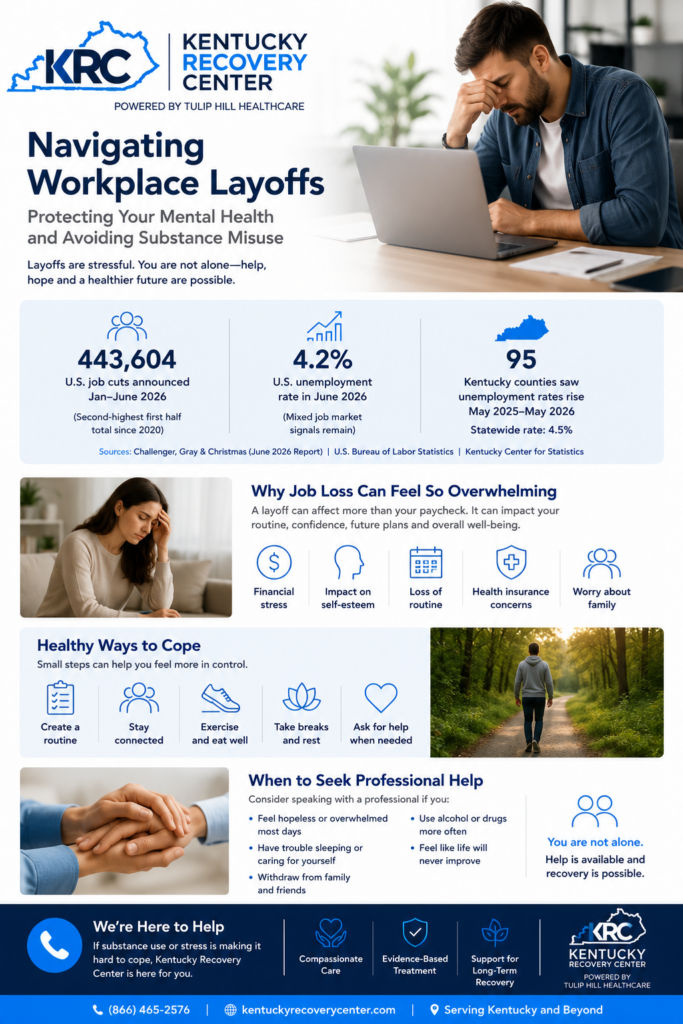
Although national job cuts slowed in June 2026, the broader picture remains unsettling. U.S.-based employers announced 443,604 job cuts during the first six months of 2026. That was lower than the 744,308 cuts announced during the same period in 2025, but it was still the second-highest January-through-June total recorded since 2020. Employers announced 45,849 cuts in June alone after announcing 97,006 in May.
The labor market has not collapsed. The national unemployment rate was 4.2% in June 2026, and total nonfarm employment increased by approximately 57,000 positions. However, the number of employed Americans decreased in the household survey, and certain industries, including leisure and hospitality, lost jobs during the month. These mixed signals help explain why many workers continue to feel uncertain about their careers, finances and future stability.
Kentucky families are experiencing some of that uncertainty firsthand. New data from the Kentucky Center for Statistics found that unemployment rates increased in 95 of the Commonwealth’s 120 counties between May 2025 and May 2026. Rates declined in only 17 counties and remained unchanged in eight. Kentucky’s statewide unemployment rate was 4.5% in May 2026.
Losing a job can affect nearly every area of life. Beyond the immediate financial concerns, a layoff may disrupt a person’s routine, identity, relationships, healthcare coverage and sense of security. Even people who expected a workforce reduction can find themselves struggling with anxiety, depression, difficulty sleeping or uncertainty about what comes next.
Some people may begin relying on alcohol or drugs to escape those feelings. What starts as a way to relax after a difficult day can gradually become a pattern that affects physical health, relationships, decision-making and the ability to move forward.
At Kentucky Recovery Center, we understand that major life changes can contribute to the development or worsening of substance use and co-occurring mental health concerns. A layoff may change someone’s circumstances, but it does not have to determine their future.
Why Workplace Layoffs Matter Right Now
Workplace layoffs have remained in the national conversation as companies adapt to changing economic conditions, technological advances and shifting workforce needs. While every organization has different reasons for reducing staff, many recent layoffs have been tied to restructuring, mergers, changing consumer demand and the growing use of artificial intelligence.
Artificial intelligence was identified as a leading reason for announced job cuts for four consecutive months through June 2026. At the same time, employers also cited financial pressures, acquisitions, bankruptcies and organizational restructuring as factors behind workforce reductions.
Technology companies announced more than 52,000 layoffs during the first quarter of 2026, roughly 40% more than during the same period in 2025. Across all industries, employers announced 97,006 job cuts in May 2026, making it the highest May total since 2020. Although layoff announcements slowed in June, many workers continue to feel uncertain about the future.
The impact of these headlines extends far beyond the people who lose their jobs. Employees who remain often experience their own stress, wondering whether another round of layoffs is coming or how changes within their organization may affect their role.
It’s common to begin questioning your future. You might wonder if your position could be next, how long it would take to find another job, whether you could keep your health insurance or how you would continue supporting your family. Others begin questioning whether their skills will remain in demand, whether artificial intelligence will change their profession or if it’s time to pursue an entirely different career.
Living with that kind of uncertainty can take a real toll. Even before a layoff happens, chronic stress can interfere with sleep, increase anxiety, make it harder to concentrate and leave people feeling emotionally exhausted. For someone already living with depression, anxiety or recovering from a substance use disorder, that ongoing uncertainty can become especially difficult to manage.
“Losing a job doesn’t just affect someone’s finances,” says Dr. Vahid Osman, Medical Director at Kentucky Recovery Center. “It can impact self-esteem, daily routines and emotional well-being in ways people don’t always expect. When stress begins leading to unhealthy coping behaviors like increased drinking or drug use, seeking support early can make a tremendous difference.”
Kentucky Unemployment Increased Across 95 Counties
Kentucky’s newest county-level data provides an important local perspective.
Between May 2025 and May 2026, unemployment rates increased in 95 counties, decreased in 17 and remained unchanged in eight. Woodford County recorded the state’s lowest county unemployment rate at 3.7%, but the broader increase shows that employment pressures were not limited to one city or region.
The May figures also represent a noticeable shift from earlier in the year. In January 2026, unemployment rates had fallen from the previous year in all 120 Kentucky counties. In April, rates remained lower in 66 counties and had increased in 41. By May, the year-over-year increase had spread to 95 counties.
Monthly unemployment estimates can change, and county-level figures are not seasonally adjusted. They should not be interpreted as evidence that every part of Kentucky is experiencing the same economic conditions. Still, the movement illustrates how quickly the employment environment can change and why many families may be feeling less financially secure.
Kentucky’s annual unemployment rate was 4.6% in 2025, compared with 4.3% nationally. No Kentucky county recorded a double-digit annual rate, although there were significant differences among counties. Annual rates ranged from 3.5% in Woodford County to 9.1% in Martin County.
Statistics cannot fully represent what unemployment means for an individual household. Behind every percentage is someone reconsidering a budget, searching for health coverage, applying for jobs or trying to explain an unexpected change to their family.
Why Job Loss Can Feel So Overwhelming
Employment provides much more than a paycheck. For many people, work brings structure, purpose, social connection and a sense of identity. It creates routines, offers opportunities for growth and provides the stability people rely on to plan for the future.
When that suddenly changes, the impact often reaches far beyond finances. A layoff can leave someone wondering how they’ll pay the mortgage, keep up with monthly bills or continue supporting their family. Others worry about losing health insurance, paying for prescription medications or finding another job that offers similar pay and benefits. Even long-term goals, like saving for retirement or buying a home, may suddenly feel out of reach.
There can also be an emotional loss that’s harder to recognize. Many people miss the daily interactions with coworkers, the sense of accomplishment that comes from meaningful work and the confidence that comes with having a defined role. Explaining a layoff to friends or family can feel uncomfortable, and some people begin questioning their own value or professional abilities, even when the decision had nothing to do with their performance.
These reactions are completely normal. Losing a job is one of life’s most significant stressors, and it’s understandable to experience a mix of fear, frustration, sadness and uncertainty. When those feelings continue for weeks or months without healthy support, however, they can begin affecting sleep, mood, physical health and decision-making, making it even harder to move forward.
Is It Normal to Grieve After a Layoff?
Yes. Losing a job often brings a grief response because you’re not only losing employment. You may also be losing daily routines, professional relationships, financial stability and a sense of identity. It’s common to move through a range of emotions, including shock, frustration, anxiety and sadness. Some days you may feel hopeful after submitting applications or interviewing for a new position, only to feel discouraged again after receiving a rejection. These emotional ups and downs are a normal part of adjusting to a major life change.
It’s also important to remember that a layoff is rarely a reflection of your worth or abilities. Workforce reductions are often driven by organizational restructuring, changing business priorities or broader economic conditions rather than an individual’s performance. Giving yourself permission to grieve while continuing to move forward at your own pace can make the transition feel more manageable.
When Layoff Stress Becomes More Than a Temporary Reaction
Feeling stressed after losing a job is completely normal. In the days and weeks that follow, it’s common to experience worry, frustration, sadness or difficulty sleeping as you adjust to an unexpected change.
For most people, those emotions gradually become easier to manage. However, if they continue for several weeks or begin interfering with everyday life, it may be a sign that you need additional support.
You might notice that you’re feeling hopeless or discouraged nearly every day, struggling to get out of bed, constantly exhausted or unable to enjoy activities that once brought you happiness. Some people become increasingly irritable, experience panic attacks or begin withdrawing from family and friends. Others find it difficult to concentrate, neglect personal responsibilities or lose motivation to continue searching for work because the future feels overwhelming.
For some, emotional distress can also show up in less obvious ways. Changes in appetite, disrupted sleep, increased alcohol or drug use, or feeling like life simply isn’t going to get better are all signs that the stress of job loss may be affecting your mental health more than you realize.
There’s no shame in asking for help. Reaching out early can prevent temporary stress from developing into a more serious mental health or substance use disorder. Speaking with a trusted friend, counselor or treatment professional can provide the support and tools needed to regain stability and begin moving forward with confidence.
You Don’t Have to Carry This Alone
If losing your job has led to increased drinking, anxiety, depression or thoughts of returning to substance use, reaching out for support early can make a meaningful difference. Talking with a mental health professional or addiction specialist doesn’t mean you’ve failed. It means you’re taking an important step toward protecting your health and your future.
Why Some People Turn to Alcohol or Drugs After Losing a Job
When life suddenly feels uncertain, it’s natural to want relief from the stress. For some people, alcohol or drugs may seem like a quick way to numb feelings of fear, embarrassment, loneliness or disappointment. A few drinks might temporarily quiet racing thoughts, while prescription medications or cannabis may seem like an easy way to relax or get some sleep.
The problem is that those coping strategies only provide temporary relief. They don’t address the financial stress, uncertainty or emotional pain that comes with losing a job. Over time, relying on substances can make it even harder to move forward by affecting motivation, judgment, relationships and overall mental health.
You may notice yourself drinking more often than usual, reaching for alcohol earlier in the day or taking more prescription medication than directed. Some people return to recreational drug use after years of sobriety, while others begin hiding how much they’re drinking or using because they know it’s becoming a problem. Financial stress can make the situation even more difficult, especially when money that could be used for household expenses begins going toward alcohol or drugs.
For individuals who are already in recovery, losing a job can be an especially vulnerable time. The daily routines, accountability and social connections that supported sobriety may suddenly disappear, making old habits feel more tempting. That doesn’t mean recovery has failed. It simply means additional support may be needed during a period of significant life change.
While alcohol or drugs may seem to ease emotional pain for a short time, they often make anxiety, depression and stress worse in the long run. They can interfere with sleep, reduce motivation, cloud decision-making and make the job search feel even more overwhelming. As tolerance develops, someone may need larger amounts to achieve the same effect, increasing the risk of dependence and addiction.
Recognizing these changes early is important. Reaching out for support before substance use becomes more severe can make recovery easier and help you regain control before a temporary setback turns into a much bigger challenge.
Layoffs Can Increase Relapse Risk
For someone in recovery, losing a job can be about much more than losing a paycheck. Work often provides structure, accountability and a daily routine that helps support long-term sobriety. It also offers a sense of purpose, social connection and financial stability. When those pieces suddenly disappear, it can leave someone feeling ungrounded during an already stressful time.
A layoff may bring financial pressure, uncertainty about healthcare coverage and concerns about paying for treatment or medications. It can also lead to isolation, boredom and feelings of rejection, especially if the job search takes longer than expected. Some people become frustrated with their former employer, while others begin blaming themselves or questioning their self-worth. Those emotions can become powerful relapse triggers, particularly when combined with anxiety, depression or the loss of regular support systems.
Experiencing cravings or having thoughts about returning to alcohol or drug use does not mean recovery has failed. Stress is one of the most common relapse triggers, and major life changes like job loss can temporarily make recovery feel more difficult. Recognizing those feelings early and talking about them is a sign of strength, not weakness.
During this transition, it can be especially helpful to stay connected to your recovery community. Attending additional meetings, checking in with a sponsor, reconnecting with a therapist or reaching out to your treatment provider can provide encouragement and accountability when you need it most. Even small steps, like maintaining a daily routine or spending time with supportive friends and family, can help reinforce the healthy habits you’ve worked so hard to build.
Most importantly, remember that a layoff is a life event, not a personal failure. Protecting your recovery during times of uncertainty is one of the best investments you can make in your long-term health and future.

Layoffs Can Also Affect Employees Who Remain
The emotional impact of layoffs isn’t limited to the people who lose their jobs. Those who remain often carry their own burden, even if they’re grateful to still be employed.
After watching coworkers leave, it’s common to experience what psychologists call survivor guilt. Someone may feel relieved that they kept their position while also feeling sad, guilty or anxious about colleagues who were laid off. At the same time, many employees begin wondering whether another round of cuts is coming and whether their own job is truly secure.
As organizations adjust, remaining employees are often asked to take on additional responsibilities with fewer people to share the workload. That increased pressure can lead to longer hours, difficulty concentrating, emotional exhaustion and burnout. Some people lose trust in leadership or feel they constantly need to prove their value to avoid being included in future layoffs. Others become so worried about ongoing uncertainty that they begin looking for a new job before another workforce reduction happens.
Living under that kind of stress can gradually affect both physical and mental health. Some people neglect sleep, skip meals, withdraw from family and friends or begin relying on alcohol or other substances as a way to cope with the pressure. While those habits may provide temporary relief, they often increase stress over time instead of reducing it.
Employers can help ease some of that uncertainty by communicating openly about organizational changes, setting realistic expectations and making mental health resources available. For employees, checking in with coworkers, maintaining healthy routines and reaching out for support when stress becomes overwhelming can make a meaningful difference. Taking care of your mental health isn’t just important after a layoff. It’s equally important when you’re living with the fear that one could happen at any time.
Healthy Ways to Cope With Job Loss
Losing a job can make life feel like it’s been turned upside down, but small, consistent routines can help restore a sense of stability. While you may not be able to control the job market or hiring decisions, you can control how you care for yourself each day.
One of the most helpful things you can do is create a daily routine. Waking up at a consistent time, getting dressed, exercising, scheduling time to search for jobs and making time for meals can help replace the structure that work once provided. Spending every waking hour applying for jobs often leads to frustration and burnout, so it’s equally important to build in time for rest.
It’s also worth remembering that your job is only one part of who you are. Losing a position doesn’t erase your skills, experience or the relationships you’ve built throughout your life. Whether you’re a parent, spouse, volunteer, friend or mentor, those roles continue to matter just as much as your career.
Staying connected with supportive people can also make a significant difference. Job loss often leads people to isolate themselves because they feel embarrassed or discouraged, but talking with trusted friends, family members or people in recovery can reduce feelings of loneliness and provide encouragement when motivation is low.
Taking care of your physical health is just as important. Regular exercise, healthy meals and consistent sleep habits can help reduce stress and improve mood. If you’ve noticed you’re drinking more alcohol than usual or relying on substances to cope with anxiety, take a step back and ask yourself why. Alcohol may provide temporary relief, but it often increases anxiety and depression over time.
Finally, try focusing on small accomplishments instead of the bigger picture. Updating your resume, reaching out to one professional contact or submitting a few quality job applications each day can help rebuild confidence. Recovery, healing and career transitions all happen one step at a time.
How to Support Someone After a Layoff
If someone you care about has recently lost their job, your support can make a bigger difference than you may realize. While it’s natural to want to solve the problem, most people simply need someone willing to listen without judgment.
Rather than immediately offering advice, give them space to talk about what they’re experiencing. Losing a job often brings feelings of grief, fear and uncertainty, and being able to express those emotions openly can be incredibly helpful.
Small acts of support also matter. Checking in regularly, inviting them to spend time together, helping review a resume or sharing a job opportunity can remind someone they aren’t facing this challenge alone. At the same time, pay attention to changes in their mood or behavior. If you notice they’re drinking more, withdrawing from loved ones or struggling with depression, gently encourage them to speak with a counselor or treatment professional.
It’s also important to avoid minimizing what they’re going through. Comments like, “Everything happens for a reason,” or, “You’ll find something better,” are usually well intentioned, but they can unintentionally make someone feel misunderstood. Sometimes the most meaningful thing you can say is simply, “I’m here for you, and we’ll figure this out together.”

When Is It Time to Seek Professional Treatment?
Feeling overwhelmed after losing a job doesn’t automatically mean you need addiction treatment. It’s normal to experience stress, uncertainty and even periods of sadness while adjusting to a major life change. For many people, those feelings gradually improve as they find new routines and begin moving forward.
However, if alcohol or drug use becomes your primary way of coping, or if your mental health continues to decline, it may be time to reach out for professional support.
You might notice that you’re drinking more often than you used to or needing larger amounts of alcohol or drugs just to feel relaxed. Some people find themselves thinking about substances throughout the day, hiding their use from loved ones or making repeated promises to cut back without being able to follow through. Others return to alcohol or drugs after months or years of recovery because the stress of unemployment feels overwhelming.
Substance use can also begin affecting other areas of life. You may start missing appointments, withdrawing from family and friends, struggling to keep up with daily responsibilities or feeling like you can’t get through the day without drinking or using drugs. It’s also common for anxiety or depression to become more intense, creating a cycle where substances temporarily numb emotional pain but ultimately make it worse.
The good news is that you don’t have to wait until you’ve hit “rock bottom” to ask for help. In fact, seeking treatment early often leads to better outcomes and can prevent a temporary setback from becoming a long-term struggle. Whether you’re concerned about your own substance use or worried about someone you love, reaching out for an assessment is simply a conversation. It gives you the opportunity to understand your options, receive professional guidance and begin taking steps toward recovery before the problem becomes more difficult to overcome.
At Kentucky Recovery Center, we believe asking for help is a sign of strength. Recovery is possible at every stage, and support is available whenever you’re ready to take the next step.
How Kentucky Recovery Center Can Help
At Kentucky Recovery Center, we understand that addiction rarely develops because of a single event. More often, it’s the result of ongoing stress, mental health challenges and life circumstances that gradually become overwhelming. A layoff may not be the cause of someone’s addiction, but it can be the event that brings an existing struggle to the surface.
Our residential treatment program is designed to help people step away from the pressures of everyday life and focus on healing in a safe, supportive environment. Every treatment plan is personalized and may include evidence-based therapy, individual counseling, group therapy, relapse prevention, family involvement and treatment for co-occurring mental health conditions such as anxiety, depression or trauma.
Recovery is about more than stopping alcohol or drug use. It’s about rebuilding confidence, learning healthier ways to cope with stress and developing the skills needed to move forward. Whether you’re struggling after a recent layoff or you’ve been carrying the weight of addiction for years, you don’t have to face it alone.
Recovery Can Begin During an Uncertain Season
A layoff can change your career path, finances and daily routine almost overnight. It can also bring emotional struggles to the surface that may have been hidden beneath the demands of everyday life. While those challenges can feel overwhelming, they don’t have to define what comes next.
Many people emerge from periods of unemployment with greater resilience, a renewed sense of purpose and a clearer understanding of what they want from their lives. For others, job loss becomes the turning point that encourages them to prioritize their mental health, address a substance use disorder or ask for help for the first time. No matter where you are in your journey, healing and recovery are possible.
As layoffs continue making headlines and unemployment rises in many Kentucky communities, it’s important to remember that the people behind those statistics deserve support just as much as they deserve new employment opportunities. Taking care of your mental health during times of uncertainty isn’t a sign of weakness. It’s one of the strongest investments you can make in your future.
If stress after losing a job has led to increased drinking, prescription drug misuse or a return to substance use, you don’t have to face it alone. Kentucky Recovery Center provides compassionate, evidence-based care that helps people regain stability, rebuild confidence and develop healthier ways to cope with life’s challenges.
Whether you’re ready to begin treatment or simply want to learn more about your options, our team is here to answer your questions, verify your insurance and help you determine the next step that’s right for you.
A layoff can change your circumstances, but it doesn’t have to change who you are or what’s possible for your future.
Frequently Asked Questions About Layoffs, Mental Health and Substance Use
Can losing a job increase the risk of addiction?
Job loss does not automatically cause addiction, but it can introduce several risk factors associated with unhealthy substance use. These include financial pressure, anxiety, depression, disrupted routines, isolation and loss of purpose.
Is it normal to feel depressed after being laid off?
Sadness, grief and worry are common following job loss. Professional support may be appropriate when symptoms persist, become severe or interfere with sleep, relationships, self-care and daily responsibilities.
How many U.S. layoffs were announced during the first half of 2026?
U.S.-based employers announced 443,604 job cuts from January through June 2026. That was approximately 40% below the 744,308 cuts announced during the first half of 2025, but it remained the second-highest first-half total since 2020.
Is unemployment increasing in Kentucky?
Kentucky’s statewide unemployment rate was 4.5% in May 2026. County-level rates increased from the previous year in 95 of Kentucky’s 120 counties, declined in 17 counties and remained unchanged in eight.
Are artificial intelligence and automation contributing to layoffs?
Employers have increasingly cited artificial intelligence when announcing job reductions. AI was the leading stated reason for announced cuts for four consecutive months through June 2026. Restructuring, mergers, bankruptcies and broader economic conditions have also contributed.
How can I cope with job loss without drinking?
Creating a routine, staying connected with supportive people, exercising, protecting sleep and limiting exposure to distressing news may help. Counseling or peer support can provide additional guidance.
What should I do if I was already in recovery before the layoff?
Stay connected with your recovery network. Consider attending additional meetings, speaking with a sponsor, contacting a therapist and telling trusted people that the layoff has increased your stress or cravings.
Can stress alone cause addiction?
Stress is not the sole cause of addiction. However, chronic stress can increase vulnerability to substance misuse, especially when combined with factors such as mental health conditions, trauma, genetic risk or previous substance exposure.
When should I consider professional addiction treatment?
Consider seeking an assessment when substance use is becoming difficult to control, affecting relationships, worsening mental health or interfering with your ability to meet responsibilities.
Does Kentucky Recovery Center address co-occurring mental health concerns?
Kentucky Recovery Center provides support for people experiencing substance use disorders alongside co-occurring concerns such as anxiety, depression and trauma-related symptoms. Treatment is individualized according to each person’s clinical needs.
Can addiction treatment help me rebuild after losing a job?
Treatment cannot replace a job or eliminate financial concerns, but it can help you develop healthier coping skills, restore stability and build a stronger foundation for long-term recovery.
How can I help a loved one who is drinking more after a layoff?
Approach the conversation calmly and focus on specific changes you have noticed. Express concern without blame, listen to their experience and encourage them to speak with a healthcare or treatment professional.
Did you know that your insurance plan may cover medical detox?
Get Family Support Now
Supporting Families Through Recovery
We understand addiction affects the whole family. Our comprehensive family program helps rebuild trust and restore relationships.
Weekly Family Therapy Sessions
Educational Workshops
Support Groups
Communication Skills Training
Get Family Support Now