Entering addiction treatment is one of the most courageous decisions a person can make. It often follows months or even years of struggling with addiction, strained relationships, declining health, or repeated attempts to stop using drugs or alcohol alone. Choosing to seek professional treatment represents hope that life can improve, even if the road ahead feels uncertain.
For many people, however, the decision to enter rehab is only the first challenge. After the initial relief of arriving at a treatment center begins to fade, difficult emotions often surface. Withdrawal symptoms may still linger, daily routines have changed, and the reality of focusing entirely on recovery can feel overwhelming. Homesickness, concerns about family, financial stress, work responsibilities, or simply missing familiar surroundings can make leaving treatment seem like an appealing option.
It is surprisingly common for people to question whether they should stay in rehab, particularly during the first week. Some begin to feel physically better after detox and assume they no longer need treatment. Others become discouraged when painful emotions they had previously numbed with substances begin to emerge. In these moments, it is easy to mistake temporary discomfort for a sign that treatment is not working.
In reality, these experiences are often signs that recovery is just beginning.
Leaving rehab before completing a recommended treatment program can interrupt important progress and increase the likelihood of relapse, overdose, and continued mental health struggles. At the same time, deciding to stay allows individuals to build the coping skills, emotional resilience, and support systems needed for lasting recovery.
Every person’s situation is unique. Some people leave because they need a different level of care, while others transition from residential treatment into outpatient services as part of their clinical plan. Others may decide to leave against medical advice because they believe they are ready to manage recovery on their own. Understanding what happens when someone leaves rehab early can help individuals and families make informed decisions during an emotionally challenging time.
Why Do People Leave Rehab Early?
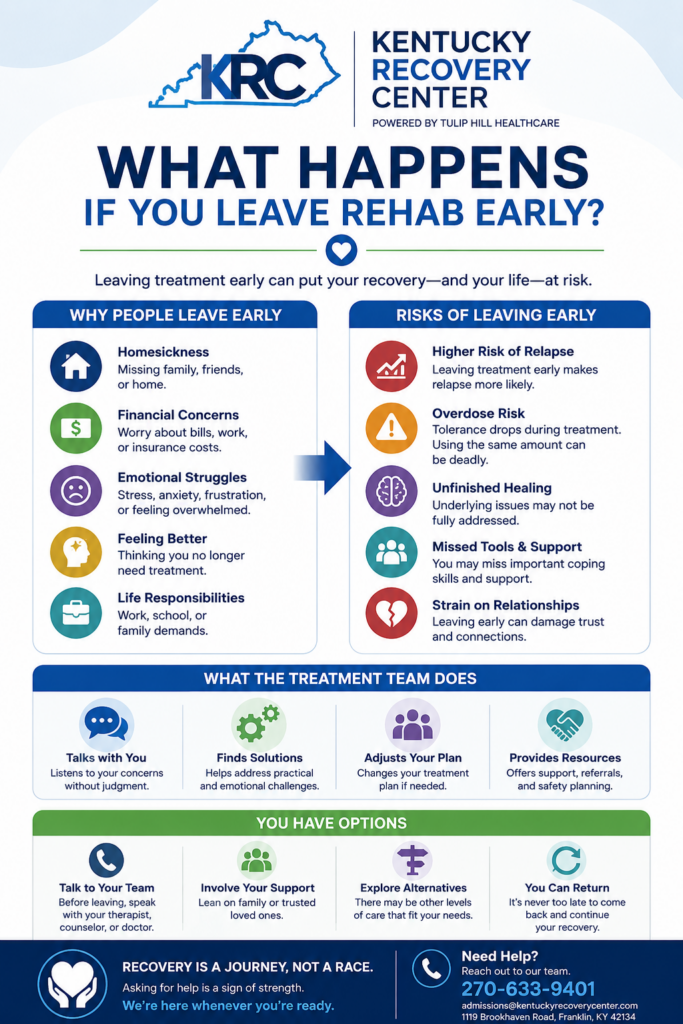
Few people enter treatment expecting to leave before completing their program. Most genuinely want to recover and hope rehab will help them build a healthier future. Yet addiction is a complex disease, and the recovery process can be physically, emotionally, and mentally demanding. As treatment progresses, some individuals begin questioning whether they should remain.
There is rarely a single reason someone leaves rehab early. Instead, multiple concerns often build over time until leaving feels like the easiest solution.
One of the most common reasons is believing that feeling physically better means treatment is complete. After detox, withdrawal symptoms gradually improve, sleep may begin to normalize, and appetite often returns. Because the immediate physical crisis has passed, some people mistakenly assume they have overcome their addiction. However, addiction affects much more than the body. The psychological, behavioral, and emotional aspects of substance use typically require weeks or months of continued treatment to address effectively.
Homesickness is another significant factor. Being away from loved ones, familiar routines, pets, or children can create feelings of loneliness and anxiety. Individuals who have never spent extended time away from home may struggle with the structured environment of residential treatment, even when they understand its benefits.
Financial concerns can also weigh heavily on someone in treatment. They may worry about paying bills, supporting their family, maintaining employment, or the cost of ongoing care. While these concerns are understandable, many treatment centers have financial counselors, admissions specialists, or case managers who can help patients understand insurance benefits, payment options, and available resources before they make the decision to leave.
Relationships outside of treatment can also influence someone’s decision. Family conflict, custody issues, romantic relationships, or pressure from friends may create a strong desire to return home. Unfortunately, returning to the same environment before developing healthy coping strategies may expose individuals to many of the same triggers that contributed to their substance use.
Some people become frustrated with the structure and expectations of rehab itself. Participating in therapy, attending groups, following daily schedules, and discussing painful experiences can feel emotionally exhausting. Recovery often requires confronting difficult memories, accepting personal responsibility, and making meaningful lifestyle changes. While this work is challenging, it is also where lasting healing begins.
For individuals living with substance use disorders, cravings may also influence decision-making. Addiction changes the brain’s reward system, affecting judgment, impulse control, motivation, and decision-making. During early recovery, the brain continues adapting to the absence of drugs or alcohol. This adjustment period can temporarily make leaving treatment seem logical, even when doing so carries significant risks.
Why the First Week of Rehab Often Feels the Hardest
Many people who consider leaving treatment do so during the first several days. Understanding why this happens can make those feelings less frightening and help individuals recognize that early discomfort is often temporary.
During active addiction, repeated substance use changes how the brain regulates stress, emotions, sleep, and motivation. Once drugs or alcohol are removed, the brain must begin restoring these natural functions. This healing process takes time.
As a result, individuals may experience mood swings, anxiety, irritability, sadness, difficulty concentrating, fatigue, or disrupted sleep even after the most severe withdrawal symptoms have resolved. Some people also notice they feel emotions more intensely than they have in years because substances previously masked or suppressed those feelings.
These emotional changes do not mean treatment is failing.
Instead, they often indicate that the brain is beginning to heal.
Clinical professionals sometimes refer to this period as emotional adjustment or early recovery stabilization. During this stage, therapists help individuals develop healthier ways to respond to uncomfortable emotions without returning to substance use. Learning these skills requires practice, patience, and support.
Many treatment centers also introduce mindfulness exercises, cognitive behavioral therapy, stress management techniques, and healthy daily routines during the first week. Although these approaches may initially feel unfamiliar, they often become valuable tools for maintaining long-term recovery after treatment ends.
Understanding that these difficult emotions are expected can help people avoid making permanent decisions based on temporary discomfort.
Detox Is Only the Beginning
One of the most common misconceptions about addiction treatment is believing that completing detox means addiction has been cured.
Detoxification and rehabilitation serve two very different purposes.
Medical detox focuses on helping the body safely eliminate drugs or alcohol while managing withdrawal symptoms under medical supervision. Depending on the substance involved, detox may include medications, monitoring of vital signs, nutritional support, hydration, and treatment of withdrawal-related complications.
Completing detox is an important milestone because it stabilizes an individual’s physical health. However, addiction is far more complex than physical dependence alone.
Long-term substance use affects thinking patterns, emotional regulation, stress responses, relationships, and everyday decision-making. Many people also experience co-occurring mental health conditions such as anxiety disorders, depression, post-traumatic stress disorder, bipolar disorder, obsessive-compulsive disorder, or unresolved trauma that continue long after withdrawal symptoms disappear.
Residential rehabilitation provides the time and structure needed to begin addressing these underlying issues. Individual counseling helps patients understand the personal factors contributing to addiction. Group therapy reduces isolation while allowing individuals to learn from others facing similar challenges. Educational sessions teach the science of addiction, relapse prevention strategies, healthy coping skills, and emotional regulation techniques that support long-term recovery.
Treatment also provides opportunities to establish healthier routines. Regular sleep schedules, balanced nutrition, physical activity, mindfulness practices, and consistent therapeutic support all contribute to improved physical and emotional well-being.
Without continuing treatment after detox, many of the emotional, psychological, behavioral, and environmental factors that contributed to substance use remain unchanged. Although the body may no longer be physically dependent on drugs or alcohol, the risk of returning to old habits often remains high because the underlying causes of addiction have not yet been fully addressed.
For this reason, addiction specialists generally view detox as the beginning of recovery rather than its conclusion. The weeks that follow are often where individuals develop the insight, coping skills, and confidence necessary to build a lasting foundation for sobriety.
The Risk of Relapse Increases After Leaving Treatment
One of the primary reasons addiction professionals encourage individuals to complete their recommended treatment plan is that the risk of relapse is highest during the weeks and months immediately following detox. Recovery involves far more than simply avoiding drugs or alcohol. It requires learning new ways to cope with stress, regulate emotions, repair relationships, and navigate daily life without relying on substances.
Research has consistently found that individuals who remain engaged in treatment longer generally experience better recovery outcomes than those who leave prematurely. While every person’s journey is different, treatment gives people additional time to practice the skills that support long-term sobriety before returning to the challenges of everyday life.
Relapse rarely occurs because of a single event. Instead, it often develops gradually.
Recovery experts frequently describe relapse as a process that unfolds in stages. The first stage is emotional relapse. During this phase, a person may not be consciously thinking about using drugs or alcohol, but they begin neglecting healthy habits. They may isolate themselves, stop participating in therapy, experience increased irritability, have difficulty sleeping, or fail to ask for help when they need it.
If these warning signs continue, mental relapse may begin. At this stage, an individual may start romanticizing past substance use, convincing themselves they can control it this time or thinking about situations where they previously used. They may begin bargaining with themselves or minimizing the consequences of addiction.
Physical relapse occurs when someone actually returns to using drugs or alcohol.
Completing rehab gives individuals the opportunity to recognize these early warning signs before they become overwhelming. Through counseling, group therapy, relapse prevention education, and ongoing support, patients learn practical strategies for responding to cravings and managing difficult situations before they lead to substance use.
These skills cannot be mastered overnight. Like learning any new habit, they require repetition, encouragement, and practice over time.
Returning Home Too Soon Can Be Challenging
Many people imagine returning home will immediately relieve the stress they feel during treatment. While reconnecting with loved ones and familiar surroundings can certainly provide comfort, returning too soon may also expose individuals to the same environments, routines, and relationships that contributed to substance use in the first place.
Triggers exist in many forms.
Certain neighborhoods, social gatherings, financial stress, relationship conflict, work pressures, or even specific emotions can remind someone of previous substance use. Without having enough time to strengthen healthy coping skills, these situations can feel overwhelming.
Some individuals also return to friends who continue using drugs or alcohol. Others may find that family dynamics remain complicated or that unresolved conflicts quickly resurface. Although these challenges are not impossible to overcome, treatment helps people prepare for them before they leave the safety and structure of residential care.
One of the greatest benefits of residential treatment is that it provides a controlled environment where individuals can focus entirely on recovery without the constant distractions and temptations of everyday life. This protected period allows the brain and body additional time to heal while healthy routines become more established.
Leaving before those routines are firmly developed can make maintaining sobriety considerably more difficult.
Overdose Risk Can Increase Significantly
Among the most serious consequences of leaving treatment early is the increased risk of overdose.
Many people are surprised to learn that even a relatively short period without drugs or alcohol can reduce the body’s tolerance. During active addiction, the body gradually adapts to repeated substance use. Once someone stops using, that tolerance begins to decline.
If an individual returns to using the same amount they consumed before entering treatment, their body may no longer be able to process that quantity safely.
This greatly increases the risk of overdose.
The danger is particularly significant for opioids such as fentanyl, heroin, oxycodone, hydrocodone, and morphine. Even individuals who previously tolerated high doses can experience life-threatening respiratory depression after a period of abstinence. Because illicit drugs increasingly contain fentanyl or other synthetic opioids without the user’s knowledge, the risk is even greater today than it was a decade ago.
Alcohol also presents serious dangers after treatment interruption. Heavy drinking following a period of abstinence can contribute to alcohol poisoning, accidents, impaired judgment, and renewed physical dependence.
People who misuse benzodiazepines such as Xanax, Ativan, Klonopin, or Valium may likewise face significant overdose risks, particularly when these medications are combined with opioids or alcohol. Stimulants such as methamphetamine and cocaine carry their own dangers, including heart attack, stroke, psychosis, and sudden cardiac complications.
According to the Centers for Disease Control and Prevention, reduced tolerance following periods of abstinence is one of the major reasons individuals face an elevated risk of fatal overdose after returning to substance use. This reality highlights why completing treatment and maintaining ongoing recovery support are so important.
Mental Health Recovery May Be Interrupted
Substance use disorders and mental health conditions frequently occur together. In fact, many people entering addiction treatment are also living with anxiety disorders, depression, trauma-related conditions, bipolar disorder, obsessive-compulsive disorder, attention-deficit/hyperactivity disorder, or other behavioral health concerns.
Sometimes these mental health conditions existed before addiction developed. In other cases, prolonged substance use contributes to emotional symptoms that become more noticeable once drugs or alcohol are no longer masking them.
For many individuals, substances became an unhealthy way of coping with painful emotions, grief, chronic stress, or unresolved trauma. Once substance use stops, those emotions often resurface with greater intensity.
This is one reason emotional healing requires time.
Residential treatment provides opportunities for comprehensive mental health evaluations, medication management when appropriate, individual psychotherapy, trauma-informed care, cognitive behavioral therapy, dialectical behavior therapy, family counseling, and other evidence-based interventions designed to support both addiction recovery and emotional wellness.
Leaving treatment early may interrupt this progress before medications have been properly adjusted, coping strategies have been practiced consistently, or underlying emotional issues have been adequately addressed.
Continuing treatment allows individuals to build confidence in managing difficult emotions without returning to substance use.
Relationships Need Time to Heal
Addiction affects far more than the person using drugs or alcohol.
Partners, parents, children, siblings, close friends, coworkers, and employers often experience the consequences of addiction alongside their loved one. Trust may have been damaged by broken promises, financial difficulties, dishonesty, legal problems, or repeated attempts to stop using without lasting success.
Repairing these relationships rarely happens within a few days.
Many residential treatment programs intentionally incorporate family involvement because healthy support systems can play an important role in long-term recovery. Family education helps loved ones better understand addiction as a chronic medical condition rather than a personal failure. Counseling sessions improve communication, establish healthier boundaries, and allow families to begin rebuilding trust together.
Children may also benefit from age-appropriate conversations that help them understand what addiction is, why their parent entered treatment, and how recovery can strengthen family relationships over time.
Leaving rehab before participating fully in these therapeutic opportunities may delay important conversations that contribute to long-term healing for everyone involved.
Recovery is rarely an individual process. Strong relationships often become one of the greatest protective factors against future relapse, making family participation an important part of comprehensive addiction treatment whenever appropriate.
Can You Leave Rehab Whenever You Want?
Whether someone can leave rehab whenever they choose depends on the type of treatment program they entered and the circumstances surrounding their admission.
For most adults who voluntarily admit themselves to a licensed addiction treatment program, participation is voluntary. This generally means they have the legal right to request discharge, even if their treatment team strongly recommends remaining in care. Before discharge, staff members typically discuss the potential risks of leaving, review available alternatives, and encourage the individual to consider completing treatment.
There are exceptions.
Some individuals enter treatment as part of a court order, drug court program, probation agreement, or other legal requirement. In these situations, leaving treatment without approval could result in legal consequences or violations of court conditions.
Likewise, certain psychiatric emergencies or situations involving an immediate risk of harm to oneself or others may require temporary hospitalization or evaluation under state law. These situations differ from routine addiction treatment and are governed by specific legal and medical standards.
If someone is unsure about their rights or treatment recommendations, speaking openly with the treatment team is usually the best first step. Many concerns that lead someone to consider leaving can be addressed through changes to the treatment plan, additional family communication, financial counseling, or other supportive services.
What Does It Mean to Leave Against Medical Advice (AMA)?
When someone chooses to leave treatment before the clinical team recommends discharge, the decision is commonly referred to as leaving Against Medical Advice (AMA).
The term can sound intimidating, but it simply means that a patient has decided to leave before completing the course of treatment recommended by their healthcare providers.
Before an AMA discharge, treatment professionals generally take time to explain why they believe continued care is important. They review the individual’s progress, discuss ongoing risks, answer questions, and ensure the patient understands the potential consequences of leaving prematurely.
Treatment centers also recognize that every person has the right to participate in decisions about their healthcare whenever legally appropriate. Rather than arguing with patients, experienced clinicians often focus on education, support, and harm reduction.
Even if someone chooses to leave AMA, most reputable treatment programs continue trying to support the individual by providing resources that may reduce future risks.
These may include discharge instructions, referrals for outpatient counseling, medication recommendations, appointments with community providers, overdose prevention education, information about recovery meetings, crisis resources, or prescriptions for medications that should not be stopped abruptly.
The goal is to keep the door open for future recovery rather than creating shame or discouragement.
How Treatment Teams Help When Someone Wants to Leave
Many people assume that telling staff they want to leave means the conversation is over.
In reality, it often marks the beginning of an important discussion.
Addiction treatment professionals understand that doubts about recovery are common. Most have worked with hundreds of individuals who questioned treatment before eventually deciding to stay and later expressed gratitude that they did.
When someone says they want to leave, the treatment team usually begins by asking what is driving that decision.
Sometimes the concern is practical. A patient may be worried about missing work, paying bills, caring for children, or communicating with family members. In many cases, case managers and social workers can help coordinate solutions that reduce these outside pressures.
Other concerns are emotional. Someone may feel discouraged, anxious, embarrassed, frustrated, or uncertain about whether treatment is helping. Individual therapy sessions, psychiatric support, medication adjustments, additional family meetings, or changes to the treatment plan may address many of these concerns.
Treatment teams also understand that cravings can temporarily influence judgment. Rather than criticizing patients for these thoughts, clinicians help them recognize cravings as a symptom of addiction that can be managed through evidence-based strategies.
Simply having an honest conversation often helps individuals regain perspective and continue treatment with renewed confidence.
Warning Signs Someone May Be Thinking About Leaving
The decision to leave rehab is rarely impulsive. In many cases, subtle warning signs begin appearing several days beforehand.
Someone considering leaving treatment may become less engaged in therapy, stop participating in group discussions, or spend increasing amounts of time isolated from peers. They may begin minimizing the seriousness of their addiction or insisting they no longer need treatment because they feel physically better.
Others become preoccupied with responsibilities at home, repeatedly discussing work obligations, finances, relationships, or other outside concerns while becoming less focused on recovery.
Some individuals begin comparing themselves to others in treatment, convincing themselves that their addiction was never as severe or that they can manage recovery independently. These thoughts are common during early recovery, but they do not necessarily reflect the reality of the individual’s ongoing risks.
Family members may also notice changes during phone calls or visits. Increased irritability, frustration with treatment rules, unrealistic confidence, or repeated statements about wanting to leave can all indicate that additional support may be needed.
Recognizing these warning signs early allows treatment professionals and loved ones to intervene with encouragement before someone makes a decision they may later regret.
Does Leaving Rehab Mean Treatment Failed?
Leaving treatment before graduation does not erase the progress someone has already made.
Every day spent in recovery provides valuable opportunities to learn about addiction, understand personal triggers, develop healthier coping skills, and begin rebuilding physical and emotional health. Even individuals who leave earlier than recommended often gain insights that can support future recovery efforts.
At the same time, it is important to recognize that leaving early usually means the recovery process is incomplete rather than finished.
Addiction is widely recognized as a chronic but treatable medical condition. Like diabetes, hypertension, or asthma, it often requires ongoing care, lifestyle changes, and continued support rather than a single episode of treatment.
Some people leave treatment, remain sober, and continue their recovery through outpatient therapy, recovery meetings, medication-assisted treatment, or other community supports. Others experience setbacks and later decide to return to treatment when they realize additional care is needed.
Neither outcome means the individual has failed.
Recovery is not measured by whether every step is perfect. It is measured by the willingness to continue moving forward, even after challenges arise.
Recognizing that setbacks can occur without giving up hope is one of the most important lessons many people learn during treatment. Shame often keeps individuals from seeking help again, but returning to treatment after a relapse or early discharge is a sign of strength, not weakness.
Can You Return to Rehab After Leaving?
Yes. Leaving rehab early does not prevent someone from returning to treatment in the future.
Many people who leave before completing a program eventually realize they still need additional support. Sometimes this realization happens within a few days. For others, it may come weeks or months later after experiencing renewed cravings, a relapse, or increasing mental health symptoms.
Returning to treatment should never be viewed as a personal failure.
Addiction is a chronic medical condition, and recovery often involves adjustments along the way. Just as someone with another chronic illness may require changes to their treatment plan over time, individuals recovering from substance use disorders sometimes need additional levels of care before achieving lasting stability.
Depending on the individual’s needs, returning to treatment may involve readmission to the same residential program, entering a different treatment center, transitioning into a partial hospitalization program (PHP), enrolling in an intensive outpatient program (IOP), beginning outpatient therapy, or participating in medication-assisted treatment (MAT).
Before returning, treatment professionals typically perform a new clinical assessment. This evaluation helps determine whether the person’s needs have changed and identifies the level of care that offers the greatest chance for long-term success.
No matter how much time has passed, asking for help again is always worthwhile.
Will Insurance Still Pay If You Leave Early?
Financial concerns are one of the most common reasons people consider leaving treatment. Worrying about insurance coverage, deductibles, missed work, or household expenses can make someone feel pressure to leave before completing their recommended program.
Fortunately, leaving treatment does not automatically mean insurance companies refuse to pay for services that have already been provided.
Most commercial insurance plans cover medically necessary care that was appropriately authorized while the patient was receiving treatment. However, every health plan has its own requirements regarding medical necessity, prior authorization, continued stay reviews, deductibles, coinsurance, and out-of-pocket responsibilities.
Many residential treatment programs work directly with insurance companies throughout a patient’s stay. Clinical teams regularly submit documentation demonstrating medical necessity, allowing insurers to determine whether continued residential care remains appropriate or whether another level of care should be recommended.
If someone leaves treatment unexpectedly, future coverage decisions may differ depending on the circumstances and the individual’s ongoing clinical needs. However, leaving AMA does not automatically eliminate future insurance benefits.
Because insurance policies vary significantly, anyone considering leaving treatment should speak with both the facility’s financial counselor and admissions team before making a final decision. These professionals can explain current coverage, answer billing questions, discuss payment options, and help patients understand what alternatives may be available.
Sometimes concerns about cost can be resolved without interrupting treatment.
What Should You Do If You’re Thinking About Leaving Rehab?
If you’re considering leaving treatment early, pause before making a decision during a difficult emotional moment.
Recovery often becomes most uncomfortable immediately before meaningful progress occurs. Feeling frustrated, anxious, homesick, or discouraged does not necessarily mean treatment is failing. In many cases, these feelings are temporary and can be addressed with additional support.
Start by talking honestly with your therapist, counselor, physician, case manager, or another trusted member of your treatment team.
Explain exactly what you’re experiencing.
Perhaps you miss your family.
Maybe you’re worried about your job.
You may feel uncomfortable opening up during therapy sessions or wonder whether treatment is helping.
These conversations allow your treatment team to better understand your concerns and work with you to find solutions.
Depending on your situation, they may recommend additional individual counseling, medication adjustments, more family communication, financial counseling, case management services, peer support, or modifications to your treatment plan.
Many people who complete rehab later say there was a point when they seriously considered leaving. Looking back, they often recognize that staying through those difficult days became one of the most important decisions they made.
Recovery is not about avoiding discomfort. It is about learning healthy ways to move through discomfort without returning to substance use.
How Families Can Support Someone Who Wants to Leave
Learning that a loved one wants to leave treatment early can be frightening. Family members often worry that months or years of encouraging treatment will be undone by one difficult decision.
Although these fears are understandable, responding with anger, guilt, or ultimatums rarely helps.
Instead, families should focus on listening first.
Ask what concerns are making treatment feel difficult. Some individuals are overwhelmed by homesickness or anxiety, while others are worried about responsibilities waiting for them at home. Simply feeling heard can reduce some of the emotional pressure they are experiencing.
Whenever possible, encourage your loved one to discuss these concerns directly with their treatment team before making any final decisions.
Treatment professionals are accustomed to these conversations and may be able to offer practical solutions that families had not considered.
Families can also reinforce why treatment was important in the first place. Rather than focusing on disappointment or fear, remind your loved one of the goals they hoped to achieve, whether rebuilding relationships, improving health, being present for their children, returning to work, or creating a better future.
Participating in family therapy sessions can also strengthen communication and help everyone better understand addiction and recovery. These sessions often address healthy boundaries, rebuilding trust, improving communication, and developing realistic expectations for life after treatment.
Recovery is strongest when families heal together.
Recovery Doesn’t End When Residential Treatment Ends
Completing residential treatment is an important milestone, but it is not the end of recovery.
Successful treatment programs devote significant time to discharge planning because recovery continues long after someone leaves the facility. Before discharge, patients typically work with their treatment team to develop an individualized aftercare plan that supports ongoing sobriety.
This plan may include outpatient counseling, intensive outpatient treatment, medication-assisted treatment when appropriate, psychiatric care, primary care follow-up, recovery housing, peer support groups, alumni programs, vocational assistance, or continued family therapy.
Continuing care has been shown to improve long-term recovery outcomes because it provides ongoing accountability, encouragement, and professional support during the transition back into everyday life.
Whether someone completes a 30-day program or remains in treatment longer based on clinical recommendations, recovery is most successful when individuals continue participating in some form of structured support after discharge.
Recovery Is a Journey Worth Completing
Addiction rarely develops overnight, and lasting recovery does not happen overnight either.
Every day spent in treatment builds upon the one before it. Individuals gain insight into the causes of addiction, develop healthier coping strategies, strengthen relationships, improve physical and mental health, and prepare for the challenges they may face after returning home.
Leaving rehab early may seem like the easiest solution during a difficult moment, but it often means walking away before the most meaningful work has been completed. Completing treatment does not guarantee that life will always be easy or that relapse will never occur. What it does provide is a stronger foundation for managing life’s challenges without returning to drugs or alcohol.
If you or someone you love is thinking about leaving rehab before completing treatment, remember that you do not have to make that decision alone. Speak openly with your treatment team, ask questions, share your concerns, and explore every available option before deciding to leave.
Recovery is rarely a straight path, and setbacks can happen. What matters most is continuing to move forward. Whether you are just beginning treatment, struggling through a difficult week, returning after a relapse, or considering another chance at recovery, help is available, and lasting change is possible.
Choosing to stay may be one of the most important decisions you ever make, but if you have already left treatment, it is never too late to ask for help again. Every day offers another opportunity to begin building a healthier, more hopeful future.
Frequently Asked Questions About Leaving Rehab Early
Can you leave rehab whenever you want?
In most cases, adults who voluntarily enter addiction treatment can choose to leave. However, treatment professionals strongly encourage discussing any concerns with the clinical team before making that decision. If treatment is court-ordered or involves certain legal or psychiatric circumstances, different rules may apply.
What happens if you leave rehab against medical advice (AMA)?
Leaving against medical advice means you are choosing to leave before your treatment team recommends discharge. You may miss important therapy, relapse prevention planning, medication adjustments, and aftercare preparation. Most treatment centers will still provide discharge instructions, referrals, and recommendations to help reduce your risk of relapse or overdose.
Is it dangerous to leave rehab early?
It can be. Leaving treatment early may increase the risk of relapse, overdose, untreated mental health symptoms, and difficulty maintaining long-term sobriety. The risks are especially high if someone returns to substance use after their tolerance has decreased during detox or early recovery.
Can you overdose after leaving rehab?
Yes. After detox or a period of sobriety, the body’s tolerance to drugs or alcohol decreases. If someone returns to using the same amount they previously consumed, the risk of overdose is significantly higher, particularly with opioids such as fentanyl or heroin.
Does leaving rehab early mean treatment failed?
No. Leaving treatment early does not erase the progress you have already made. Recovery is a lifelong process, and many people who leave before completing treatment later return or continue their recovery through outpatient care, counseling, or support groups.
Can you go back to rehab after leaving?
Yes. Many people return to treatment after leaving early. A treatment provider will typically complete a new assessment to determine the most appropriate level of care based on your current needs and recovery goals.
Will insurance still cover rehab if I leave early?
Insurance plans generally cover medically necessary treatment that has already been provided, but coverage varies by policy. Leaving early does not automatically mean your insurance will refuse payment. If you are concerned about costs, speak with your treatment center’s admissions or financial team before making a decision.
Why do people leave rehab before finishing treatment?
People leave rehab for many reasons, including homesickness, financial concerns, family responsibilities, work obligations, feeling physically better after detox, frustration with the treatment process, or believing they no longer need help. Many of these concerns can often be addressed by speaking with the treatment team.
Is detox enough to recover from addiction?
For most people, no. Detox helps manage withdrawal symptoms and stabilizes the body, but it does not address the emotional, behavioral, and psychological factors that contribute to addiction. Ongoing treatment helps individuals develop coping skills, address underlying mental health conditions, and prepare for long-term recovery.
What should I do if I want to leave rehab?
Talk with your therapist, counselor, physician, or case manager before making a final decision. They can help address concerns about treatment, discuss alternatives, modify your care plan if appropriate, and explain the potential risks of leaving early. Many people who consider leaving ultimately decide to stay and later feel grateful they completed treatment.
Can family members stop someone from leaving rehab?
In most voluntary treatment programs, family members cannot legally force an adult to remain in rehab. However, they can encourage their loved one to speak with the treatment team, participate in family therapy, and consider the long-term benefits of completing treatment before making a decision.
What happens after completing rehab?
Recovery continues after residential treatment ends. Most people transition to an individualized aftercare plan that may include outpatient therapy, medication-assisted treatment, recovery support groups, alumni programs, psychiatric care, family counseling, and ongoing relapse prevention strategies. Continuing care helps strengthen long-term recovery and reduces the risk of relapse.
Did you know that your insurance plan may cover medical detox?
Get Family Support Now
Supporting Families Through Recovery
We understand addiction affects the whole family. Our comprehensive family program helps rebuild trust and restore relationships.
Weekly Family Therapy Sessions
Educational Workshops
Support Groups
Communication Skills Training
Get Family Support Now