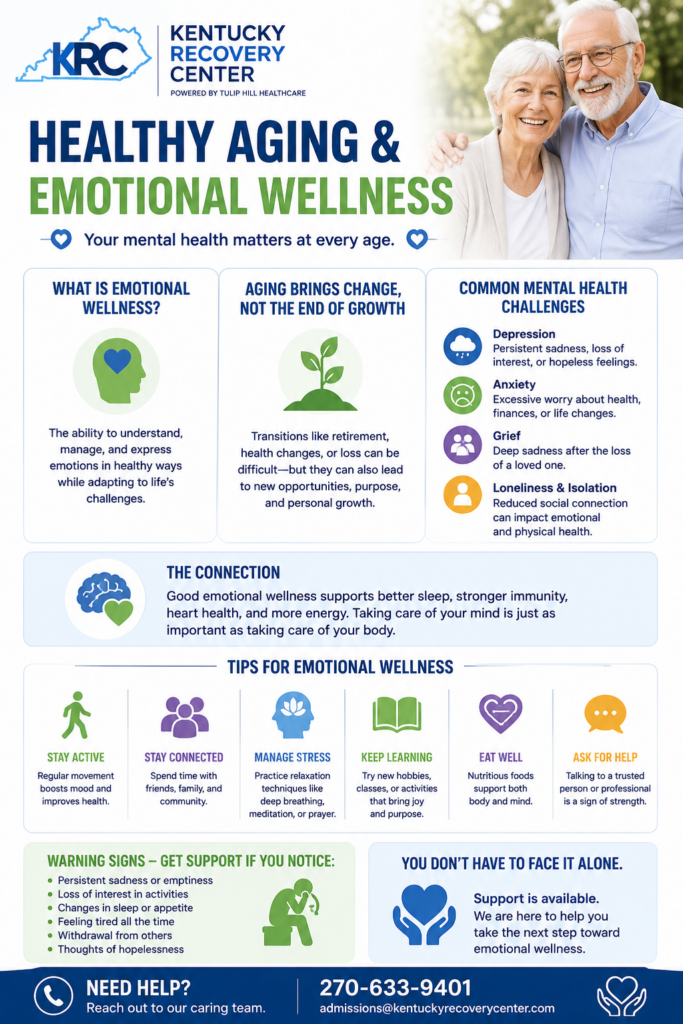
Growing older is often associated with wisdom, resilience, and new opportunities, but it also brings changes that can affect emotional well-being. Retirement, health concerns, the loss of loved ones, changing family roles, and shifts in daily routines can all influence mental health. While many older adults successfully adapt to these transitions, others may experience anxiety, depression, loneliness, grief, or increased stress that affects their quality of life.
Emotional wellness is just as important as physical health throughout every stage of life. Maintaining mental well-being supports stronger relationships, healthier decision-making, improved physical health, and a greater sense of purpose. It also plays an important role in reducing the risk of substance misuse, which can sometimes develop later in life as individuals attempt to cope with chronic pain, isolation, or emotional distress.
At Kentucky Recovery Center, we recognize that mental health and emotional wellness deserve attention at every age. Whether someone is entering retirement, caring for a spouse, adjusting to an empty nest, or facing unexpected life changes, emotional health remains an essential part of overall well-being.
What Is Emotional Wellness?
Emotional wellness refers to the ability to understand, manage, and express emotions in healthy ways while adapting to life’s challenges. It does not mean feeling happy all the time or avoiding difficult emotions. Instead, emotional wellness involves recognizing feelings, coping effectively with stress, maintaining meaningful relationships, and finding purpose even during periods of change.
Healthy emotional wellness allows individuals to recover from setbacks, communicate effectively, seek support when needed, and continue participating in activities that bring meaning and enjoyment. It also encourages realistic thinking, self-compassion, and flexibility when facing circumstances beyond one’s control.
As people age, emotional wellness often becomes increasingly connected to overall health. Physical illnesses, chronic pain, medication changes, and reduced mobility can influence mood, while emotional health may affect sleep quality, immune function, cardiovascular health, and recovery from medical conditions.
Aging Brings Change, Not the End of Growth
One of the biggest misconceptions about aging is that emotional growth slows later in life. In reality, many older adults report greater resilience, stronger emotional regulation, and a deeper appreciation for relationships than they experienced during earlier decades.
At the same time, growing older introduces transitions that require adjustment. Retirement may bring freedom but also the loss of professional identity and daily structure. Children becoming independent can create opportunities for new interests while also changing long-established family roles. Physical limitations may require adapting favorite activities, and the loss of friends or loved ones can create periods of profound grief.
These experiences are normal parts of aging, but they can also contribute to emotional distress when multiple changes occur within a short period. Recognizing these transitions as opportunities for adaptation rather than signs of decline helps promote healthier emotional adjustment.
Common Mental Health Challenges Among Older Adults
Although many older adults maintain excellent emotional health, certain mental health conditions become more common or may go unrecognized because symptoms are mistakenly viewed as a normal part of aging.
Depression is one of the most common concerns. Persistent sadness, loss of interest in enjoyable activities, changes in appetite, fatigue, difficulty sleeping, feelings of hopelessness, and social withdrawal should never be dismissed simply because someone is getting older. Depression is a medical condition that responds to appropriate treatment.
Anxiety is also common among older adults. Health concerns, financial uncertainty, caregiving responsibilities, and major life transitions can contribute to excessive worry. Some individuals experience generalized anxiety, while others may develop panic attacks or increased fear related to specific situations.
Grief represents another significant emotional challenge. Losing a spouse, sibling, lifelong friend, or other loved one is an inevitable part of many people’s lives. While grief is a natural response to loss, prolonged or overwhelming grief may benefit from professional support, particularly if it begins interfering with daily functioning.
Loneliness and social isolation have also emerged as important public health concerns. Living alone, reduced mobility, transportation challenges, or retirement may gradually reduce social interaction. Over time, isolation has been associated with increased risks of depression, anxiety, cognitive decline, and poorer physical health.
The Connection Between Emotional Wellness and Physical Health
Mental and physical health are deeply interconnected. Emotional well-being influences many aspects of physical functioning, while physical health conditions can significantly affect mood and emotional resilience.
Chronic stress increases the production of stress hormones that may contribute to elevated blood pressure, disrupted sleep, weakened immune function, and increased inflammation. Depression and anxiety can reduce motivation to exercise, prepare nutritious meals, attend medical appointments, or take medications consistently.
Conversely, maintaining emotional wellness often encourages healthier lifestyle habits. Individuals who feel emotionally supported are more likely to remain physically active, engage socially, manage chronic medical conditions effectively, and participate in preventive healthcare.
This relationship highlights why healthcare providers increasingly view mental health as an essential component of healthy aging rather than a separate concern.
Retirement and Finding a New Sense of Purpose
Retirement is often portrayed as a permanent vacation, but the transition can be more complex than many people expect. After decades of structured schedules, professional responsibilities, and workplace relationships, some individuals struggle to adjust to increased free time.
Purpose plays a significant role in emotional wellness. Work often provides daily routines, opportunities for social interaction, problem-solving, and a sense of accomplishment. Without intentionally replacing those experiences, retirement may lead to boredom, loneliness, or feelings of losing one’s identity.
Many retirees find renewed purpose through volunteering, mentoring, part-time employment, traveling, caring for grandchildren, joining community organizations, pursuing creative hobbies, or returning to school. Continuing to set goals and contribute to others supports both emotional and cognitive health.
Healthy aging is not about remaining busy every moment of the day. It is about engaging in activities that continue to provide meaning, connection, and fulfillment.
The Importance of Staying Socially Connected
Strong relationships remain one of the most powerful protective factors for emotional health throughout life. Regular interaction with family members, friends, neighbors, faith communities, volunteer organizations, or support groups helps reduce feelings of isolation while providing encouragement during challenging times.
Maintaining social connections sometimes requires greater intentional effort as people age. Retirement changes daily interactions with coworkers. Adult children may live farther away. Friends may relocate or experience health challenges of their own.
Technology has created new opportunities to remain connected through video calls, online support groups, and social media, but in-person interaction continues to provide unique emotional benefits whenever possible.
Even small moments of connection, such as attending a community event, joining a walking group, participating in a book club, or volunteering locally, can strengthen emotional wellness while reducing loneliness.
Healthy Habits That Support Emotional Wellness
Emotional wellness is influenced by the choices people make every day. While no lifestyle habit eliminates stress completely, consistent healthy routines help the brain and body manage life’s challenges more effectively.
Regular physical activity improves mood by increasing the release of endorphins while supporting cardiovascular health, mobility, and sleep. Nutritious meals provide the vitamins and minerals needed for healthy brain function, while adequate hydration supports energy and concentration.
Quality sleep allows the brain to process emotions, regulate stress, and restore physical health. Mindfulness practices, prayer, meditation, deep breathing exercises, and spending time outdoors may also reduce stress while promoting emotional balance.
Continuing to learn new skills, reading, solving puzzles, taking educational classes, or developing creative hobbies stimulates cognitive function while creating opportunities for personal growth.
Perhaps most importantly, asking for help when needed reflects strength rather than weakness. Emotional wellness improves when individuals recognize they do not have to navigate life’s challenges alone.
Substance Use Among Older Adults
Substance use disorders are sometimes overlooked in older adults because symptoms may resemble other health concerns or be attributed to aging itself. However, alcohol misuse and prescription medication dependence affect many older adults and deserve careful attention.
Some individuals begin drinking more frequently after retirement because of increased free time or loneliness. Others misuse prescription pain medications or sedatives while managing chronic pain, anxiety, or insomnia. Life transitions such as bereavement, declining health, or caregiving stress may also increase vulnerability.
Alcohol and medications often affect older adults differently than younger individuals because metabolism changes with age. Even smaller amounts of alcohol or certain medications may increase the risk of falls, memory problems, medication interactions, and other health complications.
Seeking professional help early can prevent these concerns from becoming more serious while supporting both physical and emotional recovery.
When to Seek Professional Support
Everyone experiences periods of sadness, worry, or stress. However, professional support may be beneficial when emotional symptoms persist for several weeks, interfere with relationships or daily responsibilities, reduce enjoyment of life, or contribute to increased alcohol or drug use.
Warning signs include persistent depression, overwhelming anxiety, social withdrawal, changes in sleep or appetite, loss of interest in previously enjoyable activities, feelings of hopelessness, or relying on substances to cope with emotional pain.
Mental health treatment is not reserved for crisis situations. Therapy, counseling, support groups, and comprehensive behavioral healthcare can help individuals develop practical coping strategies while improving emotional resilience and overall quality of life.
Early intervention often leads to better outcomes and prevents symptoms from becoming more severe over time.
Healthy Aging Includes Emotional Wellness
Growing older brings both opportunities and challenges, but emotional wellness remains possible throughout every stage of life. Aging does not diminish a person’s ability to experience joy, develop new relationships, learn new skills, contribute to their community, or continue growing emotionally.
Maintaining emotional wellness involves caring for the mind as intentionally as the body. Healthy relationships, meaningful activities, regular exercise, nutritious food, quality sleep, effective stress management, and professional support when needed all contribute to long-term well-being.
Rather than viewing aging as a period of decline, many individuals discover it becomes a season of renewed purpose, deeper relationships, greater resilience, and continued personal growth.
Kentucky Recovery Center Is Here to Help
At Kentucky Recovery Center, we understand that emotional wellness and mental health remain important throughout every stage of adulthood. Our team provides individualized care for adults experiencing substance use disorders and co-occurring mental health conditions, including anxiety, depression, trauma, and other behavioral health concerns.
Through evidence-based therapies, individualized treatment planning, family involvement, relapse prevention, and comprehensive aftercare support, we help individuals build healthier coping skills while addressing the underlying challenges affecting their emotional well-being.
If you or someone you love is struggling with emotional health, substance use, or co-occurring mental health concerns, you do not have to face those challenges alone. Recovery and emotional wellness are possible at any age, and seeking help today can be the first step toward a healthier, more fulfilling future.
Did you know that your insurance plan may cover medical detox?
Get Family Support Now
Supporting Families Through Recovery
We understand addiction affects the whole family. Our comprehensive family program helps rebuild trust and restore relationships.
Weekly Family Therapy Sessions
Educational Workshops
Support Groups
Communication Skills Training
Get Family Support Now