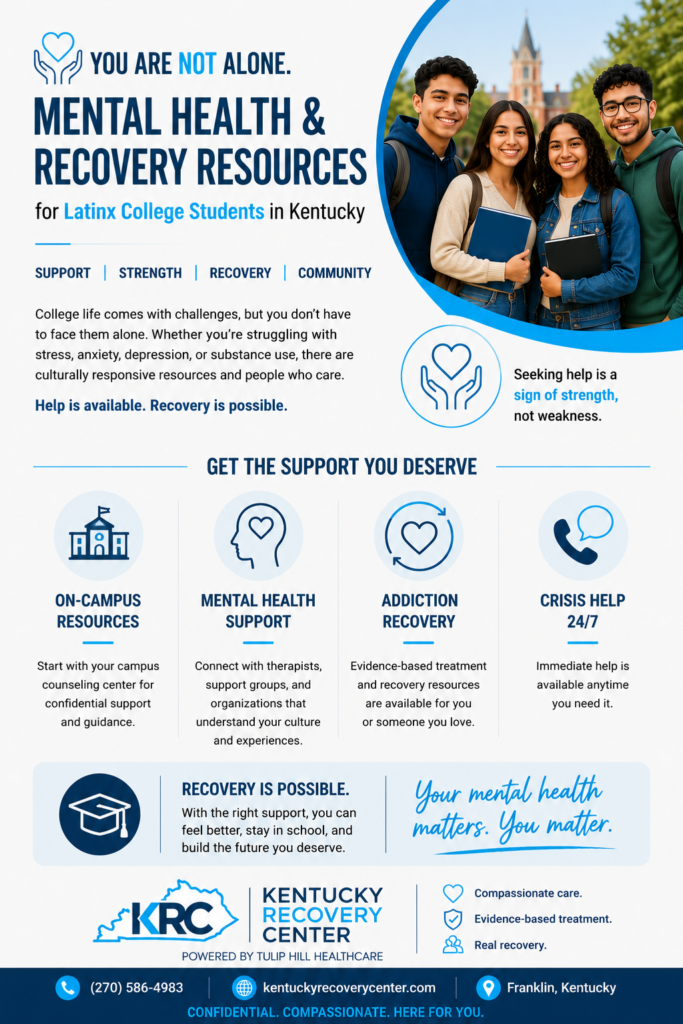
Finding Culturally Responsive Support for Mental Health, Recovery, and Academic Success
For many college students, higher education represents opportunity, independence, and the promise of a brighter future. Alongside those opportunities come new responsibilities and challenges. Academic expectations, financial pressures, changing relationships, and living away from home for the first time can all affect emotional well-being.
For many Hispanic and Latino students, these common college experiences may intersect with additional cultural or family responsibilities. Some students are the first in their family to attend college, while others balance school with work, help support loved ones financially, or navigate two cultures at once. These experiences do not define every student’s journey, but they can influence how comfortable someone feels discussing mental health or asking for help.
Mental health conditions and substance use disorders are highly treatable, and seeking support is a sign of strength rather than weakness.
At Kentucky Recovery Center, we believe everyone deserves compassionate, culturally responsive care that respects their background, values, and goals. Whether someone is living with anxiety, depression, trauma, alcohol misuse, or drug addiction, our team provides evidence-based treatment designed to support long-term recovery and whole-person wellness.
This guide brings together trusted national organizations, Kentucky-specific resources, crisis services, and culturally responsive behavioral health organizations to help Latinx college students, families, educators, and friends find support when it is needed most.
How Kentucky Recovery Center Can Help
Kentucky Recovery Center provides evidence-based treatment for adults experiencing substance use disorders and co-occurring mental health conditions. Our programs include Partial Hospitalization (PHP), Intensive Outpatient (IOP), individual therapy, family therapy, relapse prevention, and personalized treatment planning. Whether you’re a college student or supporting someone who is, our admissions team can help you explore confidential treatment options and verify insurance coverage.
Why Mental Health Matters for Latinx College Students
College is often described as one of the most exciting periods of life, but it can also be one of the most stressful. Students are expected to balance demanding coursework, employment, internships, extracurricular activities, and personal relationships while preparing for their future careers. For many, this is also the first time they are managing major responsibilities independently.
Many Hispanic and Latino students experience these same transitions while also carrying additional family or cultural responsibilities. First-generation college students may feel pressure to succeed not only for themselves but also for their families. Others may serve as translators for relatives, contribute financially to their household, or navigate differences between expectations at home and life on campus.
While these experiences can foster resilience and determination, they may also contribute to stress, anxiety, or feelings of isolation. Cultural stigma surrounding mental health can make it even more difficult to ask for help, causing some students to wait until symptoms become overwhelming before seeking treatment.
Recognizing these challenges is not about defining an entire community by its struggles. Instead, it highlights the importance of making compassionate, culturally informed mental healthcare accessible to everyone who needs it.
Understanding Mental Health and Substance Use in Hispanic Communities
Research consistently shows that Hispanic and Latino communities experience many of the same mental health conditions as the general U.S. population. However, they are often less likely to receive treatment because of barriers that can include financial limitations, lack of insurance, transportation difficulties, language differences, or concerns about finding providers who understand their cultural background.
For some individuals, emotional distress may gradually lead to unhealthy coping strategies. Alcohol or drugs may seem to offer temporary relief from anxiety, depression, trauma, or chronic stress. While substances can briefly numb emotional pain, they often make mental health symptoms worse over time and increase the risk of developing a substance use disorder.
Recovery is possible. Early intervention, evidence-based treatment, and supportive relationships consistently improve long-term outcomes for both mental health conditions and addiction.
Mental Health and College Students by the Numbers
Behavioral health concerns among college students have increased significantly over the past decade. National surveys continue to report rising levels of anxiety, depression, loneliness, and emotional distress among young adults. According to the American College Health Association, anxiety remains one of the most commonly reported concerns affecting academic performance, while depression continues to be a leading reason students seek campus counseling services.
Young adults between the ages of 18 and 25 also experience some of the highest rates of substance use disorders in the United States. At the same time, research has shown that Hispanic adults are less likely to receive mental health treatment than many other populations despite experiencing similar rates of many behavioral health conditions. These disparities underscore the importance of increasing access to culturally responsive care and reducing stigma surrounding mental health treatment.
Why Some College Students Turn to Alcohol or Drugs
Substance use rarely begins because someone intends to develop an addiction. More often, students report using alcohol or drugs in an attempt to manage stress, reduce anxiety, fit in socially, improve confidence, or cope with depression, loneliness, or traumatic experiences. What may begin as occasional use during college can gradually evolve into dependence as the brain adapts to repeated substance use.
Alcohol remains the most commonly misused substance on college campuses and is associated with injuries, impaired judgment, academic problems, and alcohol use disorder. Marijuana is also widely used and, while legal in some states, may worsen anxiety, impair concentration, or contribute to dependence for some individuals. Misuse of prescription medications—including stimulants used for studying, opioid pain medications, and anti-anxiety medications—can also lead to serious health consequences and increase the risk of addiction. Throughout Kentucky, opioids such as fentanyl continue to contribute to overdose deaths, while methamphetamine and cocaine remain significant public health concerns.
Understanding why substance use begins is an important step toward recognizing when occasional use has become something more serious.
Recognizing When Stress Has Become Something More
Stress is a normal part of college life, but persistent emotional distress should never be ignored. When feelings of anxiety, sadness, or hopelessness begin interfering with everyday responsibilities, professional support can make a meaningful difference.
Warning signs often develop gradually. A student who once enjoyed spending time with friends may begin withdrawing socially. Someone who maintained strong grades may suddenly struggle to attend class or complete assignments. Others may notice significant changes in sleep, appetite, mood, or motivation. Increasing reliance on alcohol or drugs to relax, sleep, or escape emotional pain is another common indicator that additional support may be needed.
If these challenges continue for several weeks or begin affecting academic performance, relationships, or overall health, reaching out to a counselor or behavioral health professional is an important next step. Early intervention often leads to better outcomes and can prevent problems from becoming more severe.
Why Culturally Responsive Care Matters
Effective behavioral healthcare is about more than treating symptoms. It also involves understanding the experiences, values, and relationships that shape each person’s life.
Culturally responsive care recognizes that family, community, language, faith, and personal identity may all influence how someone understands mental health and recovery. Rather than making assumptions, clinicians work collaboratively with each individual to develop treatment plans that respect their background while providing evidence-based care.
At Kentucky Recovery Center, we understand that no two recovery journeys are alike. Our clinical team provides individualized treatment for substance use disorders and co-occurring mental health conditions in an environment built on compassion, dignity, and respect. By combining evidence-based therapies with person-centered care, we help individuals build the skills and confidence needed to achieve lasting recovery.
When Should Someone Consider Professional Treatment?
Many students wonder whether their struggles are “serious enough” to seek help. The truth is that treatment is appropriate whenever emotional distress or substance use begins interfering with daily life, relationships, or academic success.
If alcohol or drug use is becoming more frequent, difficult to control, or causing problems at school, work, or home, a professional assessment can help determine the most appropriate level of care. The same is true for anxiety, depression, trauma, or other mental health concerns that persist despite attempts to manage them independently.
Kentucky Recovery Center offers comprehensive assessments for individuals experiencing substance use disorders, co-occurring mental health conditions, or both. Our team works closely with each person to create an individualized treatment plan that supports long-term healing while helping them continue moving toward their educational, professional, and personal goals.
National, Kentucky, and Campus Resources That Can Help
Finding help can feel overwhelming, especially during a stressful semester. Many students aren’t sure whether they should contact a campus counselor, a therapist, a treatment center, or a crisis line. The good news is that there isn’t one “right” place to start. Reaching out to any trusted resource is often the first step toward getting the support you need.
The organizations below offer a combination of crisis intervention, mental health counseling, addiction recovery services, educational resources, peer support, and culturally responsive care. While some are national organizations, many serve students and families throughout Kentucky.
Campus Counseling Centers in Kentucky
Most colleges and universities provide confidential counseling services for enrolled students. These centers often offer short-term therapy, crisis intervention, referrals to community providers, support groups, and wellness programming.
1. University of Kentucky Counseling Center
The University of Kentucky Counseling Center provides individual counseling, group therapy, crisis support, workshops, and consultation services for students navigating academic stress, anxiety, depression, relationship concerns, and other mental health challenges.
Website: https://counselingcenter.uky.edu
2. University of Louisville Counseling Center
The University of Louisville offers confidential counseling, psychiatric referrals, crisis services, and wellness programs designed to support students throughout their college experience.
Website: https://louisville.edu/counseling
3. Western Kentucky University Counseling Center
WKU’s Counseling Center provides mental health counseling, outreach programs, crisis response, and consultation services to help students maintain emotional well-being while pursuing their education.
Website: https://www.wku.edu/heretohelp
4. Eastern Kentucky University Counseling Center
Students attending EKU have access to licensed counselors who provide confidential therapy, crisis intervention, and mental health education.
Website: https://counselingcenter.eku.edu
5. Northern Kentucky University Counseling Services
NKU Counseling Services assists students experiencing anxiety, depression, trauma, stress, grief, and other personal concerns through confidential counseling and referrals.
Website: https://inside.nku.edu/counseling
6. Murray State University Counseling Center
Murray State offers counseling, crisis intervention, consultation, and wellness education to support students’ academic and personal success.
Website: https://www.murraystate.edu/headermenu/StudentAffairs/CounselingServices
7. Morehead State University Counseling Services
Students at Morehead State can access confidential counseling, mental health education, and referrals to specialized community resources when additional care is needed.
Website: https://www.moreheadstate.edu
8. Kentucky Community & Technical College System (KCTCS)
Many KCTCS campuses provide counseling referrals, student assistance resources, and behavioral health support through local partnerships.
Website: https://kctcs.edu
Addiction Recovery Resources
Recovery is different for everyone. Some students benefit from peer support meetings, while others may need structured outpatient treatment or specialized care for co-occurring mental health conditions. The following organizations provide evidence-based information and recovery support.
9. FindTreatment.gov
Maintained by the Substance Abuse and Mental Health Services Administration (SAMHSA), FindTreatment.gov helps individuals locate licensed addiction treatment providers across the United States.
Website: https://findtreatment.gov
10. SAMHSA National Helpline
Available 24 hours a day in both English and Spanish, the SAMHSA National Helpline connects individuals and families with treatment providers and community resources.
Phone: 1-800-662-HELP (4357)
11. Kentucky Recovery Center
For students and young adults struggling with alcohol, opioids, fentanyl, methamphetamine, cocaine, prescription medications, or co-occurring mental health conditions, Kentucky Recovery Center provides individualized, evidence-based treatment in a supportive environment.
Programs include Partial Hospitalization (PHP), Intensive Outpatient (IOP), individual therapy, family therapy, relapse prevention, and treatment for co-occurring mental health disorders. Our goal is to help individuals recover while building the skills needed to succeed in school, work, and everyday life.
Website: https://kentuckyrecoverycenter.com
12. SMART Recovery
SMART Recovery offers science-based mutual support meetings that focus on self-empowerment, healthy coping skills, and long-term recovery. Both in-person and online meetings are available.
Website: https://smartrecovery.org
13. Alcoholics Anonymous – Kentucky
Alcoholics Anonymous continues to be one of the largest peer-support organizations for individuals recovering from alcohol use disorder. Meetings are available throughout Kentucky.
Website: https://area23aa.org
14. Narcotics Anonymous – Kentucky
Kentucky NA provides peer support for individuals recovering from drug addiction through meetings held across the state.
Website: https://kentuckyna.org
15. Kentucky Harm Reduction Coalition
The Kentucky Harm Reduction Coalition works to reduce overdose deaths by providing education, naloxone distribution, community outreach, and harm reduction services.
Website: https://kyhrc.org
16. Faces & Voices of Recovery
This national organization advocates for recovery-friendly communities while providing education and support for individuals and families affected by addiction.
Website: https://facesandvoicesofrecovery.org
17. SAFE Project
SAFE Project develops educational resources that help prevent substance misuse while promoting recovery and reducing stigma in communities across the country.
Website: https://www.safeproject.us
18. Recovery.com
Recovery.com helps individuals compare addiction treatment programs, insurance coverage, levels of care, and recovery resources throughout the United States.
Website: https://recovery.com
Mental Health Resources
Mental health concerns deserve the same attention and care as physical health conditions. Whether someone is experiencing anxiety, depression, trauma, grief, or overwhelming stress, professional support can make a meaningful difference.
19. 988 Suicide & Crisis Lifeline
Anyone experiencing emotional distress, thoughts of suicide, or a mental health crisis can call or text 988 at any time. Bilingual crisis counselors are available to assist English- and Spanish-speaking callers.
Website: https://988lifeline.org
20. National Alliance on Mental Illness (NAMI)
NAMI provides education, support groups, advocacy, and resources for individuals living with mental health conditions and their families. The organization also offers information specifically focused on Hispanic and Latino communities.
Website: https://www.nami.org
21. Mental Health America
Mental Health America offers free mental health screenings, educational materials, and culturally responsive resources designed to encourage early intervention.
Website: https://mhanational.org
22. Mental Health America of Kentucky
The Kentucky chapter of Mental Health America connects residents with local education, advocacy, and behavioral health resources throughout the state.
Website: https://mhawky.org
23. Latinx Therapy
Latinx Therapy connects individuals with therapists who understand the unique cultural experiences of Hispanic and Latino communities. The directory includes bilingual providers and clinicians with experience in culturally responsive care.
Website: https://latinxtherapy.com
24. Therapy for Latinx
Therapy for Latinx provides another searchable directory that helps individuals locate therapists who understand the cultural experiences of Latino communities.
Website: https://therapyforlatinx.com
25. Inclusive Therapists
Inclusive Therapists is a nationwide directory that helps individuals find providers committed to culturally affirming, trauma-informed, and inclusive mental healthcare.
Website: https://www.inclusivetherapists.com
26. The Steve Fund
The Steve Fund focuses on supporting the mental health and emotional well-being of young people of color through educational resources, partnerships, and campus initiatives.
Website: https://www.stevefund.org
27. Active Minds
Active Minds empowers students to reduce stigma surrounding mental health while promoting peer support and wellness initiatives on college campuses nationwide.
Website: https://www.activeminds.org
28. The Jed Foundation
The Jed Foundation partners with colleges and universities to strengthen student mental health programs while providing practical resources for students and families.
Website: https://jedfoundation.org
29. American Society of Hispanic Psychiatry
This organization promotes culturally informed psychiatric care while advancing education and research related to Hispanic mental health.
Website: https://www.ashp.us
30. Casa de la Familia
Casa de la Familia provides mental health services, education, and trauma-informed support for Latino individuals and families.
Website: https://www.casadelafamilia.org
31. Informed Immigrant
Informed Immigrant offers mental health, legal, and wellness resources designed to support immigrant communities and their families.
Website: https://www.informedimmigrant.com
32. Kentucky Cabinet for Health and Family Services
The Kentucky Cabinet for Health and Family Services connects residents with behavioral health programs, crisis services, prevention initiatives, and community treatment resources throughout the Commonwealth.
Website: https://www.chfs.ky.gov
Finding the Right Resource for You
Every person’s needs are different. Some students may benefit from meeting with a campus counselor, while others may find that ongoing therapy, peer support groups, or addiction treatment better meets their needs. There is no wrong place to begin. What matters most is taking that first step and reaching out.
If alcohol or drug use has begun affecting your health, relationships, or academic success, professional treatment may provide the support needed to regain stability. Likewise, if anxiety, depression, trauma, or another mental health concern is interfering with daily life, speaking with a qualified professional can help you understand your options and begin moving toward recovery.
At Kentucky Recovery Center, we understand that seeking help can feel overwhelming. Our team provides confidential assessments and individualized treatment for substance use disorders and co-occurring mental health conditions. Whether you’re a college student, parent, or loved one looking for guidance, we’re here to answer your questions, verify insurance benefits, and help you find the care that’s right for you.
Helping a Friend Who May Be Struggling
It can be difficult to know what to do when someone you care about seems different. A friend who was once outgoing may begin skipping class, avoiding social activities, or withdrawing from conversations. Others may notice increased alcohol or drug use, dramatic mood changes, declining grades, or behaviors that simply feel out of character.
Many college students worry that bringing up mental health or substance use will damage a friendship. In reality, approaching someone with compassion and without judgment often opens the door to an important conversation.
Instead of focusing on the behavior, focus on the person. Let them know you’ve noticed they don’t seem like themselves and that you’re concerned because you care about them. Avoid labels or accusations, and try to listen more than you speak. Sometimes the most valuable thing you can offer is your willingness to be present.
If your friend is open to accepting help, encourage them to connect with their campus counseling center, a trusted healthcare provider, or another behavioral health professional. If alcohol or drug use has become a significant concern, helping them explore treatment options may be an important next step.
If you believe someone is at immediate risk of harming themselves or others, call 911 or contact the 988 Suicide & Crisis Lifeline immediately.
How Families Can Support Latinx College Students
Family plays an important role in many Hispanic and Latino cultures. Parents, grandparents, siblings, and extended family members often provide encouragement, guidance, and emotional support throughout college. These close relationships can become one of a student’s greatest strengths during difficult times.
At the same time, conversations about mental health or addiction may feel uncomfortable for some families. Concerns about stigma, privacy, or appearing weak can sometimes prevent important discussions from happening.
One of the most meaningful ways families can help is by creating a space where emotional well-being can be discussed openly and without judgment. Asking thoughtful questions, listening carefully, and expressing concern with compassion rather than criticism can encourage students to seek help earlier.
Families should also remember that recovery is rarely about willpower alone. Mental health conditions and substance use disorders are medical conditions influenced by biological, psychological, environmental, and social factors. Professional treatment is not a sign that someone has failed—it is an investment in long-term health and well-being.
For students receiving treatment, family involvement may also become an important part of recovery. Many evidence-based treatment programs include family education and therapy to improve communication, strengthen relationships, and help loved ones better understand the recovery process.
At Kentucky Recovery Center, we recognize the important role families often play in healing and encourage healthy family participation whenever appropriate and desired by the individual receiving care.
Recovery and College Success Can Go Hand in Hand
One of the biggest misconceptions surrounding addiction treatment is that students must put their lives on hold indefinitely. While some individuals benefit from taking time away from school to focus on recovery, many others continue pursuing their education while participating in outpatient treatment.
Programs such as Partial Hospitalization (PHP) and Intensive Outpatient Programs (IOP) can provide structured behavioral healthcare while allowing many individuals to continue working toward their academic or career goals. Treatment plans are individualized to address each person’s unique clinical needs, schedule, and recovery objectives.
Recovery is not about giving up your future. It is about building a healthier foundation that allows your future to become possible.
Many students who receive treatment report improvements in concentration, emotional regulation, relationships, physical health, and academic performance after addressing the underlying issues affecting their mental health and substance use.
Why Choose Kentucky Recovery Center?
Choosing a treatment provider is an important decision. Individuals deserve care that is compassionate, evidence-based, and tailored to their unique circumstances.
At Kentucky Recovery Center, we provide comprehensive treatment for substance use disorders and co-occurring mental health conditions in a supportive, respectful environment. Our clinical team understands that no two recovery journeys are alike, which is why every treatment plan is personalized to meet each individual’s needs and goals.
Our programs are designed to help individuals develop healthier coping skills, address the underlying causes of addiction, strengthen relationships, and build confidence for long-term recovery. Whether someone is seeking help for alcohol, opioids, fentanyl, methamphetamine, cocaine, prescription medications, or a co-occurring mental health condition such as anxiety, depression, or trauma, our team is committed to providing high-quality, evidence-based care.
Recovery begins with one conversation, and no one should have to take that first step alone.
Frequently Asked Questions
What mental health resources are available for Hispanic and Latino college students?
Many colleges offer confidential counseling services, and national organizations such as NAMI, Mental Health America, Active Minds, The Steve Fund, Latinx Therapy, and Therapy for Latinx provide culturally responsive education and support. Students in Kentucky can also access community behavioral health providers and specialized treatment programs like Kentucky Recovery Center.
How do I know if my drinking or drug use has become a problem?
Substance use may require professional attention if it begins affecting your grades, relationships, physical health, finances, or daily responsibilities. Feeling unable to reduce or stop using despite negative consequences is another important sign that an assessment may be beneficial.
Can I receive treatment while attending college?
In many cases, yes. Outpatient programs such as Intensive Outpatient Programs (IOP) may allow students to continue attending classes while receiving structured treatment. The appropriate level of care depends on each person’s individual needs and should be determined through a professional assessment.
What is a co-occurring mental health disorder?
A co-occurring disorder refers to the presence of both a substance use disorder and a mental health condition, such as anxiety, depression, bipolar disorder, PTSD, or obsessive-compulsive disorder. Treating both conditions together generally leads to better long-term outcomes than treating either condition alone.
Does insurance cover addiction treatment?
Many commercial insurance plans provide benefits for behavioral healthcare, including addiction treatment and mental health services. Coverage varies by plan, so verifying benefits before beginning treatment can help you better understand your options.
Is treatment confidential?
Yes. Healthcare providers are required to protect patient privacy under federal and state laws, including HIPAA. Substance use treatment programs may also be subject to additional federal confidentiality protections.
How can parents support a college student who may be struggling?
Start by having an open, nonjudgmental conversation. Express concern from a place of compassion, listen carefully, and encourage your student to connect with campus counseling services or a qualified behavioral health professional. Avoid minimizing their experiences or assuming they should simply “push through” emotional distress.
When should someone seek immediate help?
If someone is experiencing suicidal thoughts, has taken an overdose, is experiencing a medical emergency related to substance use, or appears to be in immediate danger, call 911 or contact the 988 Suicide & Crisis Lifeline immediately.
Take the First Step Toward Healing
College is a time of tremendous growth, but it can also be a time when mental health challenges or substance use begin to emerge. Asking for help does not mean you’ve failed—it means you’ve recognized that your health matters.
Whether you’re a student looking for support, a parent concerned about your child’s well-being, or a friend searching for resources for someone you care about, know that help is available.
At Kentucky Recovery Center, we’re committed to providing compassionate, evidence-based care that meets people where they are. Our team offers confidential assessments, personalized treatment planning, and support for individuals experiencing substance use disorders and co-occurring mental health conditions. We also work closely with families whenever appropriate to help build a strong foundation for lasting recovery.
Recovery is possible, and it often begins with a simple conversation. If you have questions about treatment, insurance coverage, or the admissions process, we’re here to help you take that first step with confidence and hope.
Did you know that your insurance plan may cover medical detox?
Get Family Support Now
Supporting Families Through Recovery
We understand addiction affects the whole family. Our comprehensive family program helps rebuild trust and restore relationships.
Weekly Family Therapy Sessions
Educational Workshops
Support Groups
Communication Skills Training
Get Family Support Now