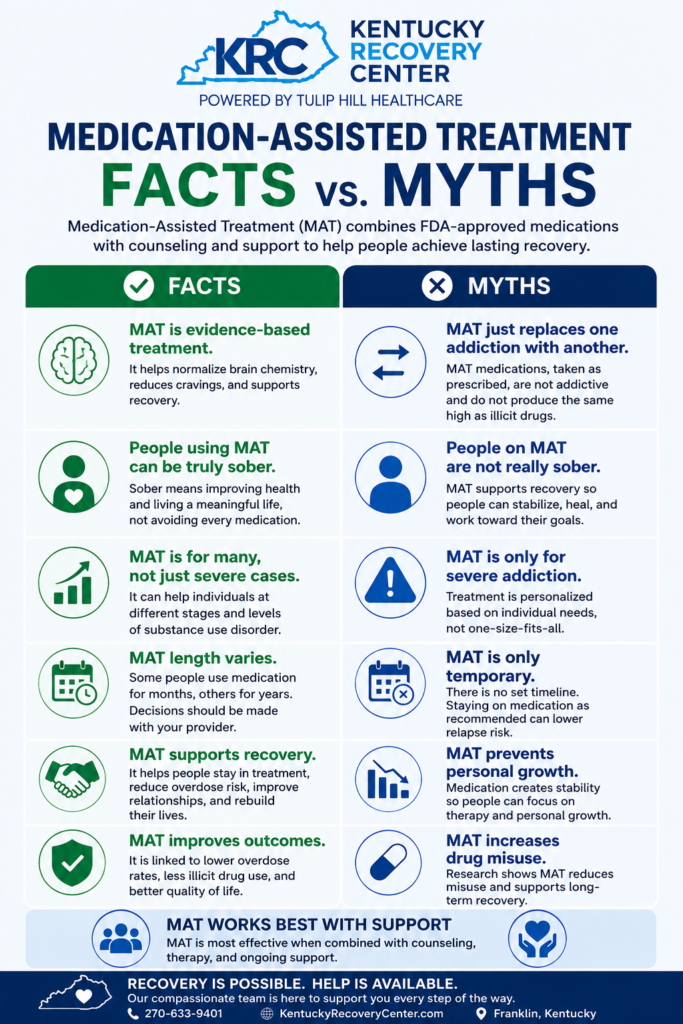
Medication-Assisted Treatment: Facts vs. Myths

For many people seeking recovery from opioid or alcohol addiction, one of the biggest barriers isn’t finding treatment. It’s overcoming the misconceptions surrounding Medication-Assisted Treatment (MAT).

Despite decades of research demonstrating its effectiveness, myths about MAT continue to circulate. Some people believe taking medication simply replaces one addiction with another. Others worry that using medication means they are “not really sober” or that recovery should rely solely on willpower.

These misunderstandings can discourage individuals from seeking a treatment option that has helped countless people stabilize their lives, reduce the risk of overdose, and build long-term recovery.

The reality is much different.

Medication-Assisted Treatment combines FDA-approved medications with counseling, behavioral therapies, and ongoing clinical support. It is not a shortcut or an easy way out. Instead, it is a carefully monitored, evidence-based approach that addresses both the physical and psychological aspects of substance use disorders.

Understanding the facts behind Medication-Assisted Treatment can help individuals and families make informed decisions based on science rather than stigma.

What Is Medication-Assisted Treatment?

Medication-Assisted Treatment, commonly called MAT, is a comprehensive treatment approach used primarily for opioid use disorder and alcohol use disorder.

Rather than relying on medication alone, MAT combines several components that work together to support recovery, including:

  • FDA-approved medications
  • Individual counseling
  • Group therapy
  • Behavioral therapies such as Cognitive Behavioral Therapy (CBT)
  • Family support when appropriate
  • Relapse prevention planning
  • Ongoing medical monitoring

The medications used in MAT are prescribed and supervised by qualified healthcare professionals. They help normalize brain chemistry affected by addiction while reducing cravings and withdrawal symptoms that often lead to relapse.

When combined with therapy, individuals can focus less on managing constant physical discomfort and more on rebuilding relationships, improving mental health, and developing healthy coping skills.

Why Addiction Changes the Brain

To understand why MAT works, it helps to understand what addiction does to the brain.

Repeated substance use changes how the brain’s reward system functions. Drugs such as opioids flood the brain with dopamine, reinforcing substance use over time. Eventually, the brain adapts, making it increasingly difficult to experience pleasure without the substance.

At the same time, the parts of the brain responsible for decision-making, impulse control, stress management, and emotional regulation become disrupted.

This is why addiction is recognized as a chronic medical condition rather than simply a lack of willpower.

Even after detoxification, these brain changes often persist for months or years. During this period, cravings can remain intense, increasing the risk of relapse.

Medication-Assisted Treatment helps stabilize many of these biological changes while individuals participate in therapy and begin rebuilding healthier routines.

Common Medications Used in MAT

Several FDA-approved medications are commonly used depending on the substance involved and each individual’s clinical needs.

Buprenorphine

Buprenorphine is commonly prescribed for opioid use disorder.

It works as a partial opioid agonist, meaning it activates opioid receptors enough to reduce withdrawal symptoms and cravings while producing significantly less euphoria than full opioids.

Because of its unique properties, buprenorphine also has a ceiling effect that lowers the risk of respiratory depression compared to full opioid agonists when used as prescribed.

Methadone

Methadone has been used safely for decades in opioid treatment programs.

As a long-acting opioid agonist, it prevents withdrawal symptoms, reduces cravings, and helps individuals stabilize without experiencing the repeated highs and lows associated with opioid misuse.

Methadone treatment is carefully monitored through certified opioid treatment programs.

Naltrexone

Naltrexone works differently than methadone or buprenorphine.

Rather than activating opioid receptors, it blocks them completely.

If someone uses opioids while taking naltrexone, they do not experience the typical euphoric effects.

Naltrexone is also approved for alcohol use disorder because it can reduce alcohol cravings and decrease the rewarding effects of drinking.

It is available as both a daily oral medication and a monthly extended-release injection.

Medications for Alcohol Use Disorder

Several medications may help individuals recovering from alcohol addiction.

These may include:

  • Naltrexone
  • Acamprosate
  • Disulfiram

Each works differently, and treatment decisions depend on a person’s medical history, drinking patterns, and recovery goals.

Myth #1: MAT Just Replaces One Addiction With Another

This is perhaps the most common misconception.

The truth is that dependence and addiction are not the same thing.

Physical dependence simply means the body adapts to a medication. Many medications—including antidepressants, blood pressure medications, and insulin therapies—require consistent use or careful tapering.

Addiction involves compulsive drug seeking despite harmful consequences, impaired control, and continued use despite damage to health, relationships, or responsibilities.

When taken as prescribed under medical supervision, MAT medications do not produce the uncontrolled behaviors associated with addiction.

Instead, they allow individuals to regain stability, return to work, care for their families, and actively participate in therapy.

Myth #2: People Using MAT Are Not Really Sober

Recovery looks different for every person.

For individuals taking medication exactly as prescribed by their treatment team, MAT supports recovery rather than preventing it.

Major medical organizations, including the American Society of Addiction Medicine (ASAM), the Substance Abuse and Mental Health Services Administration (SAMHSA), and the Centers for Disease Control and Prevention (CDC), recognize MAT as an evidence-based treatment for opioid use disorder.

Being in recovery is not defined by avoiding every medication.

It is defined by improving health, reducing harmful substance use, maintaining stability, and building a meaningful life.

Myth #3: MAT Is Only for Severe Addiction

Medication-Assisted Treatment can benefit individuals with varying levels of opioid or alcohol use disorder.

Some people enter MAT after years of addiction and multiple relapses.

Others begin medication after recognizing that withdrawal symptoms or cravings make early recovery especially difficult.

Clinical evaluations help determine whether MAT is appropriate based on:

  • Substance use history
  • Medical conditions
  • Mental health needs
  • Risk of relapse
  • Previous treatment experiences
  • Personal recovery goals

Treatment plans are individualized rather than one-size-fits-all.

Myth #4: MAT Is Only Temporary

There is no universal timeline.

Some individuals take medication for several months.

Others remain on medication for years.

Some continue indefinitely under physician supervision.

Research consistently shows that prematurely stopping medication can significantly increase relapse risk, particularly during the first year of recovery.

Rather than focusing on how quickly medication can be discontinued, treatment providers emphasize sustained recovery, improved functioning, and long-term stability.

Decisions about tapering should always be made collaboratively between patients and qualified medical providers.

Myth #5: MAT Prevents Personal Growth

Some critics assume medication does all the work.

In reality, medication creates the stability necessary for recovery work to begin.

Without overwhelming cravings or severe withdrawal symptoms, individuals are often better able to:

  • Attend therapy consistently
  • Address trauma
  • Develop coping skills
  • Repair family relationships
  • Return to employment
  • Continue education
  • Establish healthy routines
  • Participate in support groups

Medication is one part of a comprehensive recovery plan, not a replacement for personal effort.

Myth #6: MAT Increases Drug Misuse

The evidence shows the opposite.

When appropriately prescribed and monitored, MAT is associated with:

  • Lower overdose rates
  • Reduced illicit opioid use
  • Improved treatment retention
  • Lower risk of infectious disease transmission
  • Reduced criminal justice involvement
  • Improved employment outcomes
  • Better quality of life

By reducing cravings and stabilizing brain chemistry, MAT decreases the likelihood that individuals will return to uncontrolled substance use.

How Counseling Complements Medication

Medication alone cannot address every factor contributing to addiction.

Therapy remains an essential component of long-term recovery.

Counseling helps individuals identify triggers, process emotions, improve communication, develop healthier coping strategies, and strengthen relapse prevention skills.

Many treatment programs incorporate multiple therapeutic approaches, including Cognitive Behavioral Therapy (CBT), Dialectical Behavior Therapy (DBT), motivational interviewing, trauma-informed care, family therapy, and peer support.

Together, medication and therapy provide a more comprehensive approach than either intervention alone.

MAT and Co-Occurring Mental Health Disorders

Many individuals seeking treatment also experience depression, anxiety, post-traumatic stress disorder, bipolar disorder, or other mental health conditions.

Untreated mental health symptoms can increase the likelihood of relapse, while ongoing substance use can worsen psychiatric symptoms.

Integrated treatment addresses both conditions simultaneously through coordinated medical care, medication management when appropriate, psychotherapy, and recovery support.

Treating both disorders together often leads to better long-term outcomes than addressing either condition alone.

Is MAT Right for Everyone?

Medication-Assisted Treatment is highly effective for many people, but it is not the only path to recovery.

Treatment recommendations should always be based on a comprehensive clinical assessment.

Factors providers consider include:

  • The type of substance involved
  • Severity of addiction
  • Previous treatment history
  • Physical health
  • Mental health
  • Pregnancy status
  • Recovery goals
  • Personal preferences
  • Risk of relapse

Some individuals benefit greatly from MAT, while others may achieve lasting recovery through different evidence-based approaches.

The goal is to identify the treatment plan that best supports each person’s unique needs.

Reducing Stigma Around Medication-Assisted Treatment

Stigma remains one of the greatest obstacles to treatment.

People using MAT sometimes face criticism from friends, family members, employers, or even individuals within recovery communities who misunderstand how these medications work.

Language matters.

Instead of saying someone is “substituting one drug for another,” it is more accurate to recognize that they are receiving evidence-based medical treatment for a chronic health condition.

The more people understand the science behind addiction, the easier it becomes to replace judgment with compassion.

Reducing stigma encourages more individuals to seek help before addiction leads to devastating medical, emotional, legal, or financial consequences.

Recovery Is About Progress, Not Perfection

No single treatment approach works for everyone.

Recovery is highly individualized, and successful outcomes often involve a combination of medical care, counseling, peer support, healthy lifestyle changes, family involvement, and ongoing recovery planning.

Medication-Assisted Treatment is one of many evidence-based tools available to help people regain stability and reduce the risk of relapse. For many individuals, it provides the foundation needed to engage fully in therapy, rebuild relationships, return to work, and pursue long-term wellness.

If you or someone you love is struggling with opioid or alcohol addiction, speaking with qualified addiction professionals can help determine which treatment options are most appropriate. Recovery is possible, and seeking help is a courageous first step toward a healthier future.

Frequently Asked Questions About Medication-Assisted Treatment (MAT)

What is Medication-Assisted Treatment (MAT)?

Medication-Assisted Treatment (MAT) is an evidence-based approach to treating opioid and alcohol use disorders. It combines FDA-approved medications with counseling, behavioral therapies, and ongoing medical support to help individuals manage cravings, reduce withdrawal symptoms, and build a foundation for long-term recovery.

Does Medication-Assisted Treatment replace one addiction with another?

No. This is one of the most common myths about MAT. The medications used in MAT are carefully prescribed and monitored by healthcare professionals. They help stabilize brain chemistry and reduce cravings without producing the same effects associated with illicit drug use when taken as directed.

What medications are used in MAT?

The medications prescribed depend on the individual’s diagnosis and treatment needs. Common medications include buprenorphine, methadone, and naltrexone for opioid use disorder, along with naltrexone, acamprosate, and disulfiram for alcohol use disorder.

Is MAT only used for opioid addiction?

No. While MAT is widely used to treat opioid use disorder, it is also an effective treatment option for alcohol use disorder. Different medications are available depending on the substance being treated.

Is Medication-Assisted Treatment safe?

Yes. FDA-approved MAT medications have been extensively studied and are considered safe when prescribed and monitored by qualified healthcare providers. Regular medical supervision helps ensure the treatment remains appropriate and effective.

Can I still participate in counseling while receiving MAT?

Absolutely. Counseling is an essential part of Medication-Assisted Treatment. Therapy helps individuals address the emotional, behavioral, and psychological aspects of addiction while medication manages the physical symptoms and cravings.

How long does Medication-Assisted Treatment last?

There is no standard timeline. Some people benefit from MAT for several months, while others remain on medication for years. Treatment length depends on individual progress, recovery goals, medical history, and recommendations from the treatment team.

Is MAT effective?

Yes. Research has consistently shown that Medication-Assisted Treatment can reduce opioid use, lower the risk of overdose, improve treatment retention, decrease cravings, and support long-term recovery when combined with counseling and behavioral therapy.

Will I experience withdrawal if I stop MAT medications?

Stopping MAT medications too quickly may cause withdrawal symptoms or increase the risk of relapse. Any changes to medication should always be made under the supervision of a qualified healthcare provider who can develop a safe tapering plan if appropriate.

Is Medication-Assisted Treatment covered by insurance?

Many private insurance plans, Medicare, and Medicaid programs provide coverage for Medication-Assisted Treatment. Coverage varies by plan, so it’s important to verify your benefits with your insurance provider or the treatment center’s admissions team.

Can I work or go to school while receiving MAT?

Yes. One of the goals of MAT is to help individuals regain stability so they can return to work, continue their education, care for their families, and participate in everyday activities while focusing on recovery.

Does MAT cure addiction?

No. Addiction is considered a chronic medical condition, and there is no single cure. Medication-Assisted Treatment helps manage the condition by reducing cravings and withdrawal symptoms while allowing individuals to participate fully in therapy and long-term recovery planning.

Who is a good candidate for Medication-Assisted Treatment?

MAT may be recommended for individuals with opioid or alcohol use disorders after a comprehensive clinical assessment. A treatment provider will consider factors such as substance use history, medical conditions, mental health needs, previous treatment experiences, and personal recovery goals before developing an individualized treatment plan.

Can MAT help prevent relapse?

Yes. By reducing cravings and easing withdrawal symptoms, MAT can significantly lower the risk of relapse, particularly during the early stages of recovery when individuals are most vulnerable.

How can I find out if Medication-Assisted Treatment is right for me?

The best way to determine whether MAT is appropriate is to speak with an addiction treatment professional. A comprehensive evaluation can help identify the treatment approach that best supports your physical health, mental well-being, and long-term recovery goals.

Holistic Therapies in Recovery: How Whole-Person Healing Supports Lasting Sobriety

Holistic Therapies in Recovery: How Whole-Person Healing Supports Lasting Sobriety

Recovering from drug or alcohol addiction involves far more than simply stopping substance use. While achieving sobriety is an important milestone, lasting recovery often requires healing physically, emotionally, mentally, and socially. Addiction can affect nearly every aspect of a person’s life, influencing relationships, physical health, emotional well-being, self-esteem, career goals, and overall quality of life.

Because addiction impacts the whole person, effective treatment often addresses more than the symptoms of substance use alone.

This is where holistic therapies can play an important role.

Holistic therapies are complementary approaches that support traditional, evidence-based addiction treatment by promoting overall wellness. Rather than replacing medical care, individual therapy, medication-assisted treatment, or behavioral therapies, holistic approaches work alongside these treatments to help individuals develop healthier coping skills, reduce stress, improve emotional regulation, and reconnect with themselves throughout recovery.

At Kentucky Recovery Center, we recognize that every person’s recovery journey is unique. An individualized treatment plan may include a variety of therapeutic approaches designed to meet each person’s physical, emotional, and psychological needs while supporting long-term recovery.

What Are Holistic Therapies?

Holistic therapies focus on treating the whole person rather than concentrating solely on addiction symptoms. The word “holistic” refers to considering how physical health, emotional wellness, mental health, relationships, lifestyle, and daily habits all influence recovery.

Instead of viewing addiction as an isolated condition, holistic care recognizes that many factors contribute to substance use. Chronic stress, trauma, anxiety, depression, poor sleep, chronic pain, unhealthy nutrition, social isolation, and limited coping skills can all affect recovery outcomes.

Holistic therapies seek to improve overall well-being while helping individuals build healthier routines that support sobriety.

These therapies are considered complementary treatments because they are used alongside evidence-based approaches such as cognitive behavioral therapy (CBT), dialectical behavior therapy (DBT), motivational interviewing, medication-assisted treatment (MAT) when appropriate, family therapy, relapse prevention planning, and individual counseling.

Together, these approaches create a more comprehensive recovery experience.

Why Whole-Person Healing Matters

Addiction rarely affects only one area of life.

Long-term substance use often disrupts sleep, weakens physical health, contributes to nutritional deficiencies, increases anxiety or depression, strains relationships, reduces self-confidence, and makes it more difficult to manage everyday stress.

Simply stopping substance use does not automatically resolve these challenges.

Many individuals entering treatment are learning how to experience emotions without drugs or alcohol for the first time in years. They may also be rebuilding physical strength, improving communication, managing trauma, repairing family relationships, or developing healthier daily routines.

Holistic therapies help support these goals by encouraging healing across multiple areas of life simultaneously.

When physical, emotional, and mental health improve together, many individuals feel better prepared to maintain long-term recovery outside of treatment.

Holistic Care Does Not Replace Evidence-Based Treatment

One common misconception is that holistic therapies replace traditional addiction treatment.

They do not.

Addiction is a complex medical condition that often requires professional assessment, evidence-based behavioral therapies, medical supervision, psychiatric care, and ongoing recovery support.

Holistic therapies are designed to complement these treatments rather than substitute for them.

For example, practicing yoga may help reduce stress between counseling sessions. Meditation may improve emotional awareness while someone participates in cognitive behavioral therapy. Massage therapy may reduce physical tension while an individual continues working through trauma with a licensed therapist.

This balanced approach allows individuals to benefit from both scientific evidence and wellness practices that support overall quality of life.

Healthcare providers carefully determine which therapies best fit each individual’s treatment plan based on clinical needs, personal preferences, physical health, and recovery goals.

The Connection Between Stress and Addiction

Stress is one of the most common relapse triggers.

Work responsibilities, financial concerns, family conflict, health problems, grief, and unexpected life changes can all increase emotional distress. Without healthy coping skills, individuals may feel tempted to return to previous patterns of substance use.

One goal of holistic therapies is teaching healthier ways to manage stress before it becomes overwhelming.

Deep breathing exercises, mindfulness practices, physical activity, creative expression, relaxation techniques, and time spent outdoors all encourage the body’s natural relaxation response.

Over time, individuals often become better equipped to recognize early signs of stress and respond in healthier ways.

Learning to manage stress without relying on drugs or alcohol becomes an important part of long-term recovery.

The Mind-Body Connection in Recovery

Mental and physical health constantly influence one another.

Chronic anxiety may contribute to muscle tension, headaches, digestive problems, or difficulty sleeping. Likewise, poor physical health can increase emotional distress, fatigue, and irritability.

Holistic therapies encourage individuals to become more aware of this connection.

As physical wellness improves through healthy nutrition, exercise, better sleep, and relaxation, emotional health often improves as well. Similarly, reducing anxiety and improving emotional regulation frequently contributes to better physical health outcomes.

Recognizing how the mind and body work together helps individuals make healthier daily choices that support ongoing recovery.

Mindfulness and Meditation

Mindfulness has become one of the most widely studied complementary therapies used in addiction treatment.

Mindfulness involves intentionally paying attention to the present moment without judgment. Rather than dwelling on past mistakes or worrying about the future, individuals learn to observe their thoughts, emotions, and physical sensations with greater awareness.

This simple practice can have powerful benefits during recovery.

Many cravings are temporary. By practicing mindfulness, individuals often learn to notice cravings without immediately reacting to them. They become better able to tolerate uncomfortable emotions while making thoughtful decisions rather than acting impulsively.

Meditation complements mindfulness by encouraging focused attention and relaxation. Even practicing meditation for a few minutes each day may help reduce stress, improve concentration, support emotional regulation, and encourage better sleep.

Like any recovery skill, mindfulness becomes more effective with consistent practice rather than perfection.

Yoga in Addiction Recovery

Yoga combines gentle physical movement, controlled breathing, and mindfulness into a single practice that supports both physical and emotional healing. Although many people think of yoga primarily as exercise, it also encourages relaxation, body awareness, and stress reduction, making it a valuable complementary therapy during recovery.

Substance use disorders often leave individuals feeling disconnected from their bodies. Years of addiction may contribute to poor physical health, chronic muscle tension, disrupted sleep, or limited physical activity. Yoga provides an opportunity to rebuild that connection in a supportive, nonjudgmental way.

Regular yoga practice may improve flexibility, balance, strength, posture, and overall physical wellness while helping reduce anxiety and promote relaxation. Many people also find that focusing on breathing and movement quiets racing thoughts and improves emotional regulation.

Yoga can be adapted to meet different physical abilities and does not require previous experience. Whether practiced in a structured class or individually, it offers another healthy outlet for managing stress without relying on substances.

Exercise and Physical Wellness

Physical activity is one of the most effective ways to support recovery because it benefits both the body and the mind.

Exercise stimulates the release of endorphins, sometimes called the body’s natural “feel-good” chemicals. These neurotransmitters help improve mood, reduce stress, increase energy levels, and promote better sleep. Regular physical activity may also reduce symptoms of anxiety and depression, which frequently occur alongside substance use disorders.

The benefits extend beyond emotional wellness.

Exercise supports cardiovascular health, strengthens muscles and bones, improves immune function, and increases overall endurance. Many individuals entering recovery also appreciate seeing measurable improvements in their physical health as they continue making positive lifestyle changes.

The best form of exercise is the one someone enjoys enough to continue.

Walking, hiking, swimming, cycling, strength training, yoga, pickleball, dancing, tennis, kayaking, or recreational sports all provide opportunities to stay active while building healthier routines.

Physical activity also encourages structure, which is particularly valuable during early recovery when many individuals are rebuilding their daily schedules.

Nutrition and Recovery

Nutrition is another important component of whole-person healing.

Substance use can significantly affect appetite, digestion, metabolism, and the body’s ability to absorb essential vitamins and minerals. Some individuals enter treatment dehydrated or experiencing nutritional deficiencies that contribute to fatigue, poor concentration, mood changes, and weakened immune function.

Although healthy eating alone cannot treat addiction, proper nutrition supports the body’s natural healing process.

Balanced meals containing lean proteins, fruits, vegetables, whole grains, and healthy fats provide nutrients that support brain function, energy production, and overall wellness. Staying hydrated also plays an important role in physical recovery and cognitive functioning.

Learning to prepare nutritious meals may also become a valuable life skill after treatment. Cooking encourages routine, mindfulness, creativity, and self-care while helping individuals develop healthier daily habits that continue supporting recovery at home.

The Importance of Restful Sleep

Sleep disturbances are extremely common during addiction recovery.

Many individuals experience insomnia, vivid dreams, frequent waking, or irregular sleep patterns during the weeks following detoxification. These changes can feel frustrating, but they are often part of the brain’s natural healing process.

Poor sleep affects far more than energy levels.

Insufficient sleep may increase irritability, difficulty concentrating, anxiety, cravings, and emotional reactivity, all of which can make recovery more challenging.

Holistic approaches often emphasize healthy sleep habits alongside traditional treatment.

Maintaining a consistent bedtime, reducing caffeine later in the day, limiting screen time before bed, practicing relaxation techniques, exercising regularly, and creating a comfortable sleep environment all contribute to improved sleep quality over time.

When sleep problems persist, healthcare providers can evaluate whether additional medical or behavioral interventions may be appropriate.

Art Therapy and Creative Expression

Creative therapies allow individuals to express thoughts and emotions that may be difficult to communicate verbally.

Art therapy, for example, uses drawing, painting, sculpture, collage, or other artistic activities as therapeutic tools under the guidance of trained professionals. The focus is not on artistic talent but on self-expression, emotional exploration, and personal insight.

For many people recovering from addiction, creative activities provide a safe outlet for processing grief, trauma, anger, anxiety, or other complex emotions that may have contributed to substance use.

Creative expression also encourages mindfulness by directing attention toward the present moment. Completing an artistic project often creates a sense of accomplishment while helping individuals build confidence and discover healthy ways to manage difficult emotions.

Beyond formal art therapy, hobbies such as photography, woodworking, journaling, music, pottery, quilting, or creative writing may continue supporting emotional wellness long after treatment ends.

Music Therapy

Music has a unique ability to influence mood, memory, and emotional expression.

Music therapy uses carefully planned musical experiences to support therapeutic goals such as reducing stress, improving communication, processing emotions, and encouraging relaxation. Sessions may include listening to music, singing, songwriting, playing instruments, or discussing emotional responses to different pieces of music.

Many individuals find that music helps them express emotions that feel difficult to describe with words alone. Others discover that calming music reduces anxiety or improves sleep, while upbeat music increases motivation during exercise or other healthy activities.

Music therapy can also strengthen social connection through shared musical experiences and group participation, reinforcing one of the most important protective factors in long-term recovery: meaningful human connection.

Massage Therapy and Relaxation

Recovery often involves carrying significant physical and emotional tension.

Chronic stress may contribute to muscle tightness, headaches, fatigue, and difficulty relaxing. Massage therapy is one complementary approach that may help reduce physical discomfort while encouraging overall relaxation.

Some individuals report that massage helps decrease muscle tension, improve circulation, reduce stress, and promote better sleep. Feeling physically relaxed may also make it easier to engage fully in counseling sessions and other therapeutic activities.

Massage therapy should always be viewed as a complementary wellness practice rather than a treatment for addiction itself. When incorporated into a comprehensive treatment plan, however, it may contribute to greater comfort and improved overall well-being throughout the recovery process.

The broader goal of holistic care is not simply reducing symptoms. It is helping individuals feel healthier, stronger, and more capable of participating fully in every aspect of their recovery journey.

Equine Therapy

For many people, spending time with horses provides a unique opportunity for personal growth and emotional healing. Equine therapy, sometimes called equine-assisted therapy or equine-assisted psychotherapy, incorporates interactions with horses into a therapeutic setting under the guidance of trained professionals.

Unlike traditional horseback riding lessons, equine therapy often focuses on activities such as grooming, leading, observing, or caring for horses. These experiences encourage individuals to practice communication, patience, emotional awareness, problem-solving, and trust.

Horses naturally respond to human body language and emotions, providing immediate, nonjudgmental feedback. This can help individuals become more aware of how they communicate, manage stress, and interact with others.

Many people recovering from addiction have experienced damaged relationships, low self-confidence, or difficulty trusting themselves and others. Working with horses can help rebuild confidence while encouraging mindfulness, responsibility, and healthy emotional regulation.

Although equine therapy is not available at every treatment center, it has become an increasingly popular complementary therapy within many comprehensive addiction treatment programs.

Adventure and Nature-Based Therapy

Nature offers opportunities for healing that extend beyond physical activity alone.

Adventure therapy combines outdoor experiences with therapeutic goals, encouraging individuals to build confidence while learning healthy coping skills. Activities may include hiking, kayaking, camping, ropes courses, rock climbing, or team-building exercises designed to improve communication and resilience.

Participating in outdoor challenges often helps individuals recognize strengths they may not have realized they possessed. Completing a difficult hike, navigating an obstacle course, or learning a new outdoor skill reinforces the idea that recovery also involves overcoming obstacles one step at a time.

Spending time in natural settings may also reduce stress, improve mood, increase physical activity, and encourage mindfulness by shifting attention away from everyday distractions.

Nature-based therapies remind individuals that healing does not occur only inside a counseling office. Healthy experiences in the community can also become valuable tools for maintaining long-term recovery.

Breathing Exercises and Relaxation Techniques

Many people are surprised by how much control breathing has over the body’s response to stress.

During periods of anxiety or emotional distress, breathing often becomes rapid and shallow, signaling the body’s stress response. Practicing slow, intentional breathing can help activate the parasympathetic nervous system, sometimes referred to as the body’s “rest and digest” response.

Simple breathing exercises can be practiced almost anywhere.

Deep diaphragmatic breathing, box breathing, progressive muscle relaxation, guided imagery, and other relaxation techniques may help reduce feelings of anxiety, lower heart rate, improve concentration, and create a greater sense of calm during stressful situations.

These skills become especially valuable after treatment when individuals begin facing everyday challenges without relying on substances.

Like other recovery tools, relaxation techniques become more effective with regular practice.

Spiritual Wellness in Recovery

For some individuals, recovery includes exploring questions of meaning, purpose, values, or spirituality.

Spiritual wellness does not necessarily refer to religion, nor does it require belonging to a particular faith tradition. Instead, it involves developing a deeper sense of purpose, hope, gratitude, forgiveness, or connection to something larger than oneself.

Some people strengthen their spiritual wellness through religious participation, while others find meaning through meditation, time in nature, volunteer work, creative expression, or personal reflection.

Developing a stronger sense of purpose often supports recovery by helping individuals focus on long-term goals rather than immediate impulses. It can also encourage resilience during difficult moments by providing motivation to continue moving forward despite setbacks.

Treatment providers recognize that spirituality is deeply personal. Individuals should always feel respected in choosing whether and how spirituality becomes part of their recovery journey.

Holistic Therapies Support Co-Occurring Mental Health Conditions

Many people entering addiction treatment are also living with anxiety, depression, trauma-related disorders, or other mental health conditions.

These co-occurring disorders often influence one another. Emotional distress may increase substance use, while prolonged substance use can worsen mental health symptoms. Successfully addressing both conditions is often essential for long-term recovery.

Holistic therapies can complement traditional mental health treatment by helping individuals manage stress, improve emotional regulation, and develop healthier coping skills.

For example, mindfulness practices may help someone recognize anxious thoughts before they become overwhelming. Yoga may reduce physical tension associated with chronic stress. Exercise can support mood while improving sleep, and creative therapies may provide healthy outlets for processing difficult emotions.

These approaches work alongside evidence-based treatments such as cognitive behavioral therapy, dialectical behavior therapy, medication management, trauma-informed counseling, and psychiatric care rather than replacing them.

An integrated treatment approach recognizes that improving emotional wellness often strengthens addiction recovery as well.

Holistic Recovery Continues After Treatment

One of the greatest benefits of holistic therapies is that many can continue long after residential treatment has ended.

Unlike some aspects of clinical care that occur primarily within a treatment facility, practices such as walking, meditation, yoga, journaling, healthy cooking, gardening, exercise, mindfulness, creative hobbies, and spending time outdoors can easily become part of everyday life.

These healthy routines provide ongoing structure while helping individuals manage stress, improve emotional well-being, and reduce relapse risk.

Many people discover that holistic practices become part of their long-term recovery plan alongside outpatient counseling, recovery meetings, medication-assisted treatment when appropriate, family support, and regular medical care.

Rather than viewing recovery as something that ends after treatment, holistic wellness encourages individuals to continue investing in their physical, emotional, and mental health throughout life.

Over time, these daily habits become part of a healthy lifestyle that supports lasting sobriety and overall well-being.

Choosing the Right Holistic Therapies

No single holistic therapy works for everyone.

Recovery is a highly personal process, and the approaches that help one individual may not be the best fit for another. Some people find peace through meditation and yoga, while others feel more connected through hiking, strength training, music, art, or volunteering. The goal is not to try every holistic therapy available but to discover healthy activities that complement evidence-based treatment and fit comfortably into everyday life.

Treatment providers often consider several factors when recommending complementary therapies, including a person’s medical history, physical abilities, mental health needs, recovery goals, personal interests, and any history of trauma. Someone recovering from chronic pain may benefit from gentle stretching, mindfulness, or massage therapy, while another individual may respond better to outdoor recreation, creative expression, or regular physical exercise.

Remaining open to different experiences can help people discover new interests they never expected to enjoy. Many individuals enter treatment convinced that holistic therapies will not appeal to them, only to discover that activities like yoga, journaling, gardening, or meditation become valuable parts of their long-term recovery.

Recovery is about building a healthier life, and that often means exploring healthy ways to care for both the mind and body.

What Does the Research Say About Holistic Therapies?

Interest in holistic approaches has grown considerably over the past two decades, and research continues to explore how complementary therapies can support addiction recovery.

Studies have found that practices such as mindfulness meditation, yoga, regular exercise, and stress management techniques may help reduce anxiety, improve emotional regulation, increase self-awareness, promote better sleep, and decrease perceived stress. Many of these benefits can support individuals participating in comprehensive addiction treatment.

Physical activity has also been associated with improvements in mood, cognitive function, and overall quality of life. Exercise may help reduce symptoms of depression and anxiety while encouraging healthy routines that reinforce long-term recovery.

It is important to understand, however, that holistic therapies are not considered stand-alone treatments for substance use disorders.

Organizations such as the American Society of Addiction Medicine (ASAM), the National Institute on Drug Abuse (NIDA), and the Substance Abuse and Mental Health Services Administration (SAMHSA) emphasize that addiction is a complex medical condition best treated through evidence-based care. Holistic therapies are most effective when they are incorporated into a comprehensive treatment plan that includes professional counseling, behavioral therapies, medical care, family involvement, relapse prevention planning, and ongoing recovery support.

When used appropriately, complementary therapies can enhance overall well-being while reinforcing the skills individuals develop through traditional treatment.

Building Healthy Habits That Last

One of the greatest strengths of holistic therapies is that they encourage habits people can continue long after completing residential treatment.

Recovery is not maintained through one major decision. It is strengthened through hundreds of small decisions made every day.

Choosing to take a morning walk.

Preparing a nutritious meal.

Practicing meditation before bed.

Writing in a journal after a stressful day.

Attending a yoga class.

Spending time outdoors with family.

Listening to calming music during a difficult week.

Individually, these choices may seem small. Together, they create routines that support physical health, emotional resilience, and long-term sobriety.

Healthy habits also help reduce idle time, improve stress management, and provide a sense of structure that many people find beneficial during recovery. Over time, these positive routines become part of everyday life rather than something that requires constant effort.

Perhaps most importantly, they remind individuals that self-care is not a luxury. It is an essential part of maintaining recovery.

Recovery Is About More Than Overcoming Addiction

Many people begin treatment believing recovery simply means learning how to stop using drugs or alcohol.

As healing progresses, they often discover that recovery is much more than abstinence.

It is about rebuilding relationships that were damaged by addiction.

It is about improving physical health after years of neglect.

It is about managing stress without turning to substances.

It is about learning healthier ways to cope with anxiety, grief, disappointment, and life’s inevitable challenges.

It is about rediscovering purpose, confidence, and hope.

Holistic therapies support this broader vision of recovery by helping individuals reconnect with themselves in meaningful ways. Whether through exercise, creative expression, mindfulness, time spent outdoors, healthy nutrition, or relaxation practices, these therapies encourage lifelong wellness rather than temporary symptom relief.

The ultimate goal is not perfection.

It is progress.

Each healthy decision becomes another step toward building a life that feels balanced, fulfilling, and worth protecting.

Kentucky Recovery Center’s Whole-Person Approach to Recovery

At Kentucky Recovery Center, we believe successful recovery involves treating the whole person, not just the addiction. Substance use disorders often affect physical health, emotional well-being, family relationships, self-confidence, and overall quality of life. Comprehensive treatment should address each of these areas while helping individuals develop the skills needed for lasting recovery.

Our residential treatment program combines evidence-based therapies with individualized treatment planning to support each person’s unique needs. Depending on clinical recommendations, treatment may include individual counseling, group therapy, family therapy, relapse prevention planning, life skills development, psychiatric care for co-occurring mental health conditions, and complementary wellness activities that encourage overall healing.

Recovery does not end when someone leaves treatment.

The coping skills, healthy routines, stress management techniques, and wellness practices developed during treatment become the foundation for continued growth after returning home. By helping individuals strengthen both their physical and emotional well-being, holistic therapies can continue supporting recovery long after formal treatment has been completed.

If you or someone you love is struggling with alcohol or drug addiction, you do not have to face it alone. Professional treatment, compassionate support, and a comprehensive approach to healing can make lasting recovery possible. Every positive choice, whether attending therapy, practicing mindfulness, taking a walk, reconnecting with loved ones, or simply asking for help, is another step toward a healthier future.

Recovery is not only about leaving addiction behind. It is about building a healthier, more meaningful life where the mind, body, and spirit have the opportunity to heal together.

How Faith, Spirituality, and Cultural Traditions Can Complement Recovery

Finding Strength Through Personal Beliefs While Embracing Evidence-Based Treatment

Recovery is about far more than stopping the use of alcohol or drugs. It is a process of healing physically, emotionally, mentally, and socially while rebuilding a life that feels meaningful and fulfilling. For many people, recovery also becomes an opportunity to reconnect with the beliefs, traditions, and values that help define who they are.

Faith, spirituality, and cultural traditions have long been sources of hope and resilience for individuals facing life’s greatest challenges. Whether through organized religion, meditation, cultural customs, family traditions, time spent in nature, or acts of service, many people discover that these experiences provide comfort, purpose, and encouragement during recovery.

At the same time, no two recovery journeys are exactly alike. Some individuals draw strength from lifelong religious beliefs, while others develop a deeper sense of spirituality during treatment. Many find meaning through relationships, volunteer work, creativity, or mindfulness practices. Others do not identify with any religious or spiritual tradition at all.

At Kentucky Recovery Center, we believe recovery should respect the whole person. Our residential addiction and co-occurring mental health treatment programs are grounded in evidence-based clinical care while recognizing that each individual’s beliefs, cultural background, life experiences, and personal values can play an important role in long-term healing. Our goal is not to prescribe a particular belief system but to provide compassionate, individualized treatment that supports every person’s unique path toward recovery.

Recovery Is About More Than Sobriety

One of the biggest misconceptions about addiction recovery is that success simply means no longer using alcohol or drugs. While abstinence is often an important milestone, lasting recovery extends far beyond substance use.

Long-term recovery involves rebuilding nearly every aspect of life. It includes repairing relationships, improving physical health, learning healthier coping skills, managing mental health conditions, developing emotional resilience, establishing routines, pursuing education or employment, and finding purpose beyond addiction.

The Substance Abuse and Mental Health Services Administration (SAMHSA) describes recovery as a process of change through which individuals improve their health and wellness, live self-directed lives, and strive to reach their full potential. Recovery is built upon four essential dimensions: health, home, purpose, and community.

Purpose is especially important because addiction often leaves people feeling disconnected from the activities, relationships, and goals that once brought meaning to their lives. As recovery progresses, many individuals begin asking important questions.

  • Who am I without alcohol or drugs?
  • What kind of life do I want to build?
  • What values matter most to me?
  • How can I contribute to my family or community?
  • Where do I find hope during difficult moments?

For some people, those answers come through faith. For others, they emerge through spirituality, family traditions, meaningful work, community involvement, or personal growth. There is no universally correct answer. What matters is discovering healthy sources of purpose that support long-term recovery.

Recovery Is Not One-Size-Fits-All

Every person’s recovery journey is shaped by unique experiences, relationships, culture, and personal values.

Some individuals begin treatment with the support of an active faith community that continues encouraging them throughout recovery. Others reconnect with spiritual practices after years of feeling disconnected from their beliefs. Some discover renewed purpose through volunteering, creative hobbies, outdoor activities, or spending more time with loved ones.

Others may choose to focus entirely on clinical treatment without incorporating any spiritual practices into their recovery. Their motivation may come from improving their health, rebuilding trust with family members, advancing their careers, or simply living a life free from addiction.

Each of these approaches can support recovery.

The most effective treatment recognizes that every individual enters recovery with different strengths, challenges, beliefs, and goals. Rather than expecting everyone to follow the same path, evidence-based treatment focuses on developing personalized care plans that meet each person’s unique needs.

At Kentucky Recovery Center, individualized treatment planning is central to everything we do. During residential treatment, our clinical team works closely with each individual to understand not only their substance use history and mental health needs but also their personal values, family relationships, cultural experiences, and long-term recovery goals. This individualized approach helps create treatment plans that are both clinically effective and personally meaningful.

Understanding the Difference Between Faith and Spirituality

Although people often use the terms interchangeably, faith and spirituality are not necessarily the same thing.

Faith is commonly associated with organized religious beliefs, sacred texts, places of worship, shared traditions, and participation in a religious community. For many people, faith provides guidance during uncertainty, accountability through community, hope during difficult seasons, and a framework for making important life decisions.

Spirituality is often broader and more personal. It generally refers to the search for meaning, purpose, connection, gratitude, or inner peace. A person may consider themselves spiritual without belonging to a particular religion. They may experience spirituality through meditation, spending time in nature, artistic expression, acts of kindness, journaling, or simply reflecting on life’s deeper questions.

Some individuals identify strongly with both faith and spirituality. Others identify with one but not the other. Still others do not identify with either and instead find fulfillment through family relationships, community involvement, education, or personal development.

There is no single approach that is appropriate for everyone.

Recovery succeeds when individuals are encouraged to build healthy lives based on their own values rather than being expected to adopt someone else’s beliefs.

The Role of Cultural Traditions in Recovery

Culture shapes how people view health, family, relationships, and healing.

For many individuals, cultural traditions provide stability during times of uncertainty. Family meals, holiday celebrations, storytelling, music, language, ceremonies, and community gatherings reinforce identity and remind people that they belong to something larger than themselves.

Addiction and mental health conditions can sometimes weaken those connections. Individuals may withdraw from family traditions, isolate themselves from their communities, or lose touch with cultural practices that once provided comfort and stability.

Recovery often becomes an opportunity to reconnect with those positive influences.

Returning to meaningful traditions can strengthen relationships, reinforce healthy routines, and help restore a sense of identity that addiction may have disrupted. These traditions may also serve as reminders of personal values, family history, and long-term goals that support continued recovery.

At Kentucky Recovery Center, we recognize that cultural humility is an important part of providing quality behavioral healthcare. Respecting each person’s background allows clinicians to better understand the support systems, traditions, and experiences that may influence treatment planning and long-term recovery.

How Faith and Spirituality May Support Addiction Recovery

Faith and spirituality are not treatments for addiction. Substance use disorders are complex medical conditions that require evidence-based clinical care.

However, many individuals find that their beliefs become valuable sources of strength throughout recovery.

Faith communities may offer encouragement, accountability, practical assistance, mentorship, and opportunities to build healthy relationships. Religious services, prayer, scripture reading, and fellowship can provide structure and hope during periods of uncertainty.

Likewise, spiritual practices such as meditation, gratitude exercises, mindfulness, journaling, and quiet reflection may help individuals slow racing thoughts, manage stress, and become more aware of their emotions before reacting impulsively.

Many people also describe experiencing a renewed sense of hope after reconnecting with deeply held values or discovering new meaning in life. That renewed purpose can strengthen motivation during difficult periods of recovery, particularly when individuals encounter setbacks or unexpected challenges.

Research continues to explore the relationship between spirituality and recovery outcomes. While studies vary, many suggest that healthy social support, hope, optimism, gratitude, and a strong sense of purpose may contribute to improved emotional well-being and greater resilience when combined with comprehensive addiction treatment.

The key distinction is that these practices complement professional care rather than replace it.

Kentucky Recovery Center encourages individuals to explore healthy sources of strength that align with their personal values while participating fully in evidence-based addiction and mental health treatment. For some people, that includes faith. For others, it may involve mindfulness, family, community service, or personal growth. Every recovery journey is unique, and treatment should reflect that individuality.

Faith During Early Recovery

The first days and weeks of recovery are often among the most challenging. As the body begins healing from alcohol or drug use, individuals may experience physical discomfort, emotional ups and downs, sleep disturbances, anxiety, depression, irritability, or intense cravings. At the same time, they are adjusting to a new routine without relying on substances that may have been part of daily life for months or even years.

Early recovery is also a time of uncertainty. Many people wonder whether they are capable of maintaining sobriety, repairing damaged relationships, or creating a healthier future. These questions are normal, and they are one reason why professional treatment and strong support systems are so important.

For individuals who value faith or spirituality, reconnecting with those beliefs during early recovery may provide an additional source of comfort and encouragement. Prayer, meditation, reading inspirational texts, attending worship services when appropriate, or simply spending time in quiet reflection may help reduce feelings of isolation and provide reassurance during difficult moments.

Others may find similar benefits through mindfulness practices, spending time outdoors, yoga, journaling, creative expression, or conversations with trusted friends and mentors. The specific activity matters less than whether it promotes healthy coping, emotional awareness, and hope.

At Kentucky Recovery Center, early recovery focuses on helping individuals establish routines that support lasting change. Daily schedules include evidence-based therapies, educational groups, wellness activities, healthy meals, peer support, and opportunities to develop practical coping skills. Individuals are encouraged to continue healthy personal practices that align with their beliefs while participating fully in their individualized treatment plans.

Recovery does not require someone to adopt a particular faith or philosophy. Instead, it encourages each person to identify healthy sources of strength that can sustain them throughout the recovery journey.

Evidence-Based Treatment Remains the Foundation

Faith and spirituality can become meaningful parts of recovery, but they should never replace professional addiction or mental health treatment.

Substance use disorders are complex medical conditions influenced by genetics, brain chemistry, trauma, mental health, environmental factors, and life experiences. Recovery is most successful when these factors are addressed through comprehensive, evidence-based care.

Depending on an individual’s needs, treatment may include individual counseling, group therapy, family therapy, trauma-informed care, cognitive behavioral therapy (CBT), dialectical behavior therapy (DBT), medication management, relapse prevention planning, and treatment for co-occurring mental health conditions.

Each of these therapies addresses different aspects of recovery.

Individual therapy provides a safe place to explore personal experiences, identify unhealthy thought patterns, and develop healthier coping strategies. Group counseling helps individuals learn from others while reducing feelings of shame and isolation. Family therapy focuses on rebuilding trust, improving communication, and helping loved ones understand addiction as a medical condition rather than a personal failure.

For individuals living with anxiety, depression, post-traumatic stress disorder (PTSD), bipolar disorder, or other mental health conditions, treating those concerns alongside addiction is often essential for long-term recovery. Addressing only substance use without treating underlying mental health conditions may increase the likelihood of relapse.

At Kentucky Recovery Center, every treatment plan is individualized because no two people experience addiction in exactly the same way. Our clinical team evaluates each person’s medical history, behavioral health needs, recovery goals, family relationships, and personal values to create a plan designed specifically for them.

When faith or spirituality is important to an individual, those beliefs can often complement clinical care rather than conflict with it. Evidence-based treatment remains the foundation, while healthy personal beliefs may strengthen motivation, resilience, and emotional well-being throughout the recovery process.

Spiritual Practices and Relapse Prevention

Preventing relapse involves much more than avoiding alcohol or drugs. Long-term recovery requires learning new ways to manage stress, process emotions, solve problems, and respond to life’s inevitable challenges.

Relapse often begins long before someone returns to substance use. Increased stress, emotional exhaustion, isolation, unresolved conflict, poor self-care, or untreated mental health symptoms may gradually weaken recovery if they are not recognized and addressed.

This is where healthy daily practices can become valuable.

For individuals who value spirituality, prayer or meditation may provide opportunities to pause before reacting impulsively. Gratitude exercises can help shift attention away from discouragement and toward positive progress. Journaling encourages self-reflection and emotional awareness, while mindfulness techniques help individuals stay present rather than becoming overwhelmed by anxiety about the future or regret about the past.

These practices are not unique to religion. Similar benefits may come from breathing exercises, yoga, walking outdoors, volunteering, creative hobbies, or spending meaningful time with supportive family members and friends.

Research suggests that practices promoting mindfulness, gratitude, optimism, and emotional awareness may reduce stress while improving resilience and emotional regulation. When combined with evidence-based counseling and relapse prevention planning, these activities may strengthen long-term recovery.

Kentucky Recovery Center helps every individual develop a personalized relapse prevention plan before leaving residential treatment. These plans identify personal triggers, healthy coping strategies, supportive relationships, emergency resources, and practical steps for managing difficult situations without returning to substance use.

For some people, faith or spirituality becomes one component of that plan. For others, support comes from recovery meetings, therapy, exercise, family involvement, volunteering, or community engagement. The goal is to build a recovery lifestyle that reflects each individual’s strengths and values.

Recovery Capital and Building a Strong Foundation

Behavioral health professionals often use the term recovery capital to describe the internal and external resources that help individuals sustain long-term recovery.

Recovery capital includes many different forms of support.

Personal recovery capital may include healthy coping skills, physical health, self-confidence, emotional resilience, education, employment, and problem-solving abilities.

Family recovery capital includes supportive relationships, healthy communication, encouragement, accountability, and a stable home environment.

Community recovery capital involves recovery support groups, healthcare providers, faith communities, employers, volunteer organizations, educational opportunities, and community resources that encourage continued growth.

Faith and spirituality may strengthen recovery capital for individuals who find encouragement through religious or spiritual communities. Those communities often provide mentorship, opportunities for service, emotional support, and healthy social connections that reinforce recovery.

However, recovery capital can be built in many different ways.

Some individuals strengthen recovery through alumni programs, recreational clubs, educational opportunities, volunteer work, fitness activities, or supportive friendships. Others discover renewed confidence through employment, parenting, artistic pursuits, or giving back to their communities.

The important factor is not where recovery capital comes from but whether it encourages healthy, sustainable living.

Throughout residential treatment, Kentucky Recovery Center helps individuals identify and strengthen the resources they already possess while developing new skills and support systems that will continue long after treatment ends. Building recovery capital before discharge helps prepare individuals for the challenges and opportunities they may encounter as they transition back into everyday life.

Finding Community After Residential Treatment

Completing residential treatment is a major accomplishment, but recovery continues long after discharge.

One of the greatest risks during early recovery is isolation. Addiction often damages relationships and leaves individuals feeling disconnected from family, friends, coworkers, and their communities. Rebuilding healthy social connections becomes an important part of maintaining long-term recovery.

Support can come from many different places.

Some individuals become active in faith communities that provide encouragement and accountability. Others participate in mutual-support groups such as Alcoholics Anonymous (AA), SMART Recovery, Celebrate Recovery, or LifeRing. Many build strong relationships through volunteer organizations, alumni programs, recreational clubs, educational opportunities, or local community events.

There is no single definition of a recovery community.

Healthy communities are built on trust, encouragement, accountability, and shared goals rather than identical beliefs or backgrounds.

Before completing residential treatment, Kentucky Recovery Center works closely with each individual to develop an aftercare plan that supports continued growth. Depending on individual needs, that plan may include outpatient therapy, mental health services, recovery meetings, community resources, family support, alumni engagement, or additional recovery services.

Establishing these connections before leaving treatment helps individuals return home with greater confidence, knowing they have people and resources available to support their continued recovery.

Faith-Based Recovery Groups and Clinical Treatment

One question many people ask when considering treatment is whether they have to choose between professional addiction treatment and faith-based recovery programs. The answer is no. For many individuals, these approaches work well together because they serve different purposes throughout the recovery journey.

Evidence-based addiction treatment focuses on the medical, psychological, and behavioral aspects of substance use disorders. Licensed clinicians help individuals understand the underlying causes of addiction, address co-occurring mental health conditions, develop healthy coping skills, process trauma, improve relationships, and prepare for long-term recovery through individualized treatment planning.

Faith-based recovery groups, on the other hand, often provide fellowship, encouragement, accountability, mentorship, and opportunities to connect with others who share similar beliefs or values. These communities can become an important source of ongoing support after formal treatment has ended.

Neither approach replaces the other.

Professional treatment addresses the clinical aspects of addiction, while peer support groups and healthy communities often help individuals maintain motivation and accountability over time.

Several recovery support organizations are available, each offering a different philosophy and approach.

Alcoholics Anonymous (AA) is one of the most widely recognized recovery organizations. Built around its Twelve Steps, AA encourages personal responsibility, peer support, and spiritual growth. While the program refers to a “Higher Power,” members define that concept individually, and many people interpret it in different ways.

Celebrate Recovery is a Christ-centered recovery ministry offered through many churches. While it incorporates biblical teachings, it also emphasizes personal responsibility, honesty, forgiveness, healthy relationships, and ongoing accountability.

SMART Recovery offers a secular alternative based on cognitive behavioral principles. Meetings focus on practical skills such as managing cravings, improving motivation, regulating emotions, and solving everyday problems without relying on spiritual beliefs.

LifeRing Secular Recovery is another nonreligious option that encourages personal responsibility, peer support, and developing an individualized recovery plan based on each person’s strengths and experiences.

Some individuals participate in more than one recovery community throughout their lives. Others find that one approach fits their needs particularly well.

At Kentucky Recovery Center, we recognize that every person’s recovery journey is different. Rather than recommending one philosophy over another, our clinical team helps individuals identify recovery supports that align with their personal beliefs, lifestyle, and long-term goals. The most effective support system is one that encourages continued growth, accountability, and healthy decision-making long after residential treatment has ended.

How Families Can Respect Different Beliefs During Recovery

Addiction affects entire families, not just the individual receiving treatment. As loved ones begin healing together, differences in beliefs, traditions, and perspectives sometimes become more noticeable.

One family member may find comfort through religious practices, while another may prefer counseling, mindfulness, or other approaches to healing. Adult siblings may have different spiritual beliefs than their parents. A spouse may belong to a different faith tradition entirely.

These differences do not have to become obstacles to recovery.

Families often make the greatest progress when they focus less on convincing one another to share the same beliefs and more on supporting common goals. Most families, regardless of their religious or cultural backgrounds, value honesty, compassion, accountability, forgiveness, responsibility, and hope. These shared values often provide stronger foundations for healing than agreement on every spiritual question.

Supporting recovery may involve listening without judgment, encouraging treatment participation, respecting healthy boundaries, celebrating milestones, and offering consistent encouragement without enabling unhealthy behaviors.

Family therapy can also provide opportunities to improve communication, rebuild trust, and address unresolved conflicts that may have developed during active addiction. These conversations allow family members to better understand addiction as a chronic medical condition while learning practical ways to support recovery moving forward.

Kentucky Recovery Center encourages family involvement whenever appropriate because recovery is often strengthened when loved ones heal together. Our clinical team works with families to improve communication, establish healthy expectations, and create supportive environments that encourage long-term recovery while respecting each person’s individual beliefs and experiences.

The Science Behind Hope, Meaning, and Recovery

Hope may seem like an abstract concept, but researchers increasingly recognize its importance in long-term recovery.

Individuals who believe positive change is possible are often more willing to participate in treatment, develop healthier habits, rebuild relationships, and continue working toward their goals despite setbacks. Hope encourages perseverance during difficult moments and reminds people that recovery is a process rather than a single event.

Purpose also plays a significant role.

SAMHSA identifies purpose as one of the four essential dimensions of recovery, alongside health, home, and community. Purpose gives people reasons to continue making healthy decisions each day. For some individuals, that purpose comes from raising children, returning to school, advancing their careers, strengthening family relationships, helping others, or serving their communities.

For others, faith or spirituality becomes an important source of purpose because it encourages forgiveness, gratitude, compassion, and service to others.

Research has also shown that practices promoting gratitude, mindfulness, optimism, emotional awareness, and positive social relationships may contribute to improved emotional well-being. These practices may help reduce stress, strengthen emotional regulation, improve resilience, and support healthier responses to everyday challenges.

Importantly, these benefits are not limited to people with religious beliefs.

Acts of kindness, volunteering, spending time in nature, creative expression, meditation, journaling, physical activity, and meaningful social connections have all been associated with improved emotional wellness for many individuals.

This reflects an important principle of modern behavioral healthcare.

Recovery is not about requiring people to believe certain things. It is about helping individuals discover healthy sources of hope, meaning, purpose, and connection that fit their own lives.

At Kentucky Recovery Center, whole-person care means recognizing that emotional wellness extends beyond symptom management. Our clinicians help individuals identify strengths they can continue building after treatment, whether those strengths come from faith, family, education, employment, creativity, service, community involvement, or personal growth.

How Kentucky Recovery Center Supports Whole-Person Recovery

At Kentucky Recovery Center, we believe successful recovery addresses every aspect of a person’s well-being rather than focusing solely on substance use.

Addiction often affects physical health, emotional wellness, relationships, employment, finances, self-esteem, and overall quality of life. Effective treatment should recognize each of these areas while helping individuals develop practical skills that support long-term recovery.

Our residential addiction treatment program combines evidence-based therapies with individualized treatment planning to address substance use disorders and co-occurring mental health conditions. Each treatment plan is developed collaboratively, taking into account a person’s medical history, behavioral health needs, recovery goals, family relationships, cultural background, and personal values.

Throughout treatment, individuals participate in individual counseling, group therapy, educational programming, relapse prevention planning, and opportunities to develop healthier routines that support life after residential care.

For those who identify faith or spirituality as important parts of their lives, our clinical team respects those beliefs as part of each individual’s overall recovery experience. Likewise, individuals who do not identify with any religious tradition receive the same compassionate, person-centered care focused on evidence-based treatment and lasting recovery.

Recovery is never about asking someone to become someone else.

It is about helping people rediscover their strengths, rebuild confidence, repair relationships, and develop the tools needed to create healthier, more meaningful lives.

Kentucky Recovery Center is committed to providing compassionate care that respects every individual’s dignity while helping them build a strong foundation for lifelong recovery.

Hope Can Be Found in Many Places

Recovery is ultimately about creating a healthier, more meaningful life.

For some people, that journey includes faith. For others, it includes spirituality, family traditions, cultural identity, mindfulness, community service, education, or personal growth. Many individuals draw strength from a combination of these experiences, while others focus primarily on evidence-based clinical treatment and the supportive relationships they build along the way.

There is no single path to healing because every recovery journey is unique.

What matters most is finding healthy sources of hope, purpose, connection, and resilience while receiving the professional support needed to achieve lasting recovery.

Whether your recovery is rooted in faith, family, community, personal growth, or simply the desire to build a healthier future, you deserve compassionate care that respects who you are as an individual.

At Kentucky Recovery Center, we are honored to help adults from Kentucky, Tennessee, and surrounding communities begin that journey every day. Our team provides individualized, evidence-based residential addiction treatment and care for co-occurring mental health conditions while recognizing that each person’s beliefs, experiences, culture, and goals are different.

Healing looks different for everyone, but no one has to walk the journey alone.

Recovery is not measured only by the absence of alcohol or drugs. It is reflected in healthier relationships, renewed confidence, improved emotional wellness, stronger coping skills, meaningful connections, and the ability to look toward the future with hope.

No matter where you are in your journey, recovery is possible. With compassionate clinical care, healthy support systems, and a commitment to lasting change, individuals can rebuild their lives one day at a time and discover that healing extends far beyond sobriety.

If you or someone you love is struggling with alcohol addiction, drug addiction, or a co-occurring mental health condition, Kentucky Recovery Center is here to help. Our admissions team is available to answer questions, verify insurance benefits, explain treatment options, and help determine the most appropriate level of care. Reaching out for help is not a sign of weakness. It is often the first step toward reclaiming your health, rebuilding your future, and creating a life grounded in hope, purpose, and lasting recovery.


Frequently Asked Questions

Can faith help someone recover from addiction?

For many individuals, faith provides hope, encouragement, accountability, and a sense of community throughout recovery. Religious beliefs may help people find meaning during difficult times and strengthen motivation to maintain sobriety. However, faith is most effective when it complements evidence-based addiction treatment rather than replacing professional care.

Is spirituality the same as religion?

Not necessarily. Religion generally involves organized beliefs, shared traditions, and participation in a faith community. Spirituality is often a broader search for meaning, purpose, peace, or connection. Some people identify with both religion and spirituality, while others identify with one or neither.

Can someone recover successfully without being religious?

Absolutely. Recovery does not require religious beliefs. Many people build successful, long-term recovery through counseling, family support, recovery groups, mindfulness, volunteering, exercise, creative hobbies, and other meaningful activities. What matters most is developing healthy coping skills, supportive relationships, and a strong sense of purpose.

How does Kentucky Recovery Center respect different beliefs?

Kentucky Recovery Center provides individualized, evidence-based addiction and co-occurring mental health treatment that respects each person’s faith, spirituality, cultural traditions, and personal values. Treatment plans are developed collaboratively to reflect every individual’s unique needs and recovery goals without promoting any particular religious or spiritual belief system.

Can therapy and faith work together?

Yes. Professional counseling and personal faith are not mutually exclusive. Many individuals successfully combine evidence-based therapies with prayer, meditation, worship, or other spiritual practices that support emotional wellness and recovery.

What is recovery capital?

Recovery capital refers to the internal and external resources that support long-term recovery. These resources may include healthy coping skills, supportive family members, employment, education, stable housing, recovery support groups, healthcare providers, community organizations, and faith communities. Building recovery capital helps individuals maintain progress after treatment.

Are faith-based recovery groups a substitute for treatment?

No. Faith-based recovery groups provide valuable encouragement, fellowship, accountability, and peer support, but they are not replacements for professional addiction treatment. Individuals experiencing substance use disorders often benefit most from evidence-based clinical care combined with ongoing community support.

What recovery support groups are available after treatment?

Many people continue their recovery by participating in organizations such as Alcoholics Anonymous (AA), Celebrate Recovery, SMART Recovery, LifeRing Secular Recovery, or other local peer support groups. Kentucky Recovery Center helps individuals identify recovery resources that align with their personal beliefs, preferences, and long-term goals during aftercare planning.

How can family members support recovery if they have different beliefs?

Families do not have to share identical religious or spiritual beliefs to support recovery. Respecting individual perspectives, communicating openly, maintaining healthy boundaries, encouraging treatment participation, and focusing on shared values such as honesty, compassion, accountability, and hope can strengthen recovery for everyone involved.

Why is finding purpose important during recovery?

Purpose helps individuals stay motivated during challenging moments. Whether purpose comes from faith, family, career goals, education, volunteering, creativity, or helping others, having meaningful goals often strengthens resilience and supports long-term recovery by providing reasons to continue making healthy choices every day.


References

American Psychological Association. Clinical Practice Guideline for the Treatment of Depression.

National Institute on Drug Abuse (NIDA). Principles of Drug Addiction Treatment: A Research-Based Guide.

National Institute on Drug Abuse (NIDA). Drugs, Brains, and Behavior: The Science of Addiction.

National Alliance on Mental Illness (NAMI). FaithNet and Mental Health Resources.

Substance Abuse and Mental Health Services Administration (SAMHSA). Recovery and Recovery Support.

Substance Abuse and Mental Health Services Administration (SAMHSA). Working Definition of Recovery.

World Health Organization (WHO). Mental Health: Strengthening Our Response.

What Is the “Ocean View” in Relationships

FRANKLIN, Ky. — Every relationship experiences conflict. Whether it’s disagreements about finances, parenting, communication, or everyday responsibilities, conflict itself isn’t the problem, it’s how couples respond that often determines whether a relationship grows stronger or begins to break down.

Behavioral health professionals at Kentucky Recovery Center are encouraging couples to embrace a simple but powerful mindset known as the “ocean view.” Rather than allowing one disagreement to define an entire relationship, the ocean-view approach encourages partners to step back, look at the bigger picture, and remember that one difficult moment is just a single wave in a much larger ocean.

For individuals and families recovering from substance use disorders, where rebuilding trust and learning healthy communication are essential, this perspective can play an important role in long-term healing.

“Recovery is about much more than overcoming addiction,” said Dr. Vahid Osman, Medical Director at Kentucky Recovery Center. “It’s also about rebuilding relationships, restoring trust, and learning healthier ways to communicate. The ocean-view mindset reminds couples that one difficult conversation doesn’t define their relationship, it creates an opportunity to grow stronger together.”

What Is the Ocean-View Mindset?

The ocean view is a way of thinking that encourages people to zoom out during conflict.

Instead of focusing on who is right or wrong, the ocean-view approach encourages couples to consider the bigger picture. Rather than trying to win the argument, partners are invited to reflect on their shared goals, ask whether the disagreement will matter months or years from now, and consider what each person needs to feel heard, respected, and supported. Shifting the focus from blame to understanding often changes the tone of the entire conversation.

Why We Lose Perspective During Conflict

When emotions run high, the brain naturally shifts into survival mode. Stress hormones increase, making it more difficult to think clearly, regulate emotions, or empathize with another person.

People may become defensive, withdraw emotionally, criticize one another, or say things they later regret.

For individuals recovering from substance use disorders, these emotional reactions can be even more intense. Recovery often involves learning healthier ways to manage stress without turning to alcohol or drugs. Taking an ocean-view perspective creates space between the emotion and the reaction, allowing thoughtful choices to replace impulsive ones.

How Couples Can Use the Ocean View to Navigate Conflict

  • Give Yourself Permission to Pause
    One of the healthiest things couples can do during conflict is resist the urge to respond immediately. Taking a few deep breaths, stepping away for a brief walk, or simply allowing emotions to settle can prevent reactive words that may cause lasting hurt. A thoughtful response almost always leads to a more productive conversation than an emotional reaction.
  • Remember That Conflict Isn’t a Competition
    It’s easy to see a partner as the source of frustration during an argument, but the ocean-view mindset invites couples to see the problem, not each other, as the challenge they are facing together. When the conversation shifts from “me versus you” to “us versus the issue,” defensiveness often gives way to collaboration and mutual respect.
  • Replace Assumptions with Curiosity
    Many disagreements become larger than they need to be because people assume they already know what their partner is thinking or feeling. Genuine curiosity, asking thoughtful questions, listening without interruption, and seeking to understand before responding. creates opportunities for deeper connection, even during difficult conversations.
  • Look Beyond the Current Wave
    Every relationship experiences moments of tension, but healthy relationships are defined by patterns rather than isolated disagreements. One difficult conversation rarely tells the whole story. Looking at the relationship as a whole, the trust that has been built, the challenges already overcome, and the commitment shared, helps prevent temporary conflicts from feeling permanent.
  • Sometimes Being Understood Matters More Than Being Right
    Winning an argument rarely strengthens a relationship. More often, healing begins when both people feel seen, heard, and valued. A sincere apology, validating a partner’s emotions, or acknowledging their perspective can repair connection far more effectively than proving a point.

Why This Matters in Recovery

Recovery affects more than the individual, it affects partners, families, and relationships.

Substance use disorders often strain communication, damage trust, and create emotional distance. As healing begins, many couples find themselves learning entirely new ways to communicate.

Relationship counseling and family therapy provide a safe environment where couples can rebuild trust, improve communication, establish healthy boundaries, and develop practical tools for navigating conflict together. As recovery progresses, many couples discover that strengthening their relationship becomes an important part of sustaining long-term sobriety and emotional well-being.

The Bigger Picture

Every relationship experiences waves. Some are small misunderstandings, while others involve significant life challenges. The ocean-view approach reminds couples that difficult moments are only one part of a much larger story.

Healthy relationships are not built by avoiding conflict, they are built by navigating it with patience, empathy, respect, and a willingness to grow together.

“Every relationship will face difficult seasons,” added Dr. Osman. “What matters most isn’t whether conflict happens, but how couples choose to respond. When partners focus on understanding instead of winning, they strengthen not only their relationship but also the foundation that supports lasting recovery.”

About Kentucky Recovery Center

Kentucky Recovery Center is a licensed addiction and behavioral health treatment center in Franklin, Kentucky, providing evidence-based care for adults experiencing substance use disorders and co-occurring mental health conditions. As part of the Tulip Hill Healthcare network, Kentucky Recovery Center offers medically informed treatment, individual and group therapy, family counseling, and comprehensive recovery support designed to help individuals and families heal together.

Frequently Asked Questions

  • What is the “ocean view” mindset in relationships?

    The ocean-view mindset is a relationship approach that encourages couples to see disagreements as temporary moments rather than defining their entire relationship. Like a single wave in the ocean, one conflict is only a small part of a much bigger picture.
  • How can the ocean-view mindset improve communication?

    By focusing on the overall health of the relationship instead of “winning” an argument, couples can communicate with greater empathy, curiosity, and respect. This shift often leads to more productive conversations and stronger emotional connections.
  • Why do couples lose perspective during conflict?

    When emotions become intense, the brain enters a stress response that makes it harder to think clearly, regulate emotions, and empathize. This can lead to defensiveness, criticism, withdrawal, or impulsive reactions that escalate disagreements.
  • How does the ocean-view approach support people in addiction recovery?

    Recovery involves learning healthier ways to manage stress and rebuild trust. The ocean-view mindset encourages thoughtful responses instead of impulsive reactions, helping individuals and couples strengthen communication while supporting long-term recovery.
  • What are some practical ways couples can use the ocean-view mindset?

    Couples can pause before responding, focus on solving the problem together instead of blaming one another, replace assumptions with curiosity, remember the larger context of their relationship, and prioritize understanding over being right.
  • Why is pausing during an argument helpful?

    Taking a few moments to breathe, step away briefly, or collect your thoughts allows emotions to settle. Responding thoughtfully instead of reacting emotionally often leads to healthier conversations and fewer regrets.
  • How does family therapy help couples in recovery?

    Family therapy provides a supportive environment where couples can rebuild trust, improve communication, establish healthy boundaries, and develop practical conflict-resolution skills that support lasting recovery.
  • Can healthy relationships still experience conflict?

    Absolutely. Conflict is a normal part of every relationship. Healthy relationships aren’t defined by the absence of disagreements but by how partners work through challenges with patience, respect, and a willingness to grow together.
  • When should couples consider professional counseling?

    If communication frequently breaks down, trust has been damaged, conflicts become repetitive, or substance use or mental health concerns are affecting the relationship, professional counseling can provide valuable guidance and support.
  • How can Kentucky Recovery Center help couples affected by addiction?

    Kentucky Recovery Center offers evidence-based addiction treatment, behavioral health services, family counseling, and recovery support designed to help individuals and their loved ones rebuild trust, improve communication, and heal together.

32 Addiction & Mental Health Resources for Latinx College Students in Kentucky

Finding Culturally Responsive Support for Mental Health, Recovery, and Academic Success

For many college students, higher education represents opportunity, independence, and the promise of a brighter future. Alongside those opportunities come new responsibilities and challenges. Academic expectations, financial pressures, changing relationships, and living away from home for the first time can all affect emotional well-being.

For many Hispanic and Latino students, these common college experiences may intersect with additional cultural or family responsibilities. Some students are the first in their family to attend college, while others balance school with work, help support loved ones financially, or navigate two cultures at once. These experiences do not define every student’s journey, but they can influence how comfortable someone feels discussing mental health or asking for help.

Mental health conditions and substance use disorders are highly treatable, and seeking support is a sign of strength rather than weakness.

At Kentucky Recovery Center, we believe everyone deserves compassionate, culturally responsive care that respects their background, values, and goals. Whether someone is living with anxiety, depression, trauma, alcohol misuse, or drug addiction, our team provides evidence-based treatment designed to support long-term recovery and whole-person wellness.

This guide brings together trusted national organizations, Kentucky-specific resources, crisis services, and culturally responsive behavioral health organizations to help Latinx college students, families, educators, and friends find support when it is needed most.

How Kentucky Recovery Center Can Help
Kentucky Recovery Center provides evidence-based treatment for adults experiencing substance use disorders and co-occurring mental health conditions. Our programs include Partial Hospitalization (PHP), Intensive Outpatient (IOP), individual therapy, family therapy, relapse prevention, and personalized treatment planning. Whether you’re a college student or supporting someone who is, our admissions team can help you explore confidential treatment options and verify insurance coverage.


Why Mental Health Matters for Latinx College Students

College is often described as one of the most exciting periods of life, but it can also be one of the most stressful. Students are expected to balance demanding coursework, employment, internships, extracurricular activities, and personal relationships while preparing for their future careers. For many, this is also the first time they are managing major responsibilities independently.

Many Hispanic and Latino students experience these same transitions while also carrying additional family or cultural responsibilities. First-generation college students may feel pressure to succeed not only for themselves but also for their families. Others may serve as translators for relatives, contribute financially to their household, or navigate differences between expectations at home and life on campus.

While these experiences can foster resilience and determination, they may also contribute to stress, anxiety, or feelings of isolation. Cultural stigma surrounding mental health can make it even more difficult to ask for help, causing some students to wait until symptoms become overwhelming before seeking treatment.

Recognizing these challenges is not about defining an entire community by its struggles. Instead, it highlights the importance of making compassionate, culturally informed mental healthcare accessible to everyone who needs it.


Understanding Mental Health and Substance Use in Hispanic Communities

Research consistently shows that Hispanic and Latino communities experience many of the same mental health conditions as the general U.S. population. However, they are often less likely to receive treatment because of barriers that can include financial limitations, lack of insurance, transportation difficulties, language differences, or concerns about finding providers who understand their cultural background.

For some individuals, emotional distress may gradually lead to unhealthy coping strategies. Alcohol or drugs may seem to offer temporary relief from anxiety, depression, trauma, or chronic stress. While substances can briefly numb emotional pain, they often make mental health symptoms worse over time and increase the risk of developing a substance use disorder.

Recovery is possible. Early intervention, evidence-based treatment, and supportive relationships consistently improve long-term outcomes for both mental health conditions and addiction.


Mental Health and College Students by the Numbers

Behavioral health concerns among college students have increased significantly over the past decade. National surveys continue to report rising levels of anxiety, depression, loneliness, and emotional distress among young adults. According to the American College Health Association, anxiety remains one of the most commonly reported concerns affecting academic performance, while depression continues to be a leading reason students seek campus counseling services.

Young adults between the ages of 18 and 25 also experience some of the highest rates of substance use disorders in the United States. At the same time, research has shown that Hispanic adults are less likely to receive mental health treatment than many other populations despite experiencing similar rates of many behavioral health conditions. These disparities underscore the importance of increasing access to culturally responsive care and reducing stigma surrounding mental health treatment.


Why Some College Students Turn to Alcohol or Drugs

Substance use rarely begins because someone intends to develop an addiction. More often, students report using alcohol or drugs in an attempt to manage stress, reduce anxiety, fit in socially, improve confidence, or cope with depression, loneliness, or traumatic experiences. What may begin as occasional use during college can gradually evolve into dependence as the brain adapts to repeated substance use.

Alcohol remains the most commonly misused substance on college campuses and is associated with injuries, impaired judgment, academic problems, and alcohol use disorder. Marijuana is also widely used and, while legal in some states, may worsen anxiety, impair concentration, or contribute to dependence for some individuals. Misuse of prescription medications—including stimulants used for studying, opioid pain medications, and anti-anxiety medications—can also lead to serious health consequences and increase the risk of addiction. Throughout Kentucky, opioids such as fentanyl continue to contribute to overdose deaths, while methamphetamine and cocaine remain significant public health concerns.

Understanding why substance use begins is an important step toward recognizing when occasional use has become something more serious.


Recognizing When Stress Has Become Something More

Stress is a normal part of college life, but persistent emotional distress should never be ignored. When feelings of anxiety, sadness, or hopelessness begin interfering with everyday responsibilities, professional support can make a meaningful difference.

Warning signs often develop gradually. A student who once enjoyed spending time with friends may begin withdrawing socially. Someone who maintained strong grades may suddenly struggle to attend class or complete assignments. Others may notice significant changes in sleep, appetite, mood, or motivation. Increasing reliance on alcohol or drugs to relax, sleep, or escape emotional pain is another common indicator that additional support may be needed.

If these challenges continue for several weeks or begin affecting academic performance, relationships, or overall health, reaching out to a counselor or behavioral health professional is an important next step. Early intervention often leads to better outcomes and can prevent problems from becoming more severe.


Why Culturally Responsive Care Matters

Effective behavioral healthcare is about more than treating symptoms. It also involves understanding the experiences, values, and relationships that shape each person’s life.

Culturally responsive care recognizes that family, community, language, faith, and personal identity may all influence how someone understands mental health and recovery. Rather than making assumptions, clinicians work collaboratively with each individual to develop treatment plans that respect their background while providing evidence-based care.

At Kentucky Recovery Center, we understand that no two recovery journeys are alike. Our clinical team provides individualized treatment for substance use disorders and co-occurring mental health conditions in an environment built on compassion, dignity, and respect. By combining evidence-based therapies with person-centered care, we help individuals build the skills and confidence needed to achieve lasting recovery.


When Should Someone Consider Professional Treatment?

Many students wonder whether their struggles are “serious enough” to seek help. The truth is that treatment is appropriate whenever emotional distress or substance use begins interfering with daily life, relationships, or academic success.

If alcohol or drug use is becoming more frequent, difficult to control, or causing problems at school, work, or home, a professional assessment can help determine the most appropriate level of care. The same is true for anxiety, depression, trauma, or other mental health concerns that persist despite attempts to manage them independently.

Kentucky Recovery Center offers comprehensive assessments for individuals experiencing substance use disorders, co-occurring mental health conditions, or both. Our team works closely with each person to create an individualized treatment plan that supports long-term healing while helping them continue moving toward their educational, professional, and personal goals.

National, Kentucky, and Campus Resources That Can Help

Finding help can feel overwhelming, especially during a stressful semester. Many students aren’t sure whether they should contact a campus counselor, a therapist, a treatment center, or a crisis line. The good news is that there isn’t one “right” place to start. Reaching out to any trusted resource is often the first step toward getting the support you need.

The organizations below offer a combination of crisis intervention, mental health counseling, addiction recovery services, educational resources, peer support, and culturally responsive care. While some are national organizations, many serve students and families throughout Kentucky.


Campus Counseling Centers in Kentucky

Most colleges and universities provide confidential counseling services for enrolled students. These centers often offer short-term therapy, crisis intervention, referrals to community providers, support groups, and wellness programming.

1. University of Kentucky Counseling Center

The University of Kentucky Counseling Center provides individual counseling, group therapy, crisis support, workshops, and consultation services for students navigating academic stress, anxiety, depression, relationship concerns, and other mental health challenges.

Website: https://counselingcenter.uky.edu


2. University of Louisville Counseling Center

The University of Louisville offers confidential counseling, psychiatric referrals, crisis services, and wellness programs designed to support students throughout their college experience.

Website: https://louisville.edu/counseling


3. Western Kentucky University Counseling Center

WKU’s Counseling Center provides mental health counseling, outreach programs, crisis response, and consultation services to help students maintain emotional well-being while pursuing their education.

Website: https://www.wku.edu/heretohelp


4. Eastern Kentucky University Counseling Center

Students attending EKU have access to licensed counselors who provide confidential therapy, crisis intervention, and mental health education.

Website: https://counselingcenter.eku.edu


5. Northern Kentucky University Counseling Services

NKU Counseling Services assists students experiencing anxiety, depression, trauma, stress, grief, and other personal concerns through confidential counseling and referrals.

Website: https://inside.nku.edu/counseling


6. Murray State University Counseling Center

Murray State offers counseling, crisis intervention, consultation, and wellness education to support students’ academic and personal success.

Website: https://www.murraystate.edu/headermenu/StudentAffairs/CounselingServices


7. Morehead State University Counseling Services

Students at Morehead State can access confidential counseling, mental health education, and referrals to specialized community resources when additional care is needed.

Website: https://www.moreheadstate.edu


8. Kentucky Community & Technical College System (KCTCS)

Many KCTCS campuses provide counseling referrals, student assistance resources, and behavioral health support through local partnerships.

Website: https://kctcs.edu


Addiction Recovery Resources

Recovery is different for everyone. Some students benefit from peer support meetings, while others may need structured outpatient treatment or specialized care for co-occurring mental health conditions. The following organizations provide evidence-based information and recovery support.

9. FindTreatment.gov

Maintained by the Substance Abuse and Mental Health Services Administration (SAMHSA), FindTreatment.gov helps individuals locate licensed addiction treatment providers across the United States.

Website: https://findtreatment.gov


10. SAMHSA National Helpline

Available 24 hours a day in both English and Spanish, the SAMHSA National Helpline connects individuals and families with treatment providers and community resources.

Phone: 1-800-662-HELP (4357)


11. Kentucky Recovery Center

For students and young adults struggling with alcohol, opioids, fentanyl, methamphetamine, cocaine, prescription medications, or co-occurring mental health conditions, Kentucky Recovery Center provides individualized, evidence-based treatment in a supportive environment.

Programs include Partial Hospitalization (PHP), Intensive Outpatient (IOP), individual therapy, family therapy, relapse prevention, and treatment for co-occurring mental health disorders. Our goal is to help individuals recover while building the skills needed to succeed in school, work, and everyday life.

Website: https://kentuckyrecoverycenter.com


12. SMART Recovery

SMART Recovery offers science-based mutual support meetings that focus on self-empowerment, healthy coping skills, and long-term recovery. Both in-person and online meetings are available.

Website: https://smartrecovery.org


13. Alcoholics Anonymous – Kentucky

Alcoholics Anonymous continues to be one of the largest peer-support organizations for individuals recovering from alcohol use disorder. Meetings are available throughout Kentucky.

Website: https://area23aa.org


14. Narcotics Anonymous – Kentucky

Kentucky NA provides peer support for individuals recovering from drug addiction through meetings held across the state.

Website: https://kentuckyna.org


15. Kentucky Harm Reduction Coalition

The Kentucky Harm Reduction Coalition works to reduce overdose deaths by providing education, naloxone distribution, community outreach, and harm reduction services.

Website: https://kyhrc.org


16. Faces & Voices of Recovery

This national organization advocates for recovery-friendly communities while providing education and support for individuals and families affected by addiction.

Website: https://facesandvoicesofrecovery.org


17. SAFE Project

SAFE Project develops educational resources that help prevent substance misuse while promoting recovery and reducing stigma in communities across the country.

Website: https://www.safeproject.us


18. Recovery.com

Recovery.com helps individuals compare addiction treatment programs, insurance coverage, levels of care, and recovery resources throughout the United States.

Website: https://recovery.com


Mental Health Resources

Mental health concerns deserve the same attention and care as physical health conditions. Whether someone is experiencing anxiety, depression, trauma, grief, or overwhelming stress, professional support can make a meaningful difference.

19. 988 Suicide & Crisis Lifeline

Anyone experiencing emotional distress, thoughts of suicide, or a mental health crisis can call or text 988 at any time. Bilingual crisis counselors are available to assist English- and Spanish-speaking callers.

Website: https://988lifeline.org


20. National Alliance on Mental Illness (NAMI)

NAMI provides education, support groups, advocacy, and resources for individuals living with mental health conditions and their families. The organization also offers information specifically focused on Hispanic and Latino communities.

Website: https://www.nami.org


21. Mental Health America

Mental Health America offers free mental health screenings, educational materials, and culturally responsive resources designed to encourage early intervention.

Website: https://mhanational.org


22. Mental Health America of Kentucky

The Kentucky chapter of Mental Health America connects residents with local education, advocacy, and behavioral health resources throughout the state.

Website: https://mhawky.org


23. Latinx Therapy

Latinx Therapy connects individuals with therapists who understand the unique cultural experiences of Hispanic and Latino communities. The directory includes bilingual providers and clinicians with experience in culturally responsive care.

Website: https://latinxtherapy.com


24. Therapy for Latinx

Therapy for Latinx provides another searchable directory that helps individuals locate therapists who understand the cultural experiences of Latino communities.

Website: https://therapyforlatinx.com


25. Inclusive Therapists

Inclusive Therapists is a nationwide directory that helps individuals find providers committed to culturally affirming, trauma-informed, and inclusive mental healthcare.

Website: https://www.inclusivetherapists.com


26. The Steve Fund

The Steve Fund focuses on supporting the mental health and emotional well-being of young people of color through educational resources, partnerships, and campus initiatives.

Website: https://www.stevefund.org


27. Active Minds

Active Minds empowers students to reduce stigma surrounding mental health while promoting peer support and wellness initiatives on college campuses nationwide.

Website: https://www.activeminds.org


28. The Jed Foundation

The Jed Foundation partners with colleges and universities to strengthen student mental health programs while providing practical resources for students and families.

Website: https://jedfoundation.org


29. American Society of Hispanic Psychiatry

This organization promotes culturally informed psychiatric care while advancing education and research related to Hispanic mental health.

Website: https://www.ashp.us


30. Casa de la Familia

Casa de la Familia provides mental health services, education, and trauma-informed support for Latino individuals and families.

Website: https://www.casadelafamilia.org


31. Informed Immigrant

Informed Immigrant offers mental health, legal, and wellness resources designed to support immigrant communities and their families.

Website: https://www.informedimmigrant.com


32. Kentucky Cabinet for Health and Family Services

The Kentucky Cabinet for Health and Family Services connects residents with behavioral health programs, crisis services, prevention initiatives, and community treatment resources throughout the Commonwealth.

Website: https://www.chfs.ky.gov


Finding the Right Resource for You

Every person’s needs are different. Some students may benefit from meeting with a campus counselor, while others may find that ongoing therapy, peer support groups, or addiction treatment better meets their needs. There is no wrong place to begin. What matters most is taking that first step and reaching out.

If alcohol or drug use has begun affecting your health, relationships, or academic success, professional treatment may provide the support needed to regain stability. Likewise, if anxiety, depression, trauma, or another mental health concern is interfering with daily life, speaking with a qualified professional can help you understand your options and begin moving toward recovery.

At Kentucky Recovery Center, we understand that seeking help can feel overwhelming. Our team provides confidential assessments and individualized treatment for substance use disorders and co-occurring mental health conditions. Whether you’re a college student, parent, or loved one looking for guidance, we’re here to answer your questions, verify insurance benefits, and help you find the care that’s right for you.

Helping a Friend Who May Be Struggling

It can be difficult to know what to do when someone you care about seems different. A friend who was once outgoing may begin skipping class, avoiding social activities, or withdrawing from conversations. Others may notice increased alcohol or drug use, dramatic mood changes, declining grades, or behaviors that simply feel out of character.

Many college students worry that bringing up mental health or substance use will damage a friendship. In reality, approaching someone with compassion and without judgment often opens the door to an important conversation.

Instead of focusing on the behavior, focus on the person. Let them know you’ve noticed they don’t seem like themselves and that you’re concerned because you care about them. Avoid labels or accusations, and try to listen more than you speak. Sometimes the most valuable thing you can offer is your willingness to be present.

If your friend is open to accepting help, encourage them to connect with their campus counseling center, a trusted healthcare provider, or another behavioral health professional. If alcohol or drug use has become a significant concern, helping them explore treatment options may be an important next step.

If you believe someone is at immediate risk of harming themselves or others, call 911 or contact the 988 Suicide & Crisis Lifeline immediately.


How Families Can Support Latinx College Students

Family plays an important role in many Hispanic and Latino cultures. Parents, grandparents, siblings, and extended family members often provide encouragement, guidance, and emotional support throughout college. These close relationships can become one of a student’s greatest strengths during difficult times.

At the same time, conversations about mental health or addiction may feel uncomfortable for some families. Concerns about stigma, privacy, or appearing weak can sometimes prevent important discussions from happening.

One of the most meaningful ways families can help is by creating a space where emotional well-being can be discussed openly and without judgment. Asking thoughtful questions, listening carefully, and expressing concern with compassion rather than criticism can encourage students to seek help earlier.

Families should also remember that recovery is rarely about willpower alone. Mental health conditions and substance use disorders are medical conditions influenced by biological, psychological, environmental, and social factors. Professional treatment is not a sign that someone has failed—it is an investment in long-term health and well-being.

For students receiving treatment, family involvement may also become an important part of recovery. Many evidence-based treatment programs include family education and therapy to improve communication, strengthen relationships, and help loved ones better understand the recovery process.

At Kentucky Recovery Center, we recognize the important role families often play in healing and encourage healthy family participation whenever appropriate and desired by the individual receiving care.


Recovery and College Success Can Go Hand in Hand

One of the biggest misconceptions surrounding addiction treatment is that students must put their lives on hold indefinitely. While some individuals benefit from taking time away from school to focus on recovery, many others continue pursuing their education while participating in outpatient treatment.

Programs such as Partial Hospitalization (PHP) and Intensive Outpatient Programs (IOP) can provide structured behavioral healthcare while allowing many individuals to continue working toward their academic or career goals. Treatment plans are individualized to address each person’s unique clinical needs, schedule, and recovery objectives.

Recovery is not about giving up your future. It is about building a healthier foundation that allows your future to become possible.

Many students who receive treatment report improvements in concentration, emotional regulation, relationships, physical health, and academic performance after addressing the underlying issues affecting their mental health and substance use.


Why Choose Kentucky Recovery Center?

Choosing a treatment provider is an important decision. Individuals deserve care that is compassionate, evidence-based, and tailored to their unique circumstances.

At Kentucky Recovery Center, we provide comprehensive treatment for substance use disorders and co-occurring mental health conditions in a supportive, respectful environment. Our clinical team understands that no two recovery journeys are alike, which is why every treatment plan is personalized to meet each individual’s needs and goals.

Our programs are designed to help individuals develop healthier coping skills, address the underlying causes of addiction, strengthen relationships, and build confidence for long-term recovery. Whether someone is seeking help for alcohol, opioids, fentanyl, methamphetamine, cocaine, prescription medications, or a co-occurring mental health condition such as anxiety, depression, or trauma, our team is committed to providing high-quality, evidence-based care.

Recovery begins with one conversation, and no one should have to take that first step alone.


Frequently Asked Questions

What mental health resources are available for Hispanic and Latino college students?

Many colleges offer confidential counseling services, and national organizations such as NAMI, Mental Health America, Active Minds, The Steve Fund, Latinx Therapy, and Therapy for Latinx provide culturally responsive education and support. Students in Kentucky can also access community behavioral health providers and specialized treatment programs like Kentucky Recovery Center.


How do I know if my drinking or drug use has become a problem?

Substance use may require professional attention if it begins affecting your grades, relationships, physical health, finances, or daily responsibilities. Feeling unable to reduce or stop using despite negative consequences is another important sign that an assessment may be beneficial.


Can I receive treatment while attending college?

In many cases, yes. Outpatient programs such as Intensive Outpatient Programs (IOP) may allow students to continue attending classes while receiving structured treatment. The appropriate level of care depends on each person’s individual needs and should be determined through a professional assessment.


What is a co-occurring mental health disorder?

A co-occurring disorder refers to the presence of both a substance use disorder and a mental health condition, such as anxiety, depression, bipolar disorder, PTSD, or obsessive-compulsive disorder. Treating both conditions together generally leads to better long-term outcomes than treating either condition alone.


Does insurance cover addiction treatment?

Many commercial insurance plans provide benefits for behavioral healthcare, including addiction treatment and mental health services. Coverage varies by plan, so verifying benefits before beginning treatment can help you better understand your options.


Is treatment confidential?

Yes. Healthcare providers are required to protect patient privacy under federal and state laws, including HIPAA. Substance use treatment programs may also be subject to additional federal confidentiality protections.


How can parents support a college student who may be struggling?

Start by having an open, nonjudgmental conversation. Express concern from a place of compassion, listen carefully, and encourage your student to connect with campus counseling services or a qualified behavioral health professional. Avoid minimizing their experiences or assuming they should simply “push through” emotional distress.


When should someone seek immediate help?

If someone is experiencing suicidal thoughts, has taken an overdose, is experiencing a medical emergency related to substance use, or appears to be in immediate danger, call 911 or contact the 988 Suicide & Crisis Lifeline immediately.


Take the First Step Toward Healing

College is a time of tremendous growth, but it can also be a time when mental health challenges or substance use begin to emerge. Asking for help does not mean you’ve failed—it means you’ve recognized that your health matters.

Whether you’re a student looking for support, a parent concerned about your child’s well-being, or a friend searching for resources for someone you care about, know that help is available.

At Kentucky Recovery Center, we’re committed to providing compassionate, evidence-based care that meets people where they are. Our team offers confidential assessments, personalized treatment planning, and support for individuals experiencing substance use disorders and co-occurring mental health conditions. We also work closely with families whenever appropriate to help build a strong foundation for lasting recovery.

Recovery is possible, and it often begins with a simple conversation. If you have questions about treatment, insurance coverage, or the admissions process, we’re here to help you take that first step with confidence and hope.

How Fast Can You Get Addicted to Opioids?

At Kentucky Recovery Center, many of the people we meet didn’t see this coming.

They didn’t wake up one day planning to struggle with opioids. Their story often begins somewhere ordinary—after an injury, a surgery, or a period of physical or emotional pain that needed relief. A prescription is given, instructions are followed, and at first, everything feels manageable.

There’s a sense of trust in the process.

The medication works. The pain softens. Life feels quieter, more stable, more under control.

But over time, something begins to shift.

The relief doesn’t last as long as it once did. The body starts to feel unsettled between doses. Thoughts about the medication become more frequent. What once felt helpful begins to feel necessary.

And one of the most difficult truths to accept is this:

Opioid addiction can develop much faster than most people expect.

It Often Begins Beneath the Surface

Opioids are powerful not only because they relieve pain, but because they change how the brain experiences comfort.

Within just a few uses, opioids begin interacting with receptors in the brain responsible for both pain and pleasure. In response, the brain releases dopamine—a chemical that creates feelings of calm, warmth, and emotional relief.

For someone who has been struggling, that feeling can be deeply reassuring.

It can feel like a break from everything that’s been weighing them down.

What isn’t always noticeable is how quickly the brain begins to adapt. Within just a few days, it starts to recognize opioids as a reliable source of relief and begins to expect that experience again.

At this point, nothing may seem out of place.

But something important has already begun.

When Relief Turns Into Dependence

As time passes, even over the course of a week or two, the body starts to adjust.

The same dose may no longer feel as effective. Pain can return sooner. The sense of calm may fade more quickly. This is tolerance, and it’s one of the earliest signs that the body is changing in response to the drug.

For many people, this stage feels manageable. It may seem like a small adjustment—something that can be handled without concern.

But at the same time, the body is becoming more reliant.

Within a relatively short period, sometimes just one to two weeks, physical dependence can begin to take hold. The body starts to rely on opioids not just for relief, but to feel normal.

The Moment It Feels Hard to Stop

For many individuals, the turning point comes when they try to go without opioids.

That’s when withdrawal begins to show itself.

It doesn’t always arrive all at once, but it’s enough to feel uncomfortable. There may be restlessness, difficulty sleeping, or a sense of unease that’s hard to describe. The body may ache in unfamiliar ways. Anxiety can feel stronger and more persistent.

It’s not just physical—it’s emotional, too.

Taking opioids again brings relief, even if it’s not the same as before. And that relief reinforces the cycle.

At this point, use often shifts from something chosen to something that feels required.

How Addiction Grows Quietly

Addiction doesn’t usually appear as a sudden change. It builds gradually, often without clear warning signs.

A person may begin thinking about opioids more often. Daily life may start to revolve around when the next dose is available. There may be a growing sense of needing the medication—not just for pain, but for stability.

Even then, many people don’t immediately recognize what’s happening.

They may believe they still have control. They may feel that this is temporary, or that things will return to normal soon.

But over time, it becomes harder to imagine life without opioids.

For some, especially those exposed to stronger substances like fentanyl or heroin, this entire process can unfold in a matter of weeks.

A Path That Many Didn’t Expect

At Kentucky Recovery Center, we’ve seen how often opioid addiction begins in ways that feel completely reasonable.

A person seeks help for pain. They follow medical guidance. There is no intention to misuse anything.

But when the medication ends, the body may not be ready.

Withdrawal symptoms can make stopping feel overwhelming. The discomfort can feel too intense to manage alone. And in trying to feel normal again, some people begin searching for other ways to continue using opioids.

This path is more common than many realize—and it’s not a reflection of weakness.

It’s the result of how these substances affect the brain and body.

When Loved Ones Begin to Notice

Often, it’s family members or close friends who notice the first changes.

There may be a shift in mood or energy. A person who once felt present may begin to withdraw. Small changes in behavior or communication can begin to add up.

It’s not always clear what’s happening at first.

Families may question whether they’re overreacting or misunderstanding the situation. But those early observations matter.

Because opioid addiction can develop quickly, recognizing the signs early can create an opportunity to step in before things become more severe.

Slowing Things Down in a Place Meant for Healing

One of the most important things we offer at Kentucky Recovery Center is space.

Space to step away from the cycle. Space to let the body stabilize. Space to begin understanding what’s been happening—not just physically, but emotionally as well.

Recovery isn’t about rushing or forcing change. It’s about creating the right environment for healing to begin.

For some, that starts with medical detox, where withdrawal can be managed safely and with support. For others, it includes therapy that helps uncover the reasons opioids became important in the first place. In many cases, medication-assisted treatment can help reduce cravings and provide a sense of stability.

Here, surrounded by a calm and supportive setting, individuals are able to slow down and begin reconnecting with themselves in a meaningful way.

Recovery Can Begin at Any Point

One of the most important things to understand is that it’s never too early—or too late—to seek help.

Opioid addiction can develop quickly, but recovery doesn’t require waiting for things to reach a crisis point.

It can begin as soon as someone recognizes that something isn’t right.

At Kentucky Recovery Center, we work with individuals at many different stages of this journey. Some have only recently begun to struggle. Others have been dealing with opioid use for much longer.

What matters most is the decision to take a step forward.

Because even though addiction can happen quickly, healing can begin just as soon—with the right support, in the right environment.

Reach Out to Kentucky Recovery Center

If you or someone you love is beginning to struggle with opioid use, you don’t have to navigate it alone.

At Kentucky Recovery Center, we provide a peaceful, supportive environment where individuals can begin the process of healing with guidance, compassion, and care.

Because when it comes to opioids, time matters.

And the sooner you reach out, the sooner recovery can begin.

Frequently Asked Questions About Opioid Addiction

How fast can someone become addicted to opioids?

Opioid addiction can develop more quickly than most people expect. In some cases, the brain begins adapting within just a few days, and physical dependence can follow within one to two weeks. For some individuals, especially with stronger opioids, addiction can take hold within a matter of weeks.


Does opioid addiction always start with illegal drugs?

Not at all. Many people begin using opioids through a legitimate prescription for pain. They follow medical guidance and don’t intend to misuse anything. Over time, however, the body can become dependent, and the situation can change in ways they didn’t anticipate.


What’s the difference between dependence and addiction?

Dependence means the body has adjusted to opioids and may experience withdrawal symptoms without them. Addiction involves a deeper loss of control—where someone feels compelled to continue using despite negative consequences. While they are different, dependence can often lead to addiction if left unaddressed.


Why do opioids feel so difficult to stop using?

Opioids affect both physical pain and emotional comfort. Over time, the brain begins to rely on them to feel stable. When use is reduced or stopped, withdrawal symptoms can make it feel uncomfortable or even overwhelming to go without them, reinforcing the urge to continue using.


What does opioid withdrawal feel like?

Withdrawal can feel both physical and emotional. People often describe restlessness, body aches, anxiety, trouble sleeping, and a general sense of unease. While these symptoms can be intense, they can be managed safely with proper medical support.


How can I tell if opioid use is becoming a problem?

The signs are often subtle at first. You might notice increased thoughts about the medication, feeling uncomfortable between doses, or changes in mood and behavior. Sometimes, loved ones are the first to recognize that something has shifted.


Is it too early to seek help if opioid use just started?

It’s never too early to reach out. In fact, early support can prevent things from becoming more difficult over time. If something feels off, even after a short period of use, it’s worth having a conversation and exploring your options.


How does Kentucky Recovery Center help with opioid addiction?

At Kentucky Recovery Center, the focus is on creating a calm and supportive space where healing can begin. Treatment may include medical detox, therapy, and medication-assisted support when appropriate. The goal is to help individuals step out of the cycle of use and begin reconnecting with themselves in a meaningful way.


Can people recover from opioid addiction?

Yes, recovery is absolutely possible. With the right support and environment, individuals can rebuild their lives and find stability again. Recovery doesn’t happen all at once, but it begins with a single step forward.


What should I do if I’m worried about someone I love?

If you’ve noticed changes in someone close to you, it’s important to trust what you’re seeing. Approach the conversation with care and without judgment. You can also reach out to a treatment provider for guidance on how to support them in a way that feels safe and constructive.

Staying Sober While Traveling or on Vacation

Travel is often seen as a time to relax, reset, and explore something new. It offers a break from daily life and a chance to reconnect with yourself and the world around you. But for individuals in recovery, traveling can bring a different kind of challenge—one that requires awareness, preparation, and intention.

At Kentucky Recovery Center, we understand that recovery doesn’t pause when life gets exciting or when you step outside your normal routine. In fact, moments like travel are when your foundation matters most. The good news is that staying sober while traveling or on vacation isn’t just possible—it can become one of the most empowering parts of your recovery journey.

Why Staying Sober While Traveling Can Feel Challenging

When you leave home, you also leave behind the structure that supports your recovery. Familiar routines, safe environments, and daily habits are suddenly replaced with unpredictability. Airports, hotels, restaurants, and social settings often include alcohol, and that exposure can feel unavoidable.

Beyond the environment itself, travel can also bring emotional shifts. There may be moments of excitement, but also stress, fatigue, or even loneliness—especially if you’re far from your support system. These emotional changes can quietly increase vulnerability if they’re not acknowledged.

Understanding these challenges doesn’t mean avoiding travel altogether. It simply means preparing for the realities of being in a new environment while staying committed to your sobriety.

Planning a Sober Vacation That Supports Your Recovery

One of the most powerful ways to protect your sobriety is to be intentional about how you plan your trip. Where you go and what you choose to do can significantly impact your experience.

Many individuals in recovery find that certain environments feel more supportive than others. Destinations focused on relaxation, nature, or personal growth often provide a sense of peace that aligns with recovery. A quiet cabin, a mountain retreat, or time spent outdoors can offer space to reflect and recharge.

Even in busier locations, planning activities that don’t revolve around alcohol can make a meaningful difference. Exploring local culture, trying new foods, visiting historical sites, or simply enjoying time in nature can create fulfilling experiences without compromising your progress.

Planning ahead also includes knowing what resources are available. Looking up local recovery meetings or identifying quiet spaces where you can step away if needed can help you feel more prepared and in control.

Bringing Your Recovery With You Wherever You Go

Recovery isn’t something you leave behind when you travel—it’s something you carry with you. Maintaining a sense of connection to your recovery practices can help you stay grounded, even when everything around you is unfamiliar.

Simple habits can make a powerful impact. Taking time each morning to reflect, journal, or sit quietly can create a sense of stability before the day begins. These moments don’t have to be long or complicated—they just need to be consistent enough to remind you of your priorities.

Many people also find comfort in bringing familiar tools with them. Whether it’s a favorite book, a meditation app, or a playlist that helps you relax, these small things can serve as anchors when emotions begin to shift.

Staying Connected to Support While Traveling

Even when you’re far from home, you are never truly alone in your recovery. Staying connected to your support system can make a significant difference in how you navigate challenges while traveling.

Before your trip, it can be helpful to talk with someone you trust about your plans. This might be a sponsor, therapist, or close friend. Letting someone know where you’ll be and how you’re feeling can provide both accountability and reassurance.

While you’re away, maintaining regular check-ins can help you stay grounded. A simple message or phone call can remind you that support is always within reach. With today’s technology, virtual recovery meetings and online support communities make it easier than ever to stay connected, no matter where you are.

If you’re traveling with others, setting expectations ahead of time can also create a safer experience. You don’t have to share everything about your recovery, but being clear about your boundaries can reduce pressure and prevent uncomfortable situations.

Managing Triggers and Navigating Social Situations

Travel often brings exposure to situations where alcohol or substances are present. Whether it’s an airport bar, a group dinner, or a social gathering, these environments can feel challenging at times.

The goal isn’t to avoid every situation—it’s to feel prepared within them. Knowing how you want to respond ahead of time can help you move through these moments with confidence. Sometimes that means politely declining an offer, choosing a non-alcoholic option, or stepping away when something doesn’t feel right.

It’s also important to recognize emotional triggers. Stress, exhaustion, and even excitement can affect your mindset in ways that make you more vulnerable. Taking time to check in with yourself throughout your trip can help you stay aware of what you’re feeling and what you need.

Giving yourself permission to leave a situation, rest, or reset is not a sign of weakness—it’s a sign of strength and self-respect.

The Role of Self-Care in Staying Sober While Traveling

Self-care becomes even more important when you’re outside of your normal routine. Travel can be physically and emotionally demanding, and neglecting your basic needs can increase the risk of relapse.

Getting enough sleep, staying hydrated, and eating regularly all play a role in maintaining balance. When your body is supported, your mind is better equipped to handle stress and make healthy decisions.

It’s also important to avoid overfilling your schedule. While it can be tempting to try to do everything, leaving space for rest and reflection can make your trip more enjoyable and sustainable. Sometimes the most meaningful moments come when you slow down and allow yourself to simply be present.

How Sobriety Can Transform Your Travel Experience

One of the most powerful realizations in recovery is that sobriety doesn’t take anything away from life—it adds to it. Traveling sober allows you to fully experience each moment with clarity and intention.

You remember the details. You connect more deeply with the people around you. You return home feeling refreshed rather than depleted. Instead of needing to recover from your vacation, you carry the experience with you as something meaningful and positive.

Over time, these experiences help reinforce your confidence. They show you that you can navigate new environments, handle challenges, and still protect your sobriety.

You’re Not Alone in Sober Travel

More people than ever are choosing to travel without alcohol or substances, and that shift is creating new opportunities for connection and support. Sober-friendly environments, wellness retreats, and recovery-focused communities are becoming more accessible every year.

This growing movement is a reminder that recovery is not something that isolates you—it connects you to others who value health, growth, and intentional living.

What to Do If You Feel at Risk While Traveling

Even with preparation, there may be moments when you feel overwhelmed or unsure. That doesn’t mean you’ve failed—it simply means you’re human.

What matters most is how you respond. Reaching out for support, removing yourself from a triggering environment, or taking time to pause can help you regain your footing. Cravings are temporary, and with the right support, they will pass.

Having a plan for these moments before they happen can make them easier to navigate if they arise.

Kentucky Recovery Center Is Here to Support You

At Kentucky Recovery Center, we believe that recovery is about building a life that feels meaningful, stable, and fulfilling. That includes being able to travel, explore, and experience new things without compromising your well-being.

If you’re feeling uncertain about staying sober while traveling—or if you’ve struggled in similar situations before—we’re here to help. Our compassionate, structured approach provides the tools and support you need to navigate challenges with confidence.

Your recovery doesn’t stay behind when you leave home—it goes with you. And with the right foundation, so can your sense of peace, strength, and freedom.

Ready to Strengthen Your Recovery?

If you or a loved one needs support, Kentucky Recovery Center is here to guide you every step of the way.

Reach out today to learn more about our programs and how we can help you build lasting sobriety—no matter where life takes you.

Frequently Asked Questions About Staying Sober While Traveling or on Vacation

How can I stay sober while traveling or on vacation in recovery?

Staying sober while traveling or on vacation starts with intentional planning and a strong connection to your recovery. Choosing supportive environments, maintaining a simple routine, and staying in touch with your support system can make a meaningful difference. Bringing familiar recovery tools and giving yourself space to step away from triggering situations can help you stay grounded wherever you go.


Why is traveling challenging for people in recovery?

Traveling often disrupts daily routines and introduces new environments where alcohol or substances may be more accessible. Social expectations, unfamiliar surroundings, and emotional highs or lows can all create added pressure. Without preparation, these changes can increase the risk of relapse.


Should I go on vacation during early recovery?

For some individuals, traveling during early recovery can be more challenging due to increased vulnerability and less-established coping strategies. It may be helpful to discuss travel plans with a therapist or treatment provider before making a decision. In many cases, waiting until you feel more stable and confident in your recovery can provide a safer and more enjoyable experience.


How can I stay connected to my recovery support system while traveling?

Even when you’re away from home, staying connected is essential. You can check in regularly with a sponsor, therapist, or trusted friend, attend local or virtual recovery meetings, and use recovery-focused apps or online communities. Consistent connection helps reinforce accountability and emotional support.


What are the biggest triggers to watch for while on vacation?

Common triggers include being around alcohol in airports, resorts, or restaurants, as well as emotional stress, fatigue, or loneliness. Celebratory environments can also create pressure to participate in drinking. Recognizing these triggers ahead of time allows you to plan how to respond and protect your sobriety.


How do I handle situations where others are drinking?

It’s important to remember that you have the right to prioritize your recovery. You can politely decline offers, choose non-alcoholic beverages, and leave situations that feel uncomfortable. Many people find that having a simple response prepared ahead of time makes these moments easier to navigate.


Is it important to maintain a routine while traveling?

Yes, maintaining some level of routine can help create stability while you’re away from home. Consistent sleep, regular meals, and time for reflection or mindfulness can support both your physical and emotional well-being during travel.


What should I do if I feel triggered or experience cravings while traveling?

If cravings arise, it’s important to pause and acknowledge what you’re feeling. Reach out to your support system, attend a meeting if possible, and remove yourself from any triggering environment. Cravings are temporary, and taking immediate action can help you stay on track.


Can traveling actually support my recovery?

Yes, when approached thoughtfully, travel can be a positive part of recovery. It offers opportunities for reflection, growth, and new experiences that don’t revolve around substances. Many people find that sober travel strengthens their confidence and reinforces their commitment to long-term recovery.


When should I seek professional help related to travel and sobriety?

If you feel anxious about an upcoming trip, struggle to manage triggers while traveling, or experience a relapse, seeking support early is important. Professional guidance can help you rebuild stability and strengthen your recovery moving forward.

A woman opens up about her struggle during cocaine rehab in Kentucky.

Creating a Sober Home Environment: A Guide for Lasting Recovery

Recovery doesn’t end when treatment does—it continues at home. At Kentucky Recovery Center in Kentucky, we know that what happens after rehab is just as important as the care received during treatment. One of the most critical factors in maintaining sobriety is learning how to create a sober living environment after rehab—a space that supports healing, stability, and long-term success.

For many individuals, returning home can feel both exciting and overwhelming. While progress has been made in treatment, old environments can bring familiar triggers. That’s why creating a safe, structured, and supportive home is essential—not just for avoiding relapse, but for building a new, healthier way of living.

Why a Sober Living Environment Is Essential for Recovery

The environment you return to after rehab can either strengthen your recovery or challenge it. Everyday stress, unresolved relationships, and reminders of past substance use can quietly increase the risk of relapse. In fact, addiction recovery experts often emphasize that long-term sobriety depends heavily on what happens outside of treatment.

A sober living environment provides a sense of safety and consistency. It allows individuals to focus on healing without constant exposure to triggers. At Kentucky Recovery Center, we often remind clients that recovery is not just about avoiding substances—it’s about building a life that no longer revolves around them.

Removing Substances and Breaking Old Associations

The first step in creating a sober home is simple in theory but powerful in practice: remove anything connected to substance use. This includes alcohol, misused medications, and any paraphernalia tied to past habits.

But it goes beyond just physical items. Certain rooms, routines, or even music and social circles can be tied to past behaviors. Creating a sober living environment means being honest about what may trigger cravings and making intentional changes. Even small adjustments can significantly reduce temptation and help reinforce a new mindset focused on recovery.

Rebuilding Structure and Daily Routine

One of the biggest challenges after rehab is adjusting to unstructured time. During treatment, days are often filled with therapy, activities, and support. At home, that structure can disappear quickly if it’s not intentionally recreated.

Establishing a consistent daily routine brings stability back into everyday life. Waking up at the same time each day, eating regular meals, and planning meaningful activities can help reduce anxiety and prevent boredom—two common relapse triggers. Many individuals who complete residential treatment programs find that maintaining a similar level of structure at home helps them stay grounded and focused.

Over time, these routines become habits, and those habits become the foundation for long-term recovery.

Creating a Calm and Supportive Atmosphere

A sober living environment should feel safe, not stressful. The emotional tone of a home can have a powerful impact on recovery. Tension, conflict, or chaos can quickly undo progress, while calm, supportive surroundings can reinforce it.

This doesn’t mean everything has to be perfect—it means being intentional. Keeping the home clean, creating quiet spaces for reflection, and encouraging open communication can make a meaningful difference. At Kentucky Recovery Center in KY, we emphasize that emotional safety is just as important as physical safety. When people feel supported and understood, they are far more likely to stay committed to their recovery.

The Role of Support Systems in Long-Term Sobriety

Recovery is not something most people can sustain alone. Connection is a key part of healing, and isolation can be one of the biggest risks after rehab. That’s why building a strong support system is essential.

Support can come in many forms—therapy, support groups like AA or NA, trusted friends, or family members who understand the recovery process. Staying connected to others who encourage sobriety creates accountability and provides reassurance during difficult moments.

For those transitioning back home in Kentucky or Tennessee, continuing care through outpatient programs or aftercare services can also provide ongoing guidance and stability during this critical phase.

Setting Boundaries and Expectations at Home

If others share the home, it’s important that everyone understands the role they play in supporting recovery. Clear boundaries help protect sobriety and prevent misunderstandings.

This might mean having honest conversations about keeping substances out of the home or setting expectations around communication and respect. While these conversations can feel uncomfortable at first, they are necessary for creating a space that supports long-term healing.

Consistency is key. When expectations are clear and respected, the home becomes a place of trust rather than tension.

Developing Healthy Coping Strategies

Recovery is not just about removing harmful behaviors—it’s about replacing them with healthier ones. Life will still bring stress, challenges, and emotional ups and downs. The difference is learning how to respond to them without turning to substances.

Healthy coping strategies might include exercise, creative expression, mindfulness, or setting personal goals. These activities help regulate emotions, reduce stress, and create a sense of purpose. Over time, they become powerful tools that support both mental health and sobriety.

Preparing for Triggers and Challenges

Even in the most supportive environment, triggers can still arise. The key is not avoiding them entirely—but being prepared.

Recognizing personal triggers, having a plan in place, and knowing who to call during difficult moments can make all the difference. Many individuals benefit from relapse prevention strategies learned during treatment, especially when reinforced through continued care like outpatient programs.

Recovery is a process of growth, and each challenge is an opportunity to strengthen it.

How Kentucky Recovery Center Supports Life After Rehab

At Kentucky Recovery Center in Kentucky, we understand that recovery doesn’t stop when treatment ends. Our approach focuses on helping individuals build sustainable, real-world strategies for maintaining sobriety—including creating a strong and supportive home environment.

Our team of experienced professionals works closely with each client to develop personalized aftercare plans that address the challenges of life after rehab. Whether someone is returning home locally or transitioning within Tennessee or the surrounding region, we provide the guidance needed to support long-term success.

Take the Next Step Toward Lasting Recovery

Creating a sober living environment after rehab is one of the most important steps in protecting your recovery. With the right structure, support, and mindset, it’s possible to build a home—and a life—that supports lasting sobriety.

If you or a loved one needs help navigating this transition, Kentucky Recovery Center is here to guide you.

Contact us today to learn more about our programs and how we can support your journey to long-term recovery.

FAQs About Creating a Sober Living Environment

What is a sober living environment?

A sober living environment is a home that is free from drugs and alcohol and designed to support recovery through structure, safety, and positive habits.

How do you stay sober after rehab at home?

Staying sober at home involves maintaining a routine, avoiding triggers, staying connected to support systems, and continuing therapy or recovery programs.

Why is environment important in addiction recovery?

Environment plays a major role because exposure to stress, triggers, or substances can increase relapse risk, while a supportive setting strengthens recovery.

Can family help support recovery at home?

Yes, family can provide encouragement, accountability, and a stable environment, all of which are essential for long-term sobriety.

Parenting After Rehab

Recovery is a powerful turning point—but for parents, it’s also the beginning of a new responsibility: rebuilding trust with your children and restoring stability at home. While completing treatment is a major accomplishment, healing family relationships takes time, patience, and consistent effort.

At Louisville Addiction Center, we understand that addiction doesn’t just affect one person—it impacts the entire family. Children, in particular, often carry emotional wounds from periods of instability, even if they didn’t fully understand what was happening at the time.

The good news is that healing is possible. With the right approach, families can reconnect, rebuild trust, and create stronger, healthier relationships moving forward.

How Addiction Impacts Children and Family Dynamics

Addiction can disrupt the emotional foundation of a family. Children may have experienced inconsistency, broken promises, or periods where their needs were not fully met. These experiences can lead to confusion, anxiety, and a loss of trust.

Even when addiction is not openly discussed, children often sense when something is wrong. They may struggle to understand changes in behavior or feel unsure about what to expect from their parent.

Recognizing this impact is not about placing blame—it’s about gaining awareness. Understanding how your child may have been affected is the first step toward rebuilding connection.


Why Rebuilding Trust Takes Time

One of the most important things to understand is that trust cannot be restored overnight. It is rebuilt gradually through consistent, reliable actions.

Children may feel hesitant or cautious at first. They may test boundaries or wait to see if changes are permanent. This is a natural response to past instability—not a sign that healing isn’t happening.

Research and recovery guidance consistently emphasize that trust grows through honesty, patience, and repeated positive behavior over time, rather than promises alone.

At Louisville Addiction Center, we encourage parents to focus on showing change—not just talking about it.


Practical Steps to Rebuild Trust With Your Children

Communicate Openly and Honestly

Honest communication helps children feel safe and included. You don’t need to explain everything in detail, but offering a clear and age-appropriate explanation of your recovery can help them make sense of the past.

Encourage your child to ask questions and express their feelings. Even if the conversations are difficult, openness builds connection.


Take Responsibility for the Past

Children need accountability—not excuses. Acknowledging your actions, offering a sincere apology, and taking ownership of past behavior shows emotional maturity.

Avoid minimizing what happened or shifting blame. Instead, focus on showing your child that you understand the impact and are committed to change.


Be Consistent in Your Actions

Consistency is one of the most important ways to rebuild trust. Showing up on time, keeping promises, and maintaining routines demonstrates reliability.

Over time, these repeated actions help your child feel secure again. Trust is rebuilt through what you do every day—not just what you say.


Create a Safe Space for Emotions

Your child may have a range of emotions, including anger, sadness, or confusion. These feelings are valid and should be acknowledged.

Listening without judgment and validating their experiences helps rebuild emotional connection. Even when it’s difficult, allowing your child to express themselves is a key part of healing.


Establish Healthy Structure and Boundaries

Children need structure to feel safe. Setting clear expectations, maintaining routines, and creating consistent rules can restore stability in the home.

Healthy boundaries also help rebuild your role as a parent while supporting your child’s sense of security.


Spend Meaningful Time Together

Reconnection happens through shared experiences. Spending quality time together—whether through simple activities or meaningful conversations—helps rebuild emotional bonds.

It’s not about grand gestures. Small, consistent moments of connection often have the greatest impact.


Stay Committed to Your Recovery

Your sobriety is the foundation of your parenting. Continuing your recovery journey—through therapy, support groups, or aftercare—helps you remain stable and present.

When you prioritize your own well-being, you’re better equipped to support your children.


When Family Therapy Can Make a Difference

Sometimes, rebuilding trust requires additional support. Family therapy provides a structured environment where both parents and children can express emotions, improve communication, and work through unresolved issues.

Family-focused treatment is widely recognized as an important part of recovery, helping strengthen relationships and promote long-term healing.

At Louisville Addiction Center, we encourage family involvement whenever possible, because recovery is most effective when everyone is supported.


Common Challenges Parents Face After Rehab

Parenting in recovery can come with emotional and practical challenges. Many parents experience guilt or shame about the past while also trying to focus on the future.

Balancing recovery with parenting responsibilities can feel overwhelming at times. Re-establishing authority—especially with older children—may also take time.

These challenges are normal. With support, patience, and consistency, they can be overcome.


Signs That Trust Is Being Rebuilt

Progress may feel slow, but there are meaningful signs that healing is happening.

You may notice your child becoming more open in conversations or more comfortable spending time together. Communication may improve, and the overall environment at home may feel calmer and more stable.

These small changes are powerful indicators that trust is returning.


Moving Forward as a Family

Recovery creates an opportunity for a new beginning—not just for you, but for your entire family.

While the past cannot be changed, the future can be shaped through honesty, consistency, and compassion. Over time, families often find that their relationships become stronger and more resilient than before.

Parenting after rehab is not about perfection—it’s about progress, presence, and commitment.


Start Rebuilding Today

If you or a loved one is struggling with addiction, support is available.

At Louisville Addiction Center, we provide compassionate, evidence-based care designed to help individuals and families heal together. From detox to ongoing support, we are here to guide you every step of the way.

You don’t have to do this alone.

Take the first step today—and begin rebuilding your life and your family.

Frequently Asked Questions About Parenting After Rehab

How do you rebuild trust with your child after addiction?

Rebuilding trust with your child after addiction takes time, consistency, and honesty. It starts with taking responsibility for past actions, communicating openly, and following through on commitments. Trust is rebuilt through daily actions—showing up, being reliable, and creating a safe and stable environment over time.


How long does it take to rebuild trust after rehab?

There is no set timeline for rebuilding trust. For some families, progress can be seen within a few months, while for others it may take longer. The key is consistency and patience. Children need time to feel safe again, and trust grows gradually through repeated positive interactions.


Should I tell my child about my addiction?

Yes, but the conversation should be age-appropriate. Children benefit from honest communication that helps them understand what happened without overwhelming them. Being open about your recovery can build trust and create a stronger emotional connection.


What if my child is angry or doesn’t trust me?

It is normal for children to feel anger, confusion, or hesitation after a parent’s addiction. These emotions are part of the healing process. Instead of reacting defensively, it’s important to listen, validate their feelings, and remain patient. Over time, consistent behavior will help rebuild trust.


Can family therapy help after rehab?

Yes, family therapy can be extremely beneficial. It provides a safe space for both parents and children to express emotions, improve communication, and work through past experiences. Family therapy is often a key part of long-term recovery and relationship healing.


How can I be a better parent in recovery?

Being a better parent in recovery starts with maintaining your sobriety and prioritizing your mental health. Staying engaged in therapy or support groups, creating consistent routines, and being emotionally present for your child are all important steps. Growth, not perfection, is the goal.


What are common challenges parents face after rehab?

Common challenges include feelings of guilt or shame, difficulty rebuilding authority, balancing recovery with parenting responsibilities, and repairing strained relationships. These challenges are normal and can be managed with the right support and guidance.


How can I help my child heal after my addiction?

Helping your child heal involves creating a stable environment, encouraging open communication, and being emotionally available. Spending quality time together, listening without judgment, and seeking professional support when needed can all support the healing process.


Is it normal to feel guilty as a parent in recovery?

Yes, many parents in recovery experience guilt about the past. While these feelings are natural, it’s important not to let them interfere with your progress. Focusing on positive change and being present now is more beneficial than dwelling on past mistakes.


What are signs that trust is being rebuilt?

Signs of progress include improved communication, increased emotional openness, more quality time together, and a greater sense of stability at home. These changes may be gradual, but they indicate that healing and trust-building are happening.


  • Call or message us

    You’ll connect with a compassionate admissions coordinator who understands what you’re going through.

  • Free assessment

    We’ll ask about your drug use, medical history, and mental health to help build the right plan.

  • Insurance check

    We’ll verify your benefits and explain exactly what’s covered—no surprises.

  • Choose a start date

    If you’re ready, we can often schedule your intake the same week.

Did you know that your insurance plan may cover medical detox?

Complete a free, confidential Verification of Benefits to learn more about what resources may be available to you.

  • → Contributors

    Medically Reviewed By:
    Dr. Vahid Osman, M.D.
    Board-Certified Psychiatrist and Addictionologist
    Clinically Reviewed By:
    Josh Sprung,
    L.C.S.W. Board Certified Clinical Social Worker
  • → Accreditations & Credentials

    Our Verifications & Affiliations

    The Joint Commission

    Joint Commission – Gold Seal of Approval®
    LegitScript Certified

    LegitScript – Verified Advertising Compliance
    HIPAA Compliant

    HIPAA – Patient Privacy Protection
    ASAM

    ASAM Member – Science-based Standards
    Psychology Today Verified

    Psychology Today Verified – KY Listing
    BBB Accredited

    BBB Accredited – KY Chapter
    NAATP

    NAATP Member – National Association of Addiction Treatment Providers
    Kentucky Chamber of Commerce

    Kentucky Chamber of Commerce – Community Member

Detox Services

Rehab Services

Treatment Services

mindfulness in addiction recovery

Contact Us

Set yourself free from the struggles of addiction and co-occurring mental health disorders. Reach out to our treatment team in Franklin, Kentucky today..

(270) 633-9401

Continue reading

Secret Link