For many people seeking recovery from opioid or alcohol addiction, one of the biggest barriers isn’t finding treatment. It’s overcoming the misconceptions surrounding Medication-Assisted Treatment (MAT).
Despite decades of research demonstrating its effectiveness, myths about MAT continue to circulate. Some people believe taking medication simply replaces one addiction with another. Others worry that using medication means they are “not really sober” or that recovery should rely solely on willpower.
These misunderstandings can discourage individuals from seeking a treatment option that has helped countless people stabilize their lives, reduce the risk of overdose, and build long-term recovery.
The reality is much different.
Medication-Assisted Treatment combines FDA-approved medications with counseling, behavioral therapies, and ongoing clinical support. It is not a shortcut or an easy way out. Instead, it is a carefully monitored, evidence-based approach that addresses both the physical and psychological aspects of substance use disorders.
Understanding the facts behind Medication-Assisted Treatment can help individuals and families make informed decisions based on science rather than stigma.
What Is Medication-Assisted Treatment?
Medication-Assisted Treatment, commonly called MAT, is a comprehensive treatment approach used primarily for opioid use disorder and alcohol use disorder.
Rather than relying on medication alone, MAT combines several components that work together to support recovery, including:
- FDA-approved medications
- Individual counseling
- Group therapy
- Behavioral therapies such as Cognitive Behavioral Therapy (CBT)
- Family support when appropriate
- Relapse prevention planning
- Ongoing medical monitoring
The medications used in MAT are prescribed and supervised by qualified healthcare professionals. They help normalize brain chemistry affected by addiction while reducing cravings and withdrawal symptoms that often lead to relapse.
When combined with therapy, individuals can focus less on managing constant physical discomfort and more on rebuilding relationships, improving mental health, and developing healthy coping skills.
Why Addiction Changes the Brain
To understand why MAT works, it helps to understand what addiction does to the brain.
Repeated substance use changes how the brain’s reward system functions. Drugs such as opioids flood the brain with dopamine, reinforcing substance use over time. Eventually, the brain adapts, making it increasingly difficult to experience pleasure without the substance.
At the same time, the parts of the brain responsible for decision-making, impulse control, stress management, and emotional regulation become disrupted.
This is why addiction is recognized as a chronic medical condition rather than simply a lack of willpower.
Even after detoxification, these brain changes often persist for months or years. During this period, cravings can remain intense, increasing the risk of relapse.
Medication-Assisted Treatment helps stabilize many of these biological changes while individuals participate in therapy and begin rebuilding healthier routines.
Common Medications Used in MAT
Several FDA-approved medications are commonly used depending on the substance involved and each individual’s clinical needs.
Buprenorphine
Buprenorphine is commonly prescribed for opioid use disorder.
It works as a partial opioid agonist, meaning it activates opioid receptors enough to reduce withdrawal symptoms and cravings while producing significantly less euphoria than full opioids.
Because of its unique properties, buprenorphine also has a ceiling effect that lowers the risk of respiratory depression compared to full opioid agonists when used as prescribed.
Methadone
Methadone has been used safely for decades in opioid treatment programs.
As a long-acting opioid agonist, it prevents withdrawal symptoms, reduces cravings, and helps individuals stabilize without experiencing the repeated highs and lows associated with opioid misuse.
Methadone treatment is carefully monitored through certified opioid treatment programs.
Naltrexone
Naltrexone works differently than methadone or buprenorphine.
Rather than activating opioid receptors, it blocks them completely.
If someone uses opioids while taking naltrexone, they do not experience the typical euphoric effects.
Naltrexone is also approved for alcohol use disorder because it can reduce alcohol cravings and decrease the rewarding effects of drinking.
It is available as both a daily oral medication and a monthly extended-release injection.
Medications for Alcohol Use Disorder
Several medications may help individuals recovering from alcohol addiction.
These may include:
- Naltrexone
- Acamprosate
- Disulfiram
Each works differently, and treatment decisions depend on a person’s medical history, drinking patterns, and recovery goals.
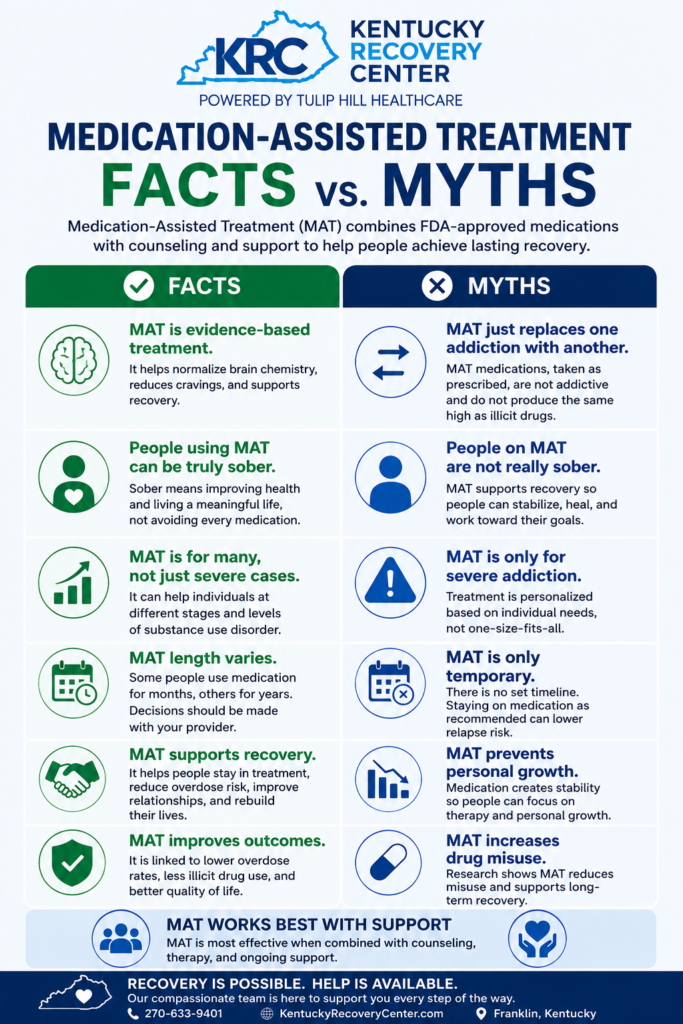
Myth #1: MAT Just Replaces One Addiction With Another
This is perhaps the most common misconception.
The truth is that dependence and addiction are not the same thing.
Physical dependence simply means the body adapts to a medication. Many medications—including antidepressants, blood pressure medications, and insulin therapies—require consistent use or careful tapering.
Addiction involves compulsive drug seeking despite harmful consequences, impaired control, and continued use despite damage to health, relationships, or responsibilities.
When taken as prescribed under medical supervision, MAT medications do not produce the uncontrolled behaviors associated with addiction.
Instead, they allow individuals to regain stability, return to work, care for their families, and actively participate in therapy.
Myth #2: People Using MAT Are Not Really Sober
Recovery looks different for every person.
For individuals taking medication exactly as prescribed by their treatment team, MAT supports recovery rather than preventing it.
Major medical organizations, including the American Society of Addiction Medicine (ASAM), the Substance Abuse and Mental Health Services Administration (SAMHSA), and the Centers for Disease Control and Prevention (CDC), recognize MAT as an evidence-based treatment for opioid use disorder.
Being in recovery is not defined by avoiding every medication.
It is defined by improving health, reducing harmful substance use, maintaining stability, and building a meaningful life.
Myth #3: MAT Is Only for Severe Addiction
Medication-Assisted Treatment can benefit individuals with varying levels of opioid or alcohol use disorder.
Some people enter MAT after years of addiction and multiple relapses.
Others begin medication after recognizing that withdrawal symptoms or cravings make early recovery especially difficult.
Clinical evaluations help determine whether MAT is appropriate based on:
- Substance use history
- Medical conditions
- Mental health needs
- Risk of relapse
- Previous treatment experiences
- Personal recovery goals
Treatment plans are individualized rather than one-size-fits-all.
Myth #4: MAT Is Only Temporary
There is no universal timeline.
Some individuals take medication for several months.
Others remain on medication for years.
Some continue indefinitely under physician supervision.
Research consistently shows that prematurely stopping medication can significantly increase relapse risk, particularly during the first year of recovery.
Rather than focusing on how quickly medication can be discontinued, treatment providers emphasize sustained recovery, improved functioning, and long-term stability.
Decisions about tapering should always be made collaboratively between patients and qualified medical providers.
Myth #5: MAT Prevents Personal Growth
Some critics assume medication does all the work.
In reality, medication creates the stability necessary for recovery work to begin.
Without overwhelming cravings or severe withdrawal symptoms, individuals are often better able to:
- Attend therapy consistently
- Address trauma
- Develop coping skills
- Repair family relationships
- Return to employment
- Continue education
- Establish healthy routines
- Participate in support groups
Medication is one part of a comprehensive recovery plan, not a replacement for personal effort.
Myth #6: MAT Increases Drug Misuse
The evidence shows the opposite.
When appropriately prescribed and monitored, MAT is associated with:
- Lower overdose rates
- Reduced illicit opioid use
- Improved treatment retention
- Lower risk of infectious disease transmission
- Reduced criminal justice involvement
- Improved employment outcomes
- Better quality of life
By reducing cravings and stabilizing brain chemistry, MAT decreases the likelihood that individuals will return to uncontrolled substance use.
How Counseling Complements Medication
Medication alone cannot address every factor contributing to addiction.
Therapy remains an essential component of long-term recovery.
Counseling helps individuals identify triggers, process emotions, improve communication, develop healthier coping strategies, and strengthen relapse prevention skills.
Many treatment programs incorporate multiple therapeutic approaches, including Cognitive Behavioral Therapy (CBT), Dialectical Behavior Therapy (DBT), motivational interviewing, trauma-informed care, family therapy, and peer support.
Together, medication and therapy provide a more comprehensive approach than either intervention alone.
MAT and Co-Occurring Mental Health Disorders
Many individuals seeking treatment also experience depression, anxiety, post-traumatic stress disorder, bipolar disorder, or other mental health conditions.
Untreated mental health symptoms can increase the likelihood of relapse, while ongoing substance use can worsen psychiatric symptoms.
Integrated treatment addresses both conditions simultaneously through coordinated medical care, medication management when appropriate, psychotherapy, and recovery support.
Treating both disorders together often leads to better long-term outcomes than addressing either condition alone.
Is MAT Right for Everyone?
Medication-Assisted Treatment is highly effective for many people, but it is not the only path to recovery.
Treatment recommendations should always be based on a comprehensive clinical assessment.
Factors providers consider include:
- The type of substance involved
- Severity of addiction
- Previous treatment history
- Physical health
- Mental health
- Pregnancy status
- Recovery goals
- Personal preferences
- Risk of relapse
Some individuals benefit greatly from MAT, while others may achieve lasting recovery through different evidence-based approaches.
The goal is to identify the treatment plan that best supports each person’s unique needs.
Reducing Stigma Around Medication-Assisted Treatment
Stigma remains one of the greatest obstacles to treatment.
People using MAT sometimes face criticism from friends, family members, employers, or even individuals within recovery communities who misunderstand how these medications work.
Language matters.
Instead of saying someone is “substituting one drug for another,” it is more accurate to recognize that they are receiving evidence-based medical treatment for a chronic health condition.
The more people understand the science behind addiction, the easier it becomes to replace judgment with compassion.
Reducing stigma encourages more individuals to seek help before addiction leads to devastating medical, emotional, legal, or financial consequences.
Recovery Is About Progress, Not Perfection
No single treatment approach works for everyone.
Recovery is highly individualized, and successful outcomes often involve a combination of medical care, counseling, peer support, healthy lifestyle changes, family involvement, and ongoing recovery planning.
Medication-Assisted Treatment is one of many evidence-based tools available to help people regain stability and reduce the risk of relapse. For many individuals, it provides the foundation needed to engage fully in therapy, rebuild relationships, return to work, and pursue long-term wellness.
If you or someone you love is struggling with opioid or alcohol addiction, speaking with qualified addiction professionals can help determine which treatment options are most appropriate. Recovery is possible, and seeking help is a courageous first step toward a healthier future.
Frequently Asked Questions About Medication-Assisted Treatment (MAT)
Did you know that your insurance plan may cover medical detox?
Get Family Support Now
Supporting Families Through Recovery
We understand addiction affects the whole family. Our comprehensive family program helps rebuild trust and restore relationships.
Weekly Family Therapy Sessions
Educational Workshops
Support Groups
Communication Skills Training
Get Family Support Now